
Kempten (Allgäu)
St.-Mang-Platz, 87435 Kempten (Allgäu), Deutschland
St.-Mang-Platz | Route & Events
The St.-Mang-Platz is one of the most characteristic places in Kempten (Allgäu) because here city history, sacred architecture, archaeological memory, and old town atmosphere meet in close proximity. The square is located directly next to the St.-Mang Church, which not only shapes the place's name but also visually dominates it. Visitors to the St.-Mang-Platz experience not an anonymous traffic space, but a place with a clear identity, historical depth, and strong recognition value. Particularly striking is the pointed church tower, which, with its height of 66 meters, is visible from afar and opens the urban space upwards. At the same time, the square is part of a dense historical environment with fountains, an underground exhibition space, and several listed buildings in the immediate vicinity. This makes the place an excellent choice for visitors who want to experience Kempten not just as a shopping or transit city, but as a developed old town with many layers of time. The St.-Mang-Platz serves almost as a concentrated showcase of the past of the Allgäu metropolis. ([kempten-tourismus.de](https://www.kempten-tourismus.de/st-mang-kirche?utm_source=openai))
Where is the St.-Mang-Platz in Kempten and how do you get there?
The St.-Mang-Platz is located in the city center of Kempten directly next to the church of the same name and near the Iller River. Official tourism information describes it as a beautiful and defining square of the city, where especially the St.-Mang Fountain and the entrance to the exhibition space Erasmuskapelle stand out. For a walk through Kempten's old town, this is an ideal starting point, as many important sights can be reached in a short distance from here. This includes not only the church itself but also adjacent historical buildings such as the Red House and the medieval house group of the Mühlberg Ensemble. Therefore, anyone looking for a place where Kempten's history is particularly vividly condensed will quickly find it at the St.-Mang-Platz. The square is not large in the classical sense, but it is precisely this density that makes its charm. It is a place for a brief stay, for looking, and for moving on, an urban hub for all who wish to perceive the old town not as a backdrop but as a living historical space. ([kempten-tourismus.de](https://www.kempten-tourismus.de/en/squares?utm_source=openai))
Traveling to Kempten is also well organized from a tourist perspective. The city is located directly on the A7, has train connections, an inner-city bus network, and the long-distance bus stop at Kotterner Straße 50, which is reportedly connected to the city center within a few minutes' walk. For coaches, the city marketing and tourism website also mentions a stopping point for boarding and alighting directly at the St.-Mang-Platz. This is convenient for groups, city tours, and day visitors who do not want to spend a long time searching for a central meeting point. Those arriving by car should best orient themselves to the parking spaces and parking garages in the city center and follow the parking guidance system, which indicates the nearest available space. Kempten is also interesting for cyclists because the city is located on important long-distance cycling routes, including the Iller Cycle Path and the Allgäu Cycle Path. Thus, the St.-Mang-Platz is not only historically attractive but also well integrated into traffic. This makes it equally suitable for spontaneous visits, tours, and organized group programs. ([kempten-tourismus.de](https://www.kempten-tourismus.de/anreise))
Why the St.-Mang Church shapes the character of the square
The St.-Mang Church is the defining building at the square and at the same time a central piece of Kempten's city history. It is considered the oldest Evangelical-Lutheran church in the city and has been closely linked to the former imperial city of Kempten for centuries. Official information describes that Kempten was a dual city of prince abbey and imperial city until 1818, with both parts having their own churches. The origins of the St.-Mang Church date back to a Romanesque predecessor building. Between 1426 and 1428, the church was expanded in the Gothic style, and the tower was raised to its current height of 66 meters. After the so-called Great Purchase, the imperial city finally separated from the prince abbot in 1525 and became Protestant in 1527 during the Reformation; this change also shaped the church. In 1767, a Baroque reconstruction followed before the current appearance was accentuated more historically through restoration work at the beginning of the 20th century. Therefore, the square is not merely the neighborhood of a church but a spatial expression of a long political and religious development. ([kempten-tourismus.de](https://www.kempten-tourismus.de/st-mang-kirche?utm_source=openai))
The interior of the church is also remarkable. Particularly famous is the carved high altar made of oak and lime wood, which was awarded at the World Exhibition in Chicago in 1894, later purchased by a Kempten manufacturer for the community, and has stood in the St.-Mang Church since 1906. Other features include the richly decorated mayor's box opposite the pulpit and the foldable backrests, which were intended to facilitate the view of the sermon. This shows how strongly ecclesiastical, urban, and social functions have been intertwined here for a long time. For visitors, this is important because the church functions not only as a monument but as a historically readable space. Those who are in Kempten during the pre-Christmas season can also participate in tower tours and see bells, the roof structure, and tower rooms. This makes the St.-Mang Church one of the most vibrant anchor points at the square, connecting historical depth with experience. ([kempten-tourismus.de](https://www.kempten-tourismus.de/st-mang-kirche?utm_source=openai))
What the exhibition space Erasmuskapelle under the square tells
Under the St.-Mang-Platz lies the exhibition space Erasmuskapelle, one of the most exciting museum and history offerings in Kempten. It is officially described as an underground exhibition space that can be reached from the surface via 23 steps. The former Erasmuskapelle was a building with changing functions for many centuries and is one of the places where the city history can be read particularly clearly. It was built in the 13th century as a cemetery chapel with an ossuary. After a fire and several reconstructions, it served from 1557 as a linen market, wine cellar, and tavern; in 1664, a room for weighing lard was added before demolition was decided in 1857. During construction work in World War II, remains were rediscovered, followed by archaeological investigations. Since 1988, layers of the past have slowly come to light, including around 500 medieval burials that became visible in 2003. This mixture of archaeology, architecture, and city history makes the place extraordinary. For families, culture enthusiasts, and visitors on rainy days, it is an attractive point of interest because here history does not remain abstract but becomes spatially and sensually tangible. ([kempten-tourismus.de](https://www.kempten-tourismus.de/en/erasmuskapelle))
The current exhibition space is intentionally staged in a modern way. Instead of a classic museum with many showcases, the exhibition relies on light, projections, audio elements, and multimedia presentation. Thus, the space tells in a compact form almost 800 years of building and usage history. The connection between surface and underground is also particularly interesting: On the St.-Mang-Platz, a modern glass and concrete structure and a bronze line in the pavement mark the outline of the former chapel. Those who look closely will recognize that the square itself is a bearer of memory. Additionally, the visit is only possible as part of a guided tour, and tickets are available on-site at the Mang-Box in the south hall of the St.-Mang Church or online. Opening hours and free admission on the first Sunday of the month make the exhibition space particularly easy to plan. Therefore, it is a highlight for a city tour that should not be taken casually but planned deliberately. It gives the St.-Mang-Platz a second level that lies beneath the visible city and makes its history even more exciting. ([kempten-tourismus.de](https://www.kempten-tourismus.de/en/erasmuskapelle))
St.-Mang Fountain, Red House, and Mühlberg Ensemble in the vicinity
The St.-Mang Fountain is one of the most important eye-catchers at the square and at the same time a key object for understanding the local landscape. It dates back to 1905, was created by the sculptor Georg Wrba, and is officially considered one of the noteworthy fountains in Kempten. The tourism site describes it as a Jugendstil fountain and a listed highlight directly in front of the church tower of St.-Mang Church. Under a protective canopy stands the statue of Saint Magnus of Füssen, who is regarded as the apostle of the Allgäu. Four bronze animal figures are attached to the outside: unicorn, ibex, doe, and stag, each with a boy perched on top. This form language is not only decorative but also tells about symbolism, protection, and urban culture. The fountain thus serves as a connecting element between the church, the square, and identity. For visitors, it is also a natural anchor point for photographing, lingering, and orienting. Especially on warm days, the square feels pleasant due to the fountain and the open design without losing its historical dignity. The combination of religious architecture and fine Jugendstil sculpture makes the place one of the most elegant corners of Kempten's city center. ([kempten-tourismus.de](https://www.kempten-tourismus.de/en/fountains?utm_source=openai))
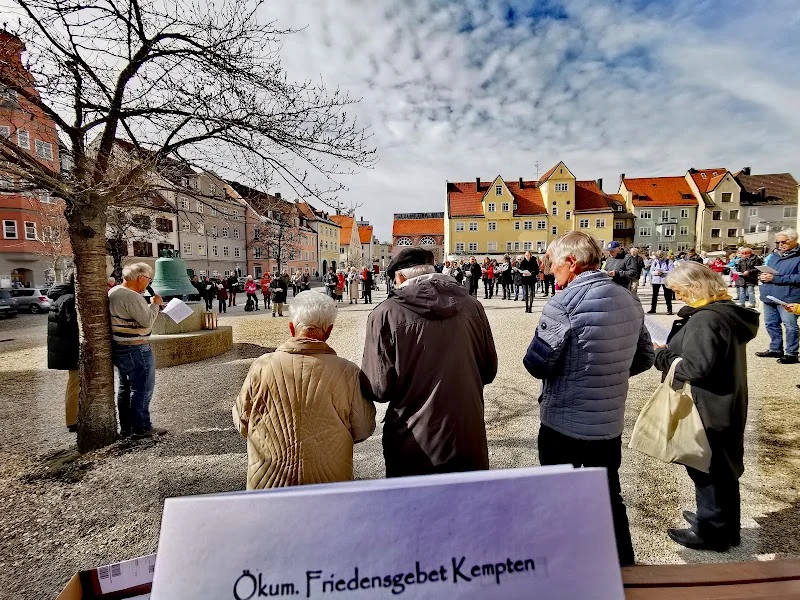
In the immediate vicinity, there are also other buildings that enhance the historical character of the square. The tourism information mentions the Red House at St.-Mang-Platz 3 as a late medieval building and the Mühlberg Ensemble as a medieval house group, which includes what is probably the oldest house in Kempten at St.-Mang-Platz 12. Additionally, other noteworthy elements are referenced, such as the Pax bell as a monument for peace. The view of the square's design itself is also interesting: The St.-Mang-Platz is described as a beautiful, historical place that shows an unusually dense succession of time layers with the church building, the fountain, and the underground exhibition space. This is particularly valuable in Kempten because the city makes its 2,000-year history visible in many places, but hardly anywhere as concentrated as here. Therefore, those who only seek the square as an address easily miss its actual quality. It is an ensemble of architecture, memory, and urban tranquility that unfolds best slowly. ([kempten-tourismus.de](https://www.kempten-tourismus.de/en/church-of-st-mang?utm_source=openai))
Parking, stopping, and arrival: what visitors should know practically
For the St.-Mang-Platz, the most important practical information is that the Kempten city center has a well-developed parking system supported by a parking guidance system. The official pages point out that visitors with cars or rental cars can find numerous parking options in and near the city center and can view the most important parking areas and garages on a digital map. Parking in Kempten is usually subject to fees; depending on the area, payment can be made with coins, credit card, or via app. Those looking for barrier-free or specific parking spaces can find additional information on disabled parking and E-charging stations. There is no classic large garage directly at the square, but there is indeed a central boarding and alighting point for coaches. This is a real advantage for groups, as they do not have to navigate far around the square. Therefore, those arriving by car should consider the character of the city center and expect a short walk instead of anticipating an immediate parking space at the square. This makes orientation in Kempten relatively relaxed: first arrive, then stroll. ([kempten-tourismus.de](https://www.kempten-tourismus.de/parken?utm_source=openai))
The rest of the arrival is also geared towards visitor-friendliness. Kempten is located directly on the A7, is accessible by train, and is also served by long-distance buses. The long-distance bus stop at Kotterner Straße 50 is reportedly within walking distance to the city center according to official information. For cyclists, the Iller Cycle Path and the Allgäu Cycle Path are important plus points as they directly connect to Kempten. Therefore, those who want to visit the St.-Mang-Platz can arrive very differently depending on their starting point: as a day visitor by car, as a group traveler by bus, as a train traveler with a short walk to the city center, or as a cyclist on one of the regional routes. The tourism site also emphasizes that city buses, e-scooters, car-sharing, and e-mobility play a role in the city. This is practical for visiting the square because one can flexibly incorporate the destination into a city walk, a tour, or an entire stay in the city center. The square is thus easily accessible but not dominated by traffic areas. This is exactly what gives it its urban quality. ([kempten-tourismus.de](https://www.kempten-tourismus.de/anreise))
Events, city tours, and the role of the square throughout the year
The St.-Mang-Platz is not an event hall, but it is certainly a place where Kempten's city history becomes visible through tours and seasonal programs. The official page for city tours lists a wide range: classic walking tours, experiential tours with theater scenes, culinary tours, children's tours, tours following the traces of Commissioner Kluftinger, and digital city discoveries via app. Such offerings make the square a fixed part of the tourist city tour because it is well suited to tell the history of the dual city, the Reformation, and the development of the old town from there. The general Kempten pages also show the square in connection with guided city experiences and emphasize that the place is a popular motif and a natural meeting point in the center. This gives the square a flexible role throughout the year: sometimes a starting point, sometimes a stopover, sometimes a photo motif, sometimes a quiet place between two program points. This versatility is particularly interesting for visitors who want to experience Kempten not just at a single point but as a city with changing presentations. ([kempten-tourismus.de](https://www.kempten-tourismus.de/fuehrungen?utm_source=openai))
Especially around Christmas time, the square gains even more significance. Official information mentions tower tours in the St.-Mang Church as part of the framework program of the Christmas market. Visitors receive insights into bells, the roof structure, and tower rooms. Additionally, the city refers to seasonal city tours that present the highlights of the festive and winter city center. Kempten itself describes its event scene as diverse and mentions, among other things, the Kempten Jazz Spring, the city festival, the Allgäu Festival Week, the Fairy Tale Summer Allgäu, and the Christmas market. Even if these events do not all take place directly at the St.-Mang-Platz, they shape the environment and show that the city center is culturally lively throughout the year. For the square, this means: It is part of an active city route that leads from history to the present. Therefore, those who visit the St.-Mang-Platz experience not only a beautiful monument but a place that is integrated into the rhythm of the city. This connection of tranquility and programming, of old town and events makes its special charm. ([kempten-tourismus.de](https://www.kempten-tourismus.de/st-mang-kirche?utm_source=openai))
Sources:
- Kempten Tourism - St.-Mang Church ([kempten-tourismus.de](https://www.kempten-tourismus.de/st-mang-kirche?utm_source=openai))
- Kempten Tourism - Squares in Kempten ([kempten-tourismus.de](https://www.kempten-tourismus.de/plaetze?utm_source=openai))
- Kempten Tourism - Showroom Erasmuskapelle ([kempten-tourismus.de](https://www.kempten-tourismus.de/en/erasmuskapelle))
- Kempten Tourism - Fountains in Kempten ([kempten-tourismus.de](https://www.kempten-tourismus.de/brunnen?utm_source=openai))
- Kempten Tourism - Parking in Kempten ([kempten-tourismus.de](https://www.kempten-tourismus.de/parken?utm_source=openai))
- Kempten Tourism - City Tours in Kempten ([kempten-tourismus.de](https://www.kempten-tourismus.de/fuehrungen?utm_source=openai))
- Kempten Tourism - Arrival in the Allgäu Metropolis ([kempten-tourismus.de](https://www.kempten-tourismus.de/anreise))
Show moreShow less
St.-Mang-Platz | Route & Events
The St.-Mang-Platz is one of the most characteristic places in Kempten (Allgäu) because here city history, sacred architecture, archaeological memory, and old town atmosphere meet in close proximity. The square is located directly next to the St.-Mang Church, which not only shapes the place's name but also visually dominates it. Visitors to the St.-Mang-Platz experience not an anonymous traffic space, but a place with a clear identity, historical depth, and strong recognition value. Particularly striking is the pointed church tower, which, with its height of 66 meters, is visible from afar and opens the urban space upwards. At the same time, the square is part of a dense historical environment with fountains, an underground exhibition space, and several listed buildings in the immediate vicinity. This makes the place an excellent choice for visitors who want to experience Kempten not just as a shopping or transit city, but as a developed old town with many layers of time. The St.-Mang-Platz serves almost as a concentrated showcase of the past of the Allgäu metropolis. ([kempten-tourismus.de](https://www.kempten-tourismus.de/st-mang-kirche?utm_source=openai))
Where is the St.-Mang-Platz in Kempten and how do you get there?
The St.-Mang-Platz is located in the city center of Kempten directly next to the church of the same name and near the Iller River. Official tourism information describes it as a beautiful and defining square of the city, where especially the St.-Mang Fountain and the entrance to the exhibition space Erasmuskapelle stand out. For a walk through Kempten's old town, this is an ideal starting point, as many important sights can be reached in a short distance from here. This includes not only the church itself but also adjacent historical buildings such as the Red House and the medieval house group of the Mühlberg Ensemble. Therefore, anyone looking for a place where Kempten's history is particularly vividly condensed will quickly find it at the St.-Mang-Platz. The square is not large in the classical sense, but it is precisely this density that makes its charm. It is a place for a brief stay, for looking, and for moving on, an urban hub for all who wish to perceive the old town not as a backdrop but as a living historical space. ([kempten-tourismus.de](https://www.kempten-tourismus.de/en/squares?utm_source=openai))
Traveling to Kempten is also well organized from a tourist perspective. The city is located directly on the A7, has train connections, an inner-city bus network, and the long-distance bus stop at Kotterner Straße 50, which is reportedly connected to the city center within a few minutes' walk. For coaches, the city marketing and tourism website also mentions a stopping point for boarding and alighting directly at the St.-Mang-Platz. This is convenient for groups, city tours, and day visitors who do not want to spend a long time searching for a central meeting point. Those arriving by car should best orient themselves to the parking spaces and parking garages in the city center and follow the parking guidance system, which indicates the nearest available space. Kempten is also interesting for cyclists because the city is located on important long-distance cycling routes, including the Iller Cycle Path and the Allgäu Cycle Path. Thus, the St.-Mang-Platz is not only historically attractive but also well integrated into traffic. This makes it equally suitable for spontaneous visits, tours, and organized group programs. ([kempten-tourismus.de](https://www.kempten-tourismus.de/anreise))
Why the St.-Mang Church shapes the character of the square
The St.-Mang Church is the defining building at the square and at the same time a central piece of Kempten's city history. It is considered the oldest Evangelical-Lutheran church in the city and has been closely linked to the former imperial city of Kempten for centuries. Official information describes that Kempten was a dual city of prince abbey and imperial city until 1818, with both parts having their own churches. The origins of the St.-Mang Church date back to a Romanesque predecessor building. Between 1426 and 1428, the church was expanded in the Gothic style, and the tower was raised to its current height of 66 meters. After the so-called Great Purchase, the imperial city finally separated from the prince abbot in 1525 and became Protestant in 1527 during the Reformation; this change also shaped the church. In 1767, a Baroque reconstruction followed before the current appearance was accentuated more historically through restoration work at the beginning of the 20th century. Therefore, the square is not merely the neighborhood of a church but a spatial expression of a long political and religious development. ([kempten-tourismus.de](https://www.kempten-tourismus.de/st-mang-kirche?utm_source=openai))
The interior of the church is also remarkable. Particularly famous is the carved high altar made of oak and lime wood, which was awarded at the World Exhibition in Chicago in 1894, later purchased by a Kempten manufacturer for the community, and has stood in the St.-Mang Church since 1906. Other features include the richly decorated mayor's box opposite the pulpit and the foldable backrests, which were intended to facilitate the view of the sermon. This shows how strongly ecclesiastical, urban, and social functions have been intertwined here for a long time. For visitors, this is important because the church functions not only as a monument but as a historically readable space. Those who are in Kempten during the pre-Christmas season can also participate in tower tours and see bells, the roof structure, and tower rooms. This makes the St.-Mang Church one of the most vibrant anchor points at the square, connecting historical depth with experience. ([kempten-tourismus.de](https://www.kempten-tourismus.de/st-mang-kirche?utm_source=openai))
What the exhibition space Erasmuskapelle under the square tells
Under the St.-Mang-Platz lies the exhibition space Erasmuskapelle, one of the most exciting museum and history offerings in Kempten. It is officially described as an underground exhibition space that can be reached from the surface via 23 steps. The former Erasmuskapelle was a building with changing functions for many centuries and is one of the places where the city history can be read particularly clearly. It was built in the 13th century as a cemetery chapel with an ossuary. After a fire and several reconstructions, it served from 1557 as a linen market, wine cellar, and tavern; in 1664, a room for weighing lard was added before demolition was decided in 1857. During construction work in World War II, remains were rediscovered, followed by archaeological investigations. Since 1988, layers of the past have slowly come to light, including around 500 medieval burials that became visible in 2003. This mixture of archaeology, architecture, and city history makes the place extraordinary. For families, culture enthusiasts, and visitors on rainy days, it is an attractive point of interest because here history does not remain abstract but becomes spatially and sensually tangible. ([kempten-tourismus.de](https://www.kempten-tourismus.de/en/erasmuskapelle))
The current exhibition space is intentionally staged in a modern way. Instead of a classic museum with many showcases, the exhibition relies on light, projections, audio elements, and multimedia presentation. Thus, the space tells in a compact form almost 800 years of building and usage history. The connection between surface and underground is also particularly interesting: On the St.-Mang-Platz, a modern glass and concrete structure and a bronze line in the pavement mark the outline of the former chapel. Those who look closely will recognize that the square itself is a bearer of memory. Additionally, the visit is only possible as part of a guided tour, and tickets are available on-site at the Mang-Box in the south hall of the St.-Mang Church or online. Opening hours and free admission on the first Sunday of the month make the exhibition space particularly easy to plan. Therefore, it is a highlight for a city tour that should not be taken casually but planned deliberately. It gives the St.-Mang-Platz a second level that lies beneath the visible city and makes its history even more exciting. ([kempten-tourismus.de](https://www.kempten-tourismus.de/en/erasmuskapelle))
St.-Mang Fountain, Red House, and Mühlberg Ensemble in the vicinity
The St.-Mang Fountain is one of the most important eye-catchers at the square and at the same time a key object for understanding the local landscape. It dates back to 1905, was created by the sculptor Georg Wrba, and is officially considered one of the noteworthy fountains in Kempten. The tourism site describes it as a Jugendstil fountain and a listed highlight directly in front of the church tower of St.-Mang Church. Under a protective canopy stands the statue of Saint Magnus of Füssen, who is regarded as the apostle of the Allgäu. Four bronze animal figures are attached to the outside: unicorn, ibex, doe, and stag, each with a boy perched on top. This form language is not only decorative but also tells about symbolism, protection, and urban culture. The fountain thus serves as a connecting element between the church, the square, and identity. For visitors, it is also a natural anchor point for photographing, lingering, and orienting. Especially on warm days, the square feels pleasant due to the fountain and the open design without losing its historical dignity. The combination of religious architecture and fine Jugendstil sculpture makes the place one of the most elegant corners of Kempten's city center. ([kempten-tourismus.de](https://www.kempten-tourismus.de/en/fountains?utm_source=openai))
In the immediate vicinity, there are also other buildings that enhance the historical character of the square. The tourism information mentions the Red House at St.-Mang-Platz 3 as a late medieval building and the Mühlberg Ensemble as a medieval house group, which includes what is probably the oldest house in Kempten at St.-Mang-Platz 12. Additionally, other noteworthy elements are referenced, such as the Pax bell as a monument for peace. The view of the square's design itself is also interesting: The St.-Mang-Platz is described as a beautiful, historical place that shows an unusually dense succession of time layers with the church building, the fountain, and the underground exhibition space. This is particularly valuable in Kempten because the city makes its 2,000-year history visible in many places, but hardly anywhere as concentrated as here. Therefore, those who only seek the square as an address easily miss its actual quality. It is an ensemble of architecture, memory, and urban tranquility that unfolds best slowly. ([kempten-tourismus.de](https://www.kempten-tourismus.de/en/church-of-st-mang?utm_source=openai))
Parking, stopping, and arrival: what visitors should know practically
For the St.-Mang-Platz, the most important practical information is that the Kempten city center has a well-developed parking system supported by a parking guidance system. The official pages point out that visitors with cars or rental cars can find numerous parking options in and near the city center and can view the most important parking areas and garages on a digital map. Parking in Kempten is usually subject to fees; depending on the area, payment can be made with coins, credit card, or via app. Those looking for barrier-free or specific parking spaces can find additional information on disabled parking and E-charging stations. There is no classic large garage directly at the square, but there is indeed a central boarding and alighting point for coaches. This is a real advantage for groups, as they do not have to navigate far around the square. Therefore, those arriving by car should consider the character of the city center and expect a short walk instead of anticipating an immediate parking space at the square. This makes orientation in Kempten relatively relaxed: first arrive, then stroll. ([kempten-tourismus.de](https://www.kempten-tourismus.de/parken?utm_source=openai))
The rest of the arrival is also geared towards visitor-friendliness. Kempten is located directly on the A7, is accessible by train, and is also served by long-distance buses. The long-distance bus stop at Kotterner Straße 50 is reportedly within walking distance to the city center according to official information. For cyclists, the Iller Cycle Path and the Allgäu Cycle Path are important plus points as they directly connect to Kempten. Therefore, those who want to visit the St.-Mang-Platz can arrive very differently depending on their starting point: as a day visitor by car, as a group traveler by bus, as a train traveler with a short walk to the city center, or as a cyclist on one of the regional routes. The tourism site also emphasizes that city buses, e-scooters, car-sharing, and e-mobility play a role in the city. This is practical for visiting the square because one can flexibly incorporate the destination into a city walk, a tour, or an entire stay in the city center. The square is thus easily accessible but not dominated by traffic areas. This is exactly what gives it its urban quality. ([kempten-tourismus.de](https://www.kempten-tourismus.de/anreise))
Events, city tours, and the role of the square throughout the year
The St.-Mang-Platz is not an event hall, but it is certainly a place where Kempten's city history becomes visible through tours and seasonal programs. The official page for city tours lists a wide range: classic walking tours, experiential tours with theater scenes, culinary tours, children's tours, tours following the traces of Commissioner Kluftinger, and digital city discoveries via app. Such offerings make the square a fixed part of the tourist city tour because it is well suited to tell the history of the dual city, the Reformation, and the development of the old town from there. The general Kempten pages also show the square in connection with guided city experiences and emphasize that the place is a popular motif and a natural meeting point in the center. This gives the square a flexible role throughout the year: sometimes a starting point, sometimes a stopover, sometimes a photo motif, sometimes a quiet place between two program points. This versatility is particularly interesting for visitors who want to experience Kempten not just at a single point but as a city with changing presentations. ([kempten-tourismus.de](https://www.kempten-tourismus.de/fuehrungen?utm_source=openai))
Especially around Christmas time, the square gains even more significance. Official information mentions tower tours in the St.-Mang Church as part of the framework program of the Christmas market. Visitors receive insights into bells, the roof structure, and tower rooms. Additionally, the city refers to seasonal city tours that present the highlights of the festive and winter city center. Kempten itself describes its event scene as diverse and mentions, among other things, the Kempten Jazz Spring, the city festival, the Allgäu Festival Week, the Fairy Tale Summer Allgäu, and the Christmas market. Even if these events do not all take place directly at the St.-Mang-Platz, they shape the environment and show that the city center is culturally lively throughout the year. For the square, this means: It is part of an active city route that leads from history to the present. Therefore, those who visit the St.-Mang-Platz experience not only a beautiful monument but a place that is integrated into the rhythm of the city. This connection of tranquility and programming, of old town and events makes its special charm. ([kempten-tourismus.de](https://www.kempten-tourismus.de/st-mang-kirche?utm_source=openai))
Sources:
- Kempten Tourism - St.-Mang Church ([kempten-tourismus.de](https://www.kempten-tourismus.de/st-mang-kirche?utm_source=openai))
- Kempten Tourism - Squares in Kempten ([kempten-tourismus.de](https://www.kempten-tourismus.de/plaetze?utm_source=openai))
- Kempten Tourism - Showroom Erasmuskapelle ([kempten-tourismus.de](https://www.kempten-tourismus.de/en/erasmuskapelle))
- Kempten Tourism - Fountains in Kempten ([kempten-tourismus.de](https://www.kempten-tourismus.de/brunnen?utm_source=openai))
- Kempten Tourism - Parking in Kempten ([kempten-tourismus.de](https://www.kempten-tourismus.de/parken?utm_source=openai))
- Kempten Tourism - City Tours in Kempten ([kempten-tourismus.de](https://www.kempten-tourismus.de/fuehrungen?utm_source=openai))
- Kempten Tourism - Arrival in the Allgäu Metropolis ([kempten-tourismus.de](https://www.kempten-tourismus.de/anreise))
St.-Mang-Platz | Route & Events
The St.-Mang-Platz is one of the most characteristic places in Kempten (Allgäu) because here city history, sacred architecture, archaeological memory, and old town atmosphere meet in close proximity. The square is located directly next to the St.-Mang Church, which not only shapes the place's name but also visually dominates it. Visitors to the St.-Mang-Platz experience not an anonymous traffic space, but a place with a clear identity, historical depth, and strong recognition value. Particularly striking is the pointed church tower, which, with its height of 66 meters, is visible from afar and opens the urban space upwards. At the same time, the square is part of a dense historical environment with fountains, an underground exhibition space, and several listed buildings in the immediate vicinity. This makes the place an excellent choice for visitors who want to experience Kempten not just as a shopping or transit city, but as a developed old town with many layers of time. The St.-Mang-Platz serves almost as a concentrated showcase of the past of the Allgäu metropolis. ([kempten-tourismus.de](https://www.kempten-tourismus.de/st-mang-kirche?utm_source=openai))
Where is the St.-Mang-Platz in Kempten and how do you get there?
The St.-Mang-Platz is located in the city center of Kempten directly next to the church of the same name and near the Iller River. Official tourism information describes it as a beautiful and defining square of the city, where especially the St.-Mang Fountain and the entrance to the exhibition space Erasmuskapelle stand out. For a walk through Kempten's old town, this is an ideal starting point, as many important sights can be reached in a short distance from here. This includes not only the church itself but also adjacent historical buildings such as the Red House and the medieval house group of the Mühlberg Ensemble. Therefore, anyone looking for a place where Kempten's history is particularly vividly condensed will quickly find it at the St.-Mang-Platz. The square is not large in the classical sense, but it is precisely this density that makes its charm. It is a place for a brief stay, for looking, and for moving on, an urban hub for all who wish to perceive the old town not as a backdrop but as a living historical space. ([kempten-tourismus.de](https://www.kempten-tourismus.de/en/squares?utm_source=openai))
Traveling to Kempten is also well organized from a tourist perspective. The city is located directly on the A7, has train connections, an inner-city bus network, and the long-distance bus stop at Kotterner Straße 50, which is reportedly connected to the city center within a few minutes' walk. For coaches, the city marketing and tourism website also mentions a stopping point for boarding and alighting directly at the St.-Mang-Platz. This is convenient for groups, city tours, and day visitors who do not want to spend a long time searching for a central meeting point. Those arriving by car should best orient themselves to the parking spaces and parking garages in the city center and follow the parking guidance system, which indicates the nearest available space. Kempten is also interesting for cyclists because the city is located on important long-distance cycling routes, including the Iller Cycle Path and the Allgäu Cycle Path. Thus, the St.-Mang-Platz is not only historically attractive but also well integrated into traffic. This makes it equally suitable for spontaneous visits, tours, and organized group programs. ([kempten-tourismus.de](https://www.kempten-tourismus.de/anreise))
Why the St.-Mang Church shapes the character of the square
The St.-Mang Church is the defining building at the square and at the same time a central piece of Kempten's city history. It is considered the oldest Evangelical-Lutheran church in the city and has been closely linked to the former imperial city of Kempten for centuries. Official information describes that Kempten was a dual city of prince abbey and imperial city until 1818, with both parts having their own churches. The origins of the St.-Mang Church date back to a Romanesque predecessor building. Between 1426 and 1428, the church was expanded in the Gothic style, and the tower was raised to its current height of 66 meters. After the so-called Great Purchase, the imperial city finally separated from the prince abbot in 1525 and became Protestant in 1527 during the Reformation; this change also shaped the church. In 1767, a Baroque reconstruction followed before the current appearance was accentuated more historically through restoration work at the beginning of the 20th century. Therefore, the square is not merely the neighborhood of a church but a spatial expression of a long political and religious development. ([kempten-tourismus.de](https://www.kempten-tourismus.de/st-mang-kirche?utm_source=openai))
The interior of the church is also remarkable. Particularly famous is the carved high altar made of oak and lime wood, which was awarded at the World Exhibition in Chicago in 1894, later purchased by a Kempten manufacturer for the community, and has stood in the St.-Mang Church since 1906. Other features include the richly decorated mayor's box opposite the pulpit and the foldable backrests, which were intended to facilitate the view of the sermon. This shows how strongly ecclesiastical, urban, and social functions have been intertwined here for a long time. For visitors, this is important because the church functions not only as a monument but as a historically readable space. Those who are in Kempten during the pre-Christmas season can also participate in tower tours and see bells, the roof structure, and tower rooms. This makes the St.-Mang Church one of the most vibrant anchor points at the square, connecting historical depth with experience. ([kempten-tourismus.de](https://www.kempten-tourismus.de/st-mang-kirche?utm_source=openai))
What the exhibition space Erasmuskapelle under the square tells
Under the St.-Mang-Platz lies the exhibition space Erasmuskapelle, one of the most exciting museum and history offerings in Kempten. It is officially described as an underground exhibition space that can be reached from the surface via 23 steps. The former Erasmuskapelle was a building with changing functions for many centuries and is one of the places where the city history can be read particularly clearly. It was built in the 13th century as a cemetery chapel with an ossuary. After a fire and several reconstructions, it served from 1557 as a linen market, wine cellar, and tavern; in 1664, a room for weighing lard was added before demolition was decided in 1857. During construction work in World War II, remains were rediscovered, followed by archaeological investigations. Since 1988, layers of the past have slowly come to light, including around 500 medieval burials that became visible in 2003. This mixture of archaeology, architecture, and city history makes the place extraordinary. For families, culture enthusiasts, and visitors on rainy days, it is an attractive point of interest because here history does not remain abstract but becomes spatially and sensually tangible. ([kempten-tourismus.de](https://www.kempten-tourismus.de/en/erasmuskapelle))
The current exhibition space is intentionally staged in a modern way. Instead of a classic museum with many showcases, the exhibition relies on light, projections, audio elements, and multimedia presentation. Thus, the space tells in a compact form almost 800 years of building and usage history. The connection between surface and underground is also particularly interesting: On the St.-Mang-Platz, a modern glass and concrete structure and a bronze line in the pavement mark the outline of the former chapel. Those who look closely will recognize that the square itself is a bearer of memory. Additionally, the visit is only possible as part of a guided tour, and tickets are available on-site at the Mang-Box in the south hall of the St.-Mang Church or online. Opening hours and free admission on the first Sunday of the month make the exhibition space particularly easy to plan. Therefore, it is a highlight for a city tour that should not be taken casually but planned deliberately. It gives the St.-Mang-Platz a second level that lies beneath the visible city and makes its history even more exciting. ([kempten-tourismus.de](https://www.kempten-tourismus.de/en/erasmuskapelle))
St.-Mang Fountain, Red House, and Mühlberg Ensemble in the vicinity
The St.-Mang Fountain is one of the most important eye-catchers at the square and at the same time a key object for understanding the local landscape. It dates back to 1905, was created by the sculptor Georg Wrba, and is officially considered one of the noteworthy fountains in Kempten. The tourism site describes it as a Jugendstil fountain and a listed highlight directly in front of the church tower of St.-Mang Church. Under a protective canopy stands the statue of Saint Magnus of Füssen, who is regarded as the apostle of the Allgäu. Four bronze animal figures are attached to the outside: unicorn, ibex, doe, and stag, each with a boy perched on top. This form language is not only decorative but also tells about symbolism, protection, and urban culture. The fountain thus serves as a connecting element between the church, the square, and identity. For visitors, it is also a natural anchor point for photographing, lingering, and orienting. Especially on warm days, the square feels pleasant due to the fountain and the open design without losing its historical dignity. The combination of religious architecture and fine Jugendstil sculpture makes the place one of the most elegant corners of Kempten's city center. ([kempten-tourismus.de](https://www.kempten-tourismus.de/en/fountains?utm_source=openai))
In the immediate vicinity, there are also other buildings that enhance the historical character of the square. The tourism information mentions the Red House at St.-Mang-Platz 3 as a late medieval building and the Mühlberg Ensemble as a medieval house group, which includes what is probably the oldest house in Kempten at St.-Mang-Platz 12. Additionally, other noteworthy elements are referenced, such as the Pax bell as a monument for peace. The view of the square's design itself is also interesting: The St.-Mang-Platz is described as a beautiful, historical place that shows an unusually dense succession of time layers with the church building, the fountain, and the underground exhibition space. This is particularly valuable in Kempten because the city makes its 2,000-year history visible in many places, but hardly anywhere as concentrated as here. Therefore, those who only seek the square as an address easily miss its actual quality. It is an ensemble of architecture, memory, and urban tranquility that unfolds best slowly. ([kempten-tourismus.de](https://www.kempten-tourismus.de/en/church-of-st-mang?utm_source=openai))
Parking, stopping, and arrival: what visitors should know practically
For the St.-Mang-Platz, the most important practical information is that the Kempten city center has a well-developed parking system supported by a parking guidance system. The official pages point out that visitors with cars or rental cars can find numerous parking options in and near the city center and can view the most important parking areas and garages on a digital map. Parking in Kempten is usually subject to fees; depending on the area, payment can be made with coins, credit card, or via app. Those looking for barrier-free or specific parking spaces can find additional information on disabled parking and E-charging stations. There is no classic large garage directly at the square, but there is indeed a central boarding and alighting point for coaches. This is a real advantage for groups, as they do not have to navigate far around the square. Therefore, those arriving by car should consider the character of the city center and expect a short walk instead of anticipating an immediate parking space at the square. This makes orientation in Kempten relatively relaxed: first arrive, then stroll. ([kempten-tourismus.de](https://www.kempten-tourismus.de/parken?utm_source=openai))
The rest of the arrival is also geared towards visitor-friendliness. Kempten is located directly on the A7, is accessible by train, and is also served by long-distance buses. The long-distance bus stop at Kotterner Straße 50 is reportedly within walking distance to the city center according to official information. For cyclists, the Iller Cycle Path and the Allgäu Cycle Path are important plus points as they directly connect to Kempten. Therefore, those who want to visit the St.-Mang-Platz can arrive very differently depending on their starting point: as a day visitor by car, as a group traveler by bus, as a train traveler with a short walk to the city center, or as a cyclist on one of the regional routes. The tourism site also emphasizes that city buses, e-scooters, car-sharing, and e-mobility play a role in the city. This is practical for visiting the square because one can flexibly incorporate the destination into a city walk, a tour, or an entire stay in the city center. The square is thus easily accessible but not dominated by traffic areas. This is exactly what gives it its urban quality. ([kempten-tourismus.de](https://www.kempten-tourismus.de/anreise))
Events, city tours, and the role of the square throughout the year
The St.-Mang-Platz is not an event hall, but it is certainly a place where Kempten's city history becomes visible through tours and seasonal programs. The official page for city tours lists a wide range: classic walking tours, experiential tours with theater scenes, culinary tours, children's tours, tours following the traces of Commissioner Kluftinger, and digital city discoveries via app. Such offerings make the square a fixed part of the tourist city tour because it is well suited to tell the history of the dual city, the Reformation, and the development of the old town from there. The general Kempten pages also show the square in connection with guided city experiences and emphasize that the place is a popular motif and a natural meeting point in the center. This gives the square a flexible role throughout the year: sometimes a starting point, sometimes a stopover, sometimes a photo motif, sometimes a quiet place between two program points. This versatility is particularly interesting for visitors who want to experience Kempten not just at a single point but as a city with changing presentations. ([kempten-tourismus.de](https://www.kempten-tourismus.de/fuehrungen?utm_source=openai))
Especially around Christmas time, the square gains even more significance. Official information mentions tower tours in the St.-Mang Church as part of the framework program of the Christmas market. Visitors receive insights into bells, the roof structure, and tower rooms. Additionally, the city refers to seasonal city tours that present the highlights of the festive and winter city center. Kempten itself describes its event scene as diverse and mentions, among other things, the Kempten Jazz Spring, the city festival, the Allgäu Festival Week, the Fairy Tale Summer Allgäu, and the Christmas market. Even if these events do not all take place directly at the St.-Mang-Platz, they shape the environment and show that the city center is culturally lively throughout the year. For the square, this means: It is part of an active city route that leads from history to the present. Therefore, those who visit the St.-Mang-Platz experience not only a beautiful monument but a place that is integrated into the rhythm of the city. This connection of tranquility and programming, of old town and events makes its special charm. ([kempten-tourismus.de](https://www.kempten-tourismus.de/st-mang-kirche?utm_source=openai))
Sources:
- Kempten Tourism - St.-Mang Church ([kempten-tourismus.de](https://www.kempten-tourismus.de/st-mang-kirche?utm_source=openai))
- Kempten Tourism - Squares in Kempten ([kempten-tourismus.de](https://www.kempten-tourismus.de/plaetze?utm_source=openai))
- Kempten Tourism - Showroom Erasmuskapelle ([kempten-tourismus.de](https://www.kempten-tourismus.de/en/erasmuskapelle))
- Kempten Tourism - Fountains in Kempten ([kempten-tourismus.de](https://www.kempten-tourismus.de/brunnen?utm_source=openai))
- Kempten Tourism - Parking in Kempten ([kempten-tourismus.de](https://www.kempten-tourismus.de/parken?utm_source=openai))
- Kempten Tourism - City Tours in Kempten ([kempten-tourismus.de](https://www.kempten-tourismus.de/fuehrungen?utm_source=openai))
- Kempten Tourism - Arrival in the Allgäu Metropolis ([kempten-tourismus.de](https://www.kempten-tourismus.de/anreise))
Upcoming Events
Old Town Festival with Children's Day
Experience the family-friendly Old Town Festival in Kempten with a special Children's Day. Many activities and entertainment await you!
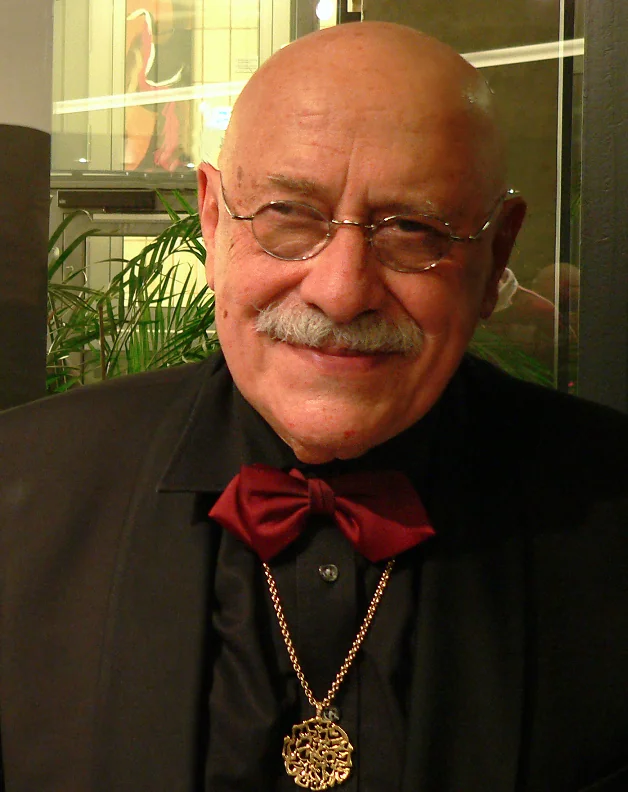
Giora Feidman – For a Better World
Enjoy a moving concert by Giora Feidman and Majid Montazer in Kempten. Secure your seat for July 28, 2026.
Frequently Asked Questions
Reviews
No reviews found