
Merktstraße 1, Kempten (Allgäu)
Merktstraße 1, 87437 Kempten (Allgäu), Germany
Small Baths APC Cambodunum | Directions & Tickets
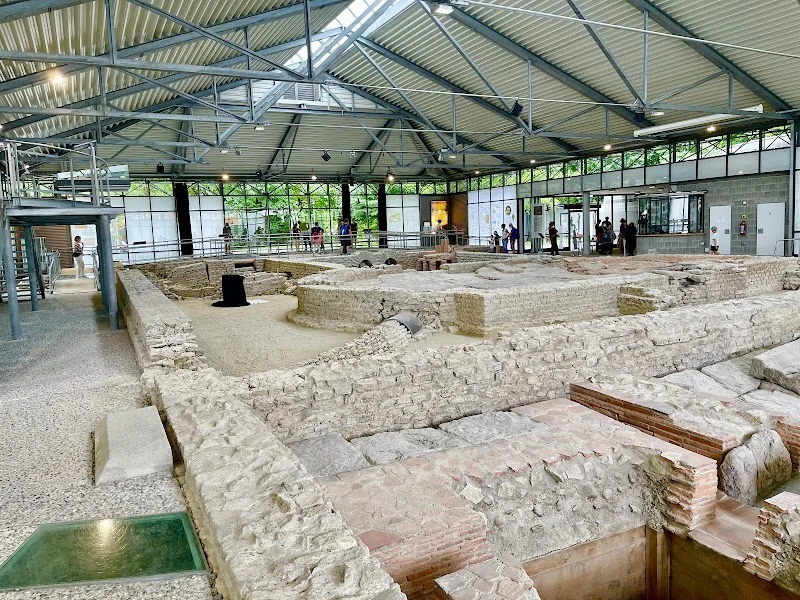
The Small Baths in the Archaeological Park Cambodunum are among the most impressive places where Roman history can still be experienced directly in Kempten today. Upon entering the site, one does not face an abstract reconstruction but rather a protective and exhibition building that preserves and makes visible original remains of an ancient bathing facility. This is precisely the unique strength of this place: it combines archaeological substance, illustrative communication, and the atmosphere of a spacious open-air museum on the high bank of the Iller. The APC sees itself as a Roman open-air museum of the city of Kempten and makes the center of the former Roman provincial capital comprehensible to this day with the temple district, the Small Baths, and the forum with basilica. At the same time, Cambodunum is the oldest documented city in Germany, which adds an additional historical depth to the visit. ([apc-kempten.de](https://apc-kempten.de/de?utm_source=openai))
For visitors, the location is also practically well connected: the ticket office of the Small Baths is located at Merktstraße 1, the main entrance of the APC at Cambodunumweg 3. The site is open seasonally from March to November, currently in the 2026 season from Tuesday to Sunday from 10 am to 5 pm. Those planning a visit will find clear pathways, official visitor information, ticket options at both ticket offices, and guidance on directions, parking, and tours. This is a significant advantage, especially for excursions, family visits, cultural trips, and short stops in Kempten, as the historical content is combined with an uncomplicated visiting structure. ([apc-kempten.de](https://www.apc-kempten.de/de/besucherinfo?utm_source=openai))
Opening Hours, Tickets, and Admission Prices for the Small Baths
The planning of a visit to the Archaeological Park Cambodunum is best started with the opening hours and admission regulations. According to official visitor information, the APC is open seasonally from March 15 to November 15, 2026, every Tuesday to Sunday from 10 am to 5 pm. During the winter break, the grounds remain closed, and Shrove Tuesday is also a closing day. Those arriving on public holidays can still rely on several regular opening days, as the APC lists Good Friday, Easter Sunday, Easter Monday, May Day, Ascension Day, Whit Monday, Corpus Christi, Assumption Day, German Unity Day, and All Saints' Day as open days. This makes the Small Baths not only a museum site but also a well-planned excursion destination for almost the entire warm season. ([apc-kempten.de](https://www.apc-kempten.de/de/besucherinfo?utm_source=openai))
The admission structure is also clear and family-friendly. The official visitor information states that the admission fee for adults is 5 euros, while children and teenagers up to 17 years old and students receive free admission. Additionally, there is a reduced admission fee of 2.50 euros for certain eligible groups and a group rate of 2.50 euros per person for groups of 10 or more. Particularly attractive is the first Sunday of the month, when admission is free. Tickets can be purchased at both the ticket office at the temple district at Cambodunumweg 3 and at the ticket office at the Small Baths at Merktstraße 1. This makes access flexible, and visitors can start their tour where it is most convenient for their route. For SEO search queries related to tickets, admission prices, and opening hours, this information is crucial as it directly answers the most common planning questions. ([apc-kempten.de](https://www.apc-kempten.de/en/visitor-information?utm_source=openai))
Directions and Parking at the Small Baths
The directions to the Archaeological Park Cambodunum are intentionally described simply so that visitors can reach the site without detours. By car, the official route leads via the A7, B12, or B19 to Kempten. On-site, it is best to follow the signs at Berliner Platz towards the main train station and then the indications to the Archaeological Park Cambodunum. The APC is located on the high bank of the Iller in the Kempten-Ost district, which makes the location particularly scenic and embeds the historical urban space well. For navigation devices, the visitor information lists either Cambodunumweg 3 or Merktstraße 1 as suitable addresses. Especially for the Small Baths, Merktstraße 1 is the direct and practical point of contact, as the ticket office is also located there. ([apc-kempten.de](https://www.apc-kempten.de/de/besucherinfo?utm_source=openai))
When it comes to parking, it is important to know that there is no dedicated APC parking lot. The official recommendation is therefore to use the surrounding parking lots, particularly the Illerdamm parking lot and the Brodkorbweg parking lot. According to visitor information, the walking time from the parking lot to the park grounds is about 5 to 15 minutes. This is pleasantly manageable for a museum visit, but it is advisable to arrive with some time to spare, especially on weekends, public holidays, or during events. Additionally, the location on the high bank of the Iller helps to perceive the walk not just as a mere transfer but as part of the visit experience: even the arrival makes it clear that a large archaeological landscape is being explored and not just a single building. Therefore, those looking for parking, directions, or the best route to the ticket office of the Small Baths will find a clear, practical solution at the APC. ([apc-kempten.de](https://www.apc-kempten.de/de/besucherinfo?utm_source=openai))
The History of the Small Baths in Roman Cambodunum
The historical significance of the Small Baths begins in the early Roman phase of Cambodunum. According to official accounts, the governor of the Roman province of Raetia built a representative structure next to the forum, and in this context, the Small Baths were created around the year 50 AD. Initially, they served the governor as a private bathing facility for himself, his staff, and his guests. Thus, they were not simply a public bath in the modern sense but part of a space of power and representation, where Roman administration, comfort, and everyday culture merged. This connection makes the place so exciting: the baths are a window into the living world of the Roman elite in the province and show how closely bathing culture, status, and administration were intertwined in antiquity. ([apc-kempten.de](https://apc-kempten.de/de/archaeologischer-park/ausstellungsareale/kleine-thermen?utm_source=openai))
Two generations later, the use of the facility changed. When the provincial governor moved his seat to Augusta Vindelicum, today's Augsburg, the palace complex in Cambodunum was henceforth used as a guesthouse. The associated Small Baths were also remodeled and received a public latrine. This transformation tells much about the urban and political development of Roman Kempten: from a representative governor's area, it became a functionally adapted building ensemble whose use adapted to new conditions. For visitors, this change of layers is particularly interesting archaeologically, as it shows that ancient sites are never static. They change with power relations, urban needs, and building possibilities. Therefore, those visiting the Small Baths see not only a bathing facility but also a structural testimony to Roman administrative history in Southern Germany. ([apc-kempten.de](https://apc-kempten.de/de/archaeologischer-park/ausstellungsareale/kleine-thermen?utm_source=openai))
Exhibition, Circular Path, and the Roman Center on the High Bank of the Iller
The Small Baths should not be viewed in isolation but as part of a larger archaeological ensemble. The APC itself describes that the temple district, the Small Baths, and the forum with basilica make the center of the former Roman provincial capital recognizable to this day. For this reason, it is worthwhile not to reduce the visit to a short stop but to understand it as a tour through a Roman city model in the open air. Overview maps are available at both ticket offices, both in the temple district and at the Small Baths. Additionally, the APC refers to an experience circular path with 15 activity stations that opens up the site with information and interactive elements. This creates a visit that remains comprehensible and varied for both history enthusiasts and families. ([apc-kempten.de](https://www.apc-kempten.de/de/archaeologischer-park?utm_source=openai))
In the Small Baths themselves, the protective and exhibition building presents the original remains of the ancient bathing facility. According to the official description, original finds from the excavations provide insight into the ancient wellness culture of the Roman city. This is a modern term, but it fits surprisingly well, as it makes the utility of the place understandable for the elite of that time: bathing in Rome was not only about cleanliness but also about socializing, relaxation, status, and representation. That the exhibition building protects the remains is as important as its educational function, as it keeps visible what has already endured in the ground for millennia. The combination of preserved substance, explanatory exhibition, and scenic location on the high bank of the Iller is one of the reasons why the APC works so convincingly as an excursion destination. Those searching for exhibitions, circular paths, or special highlights of the Small Baths will find a coherent archaeological concept here. ([apc-kempten.de](https://apc-kempten.de/de/archaeologischer-park/ausstellungsareale/kleine-thermen?utm_source=openai))
Guided Tours, Family Offers, and Practical Tips for the Visit
The APC is intentionally designed as a family-friendly excursion destination, and this is also reflected in the practical offerings around the Small Baths. The park refers to guided formats, including standard tours and costume tours, where guides in Roman attire lead through the grounds and vividly narrate life in Cambodunum. There is a booking service for groups, and privately bookable offers are also possible. Those who prefer to explore on their own can work with the circular path and the overview maps and discover the individual stations themselves. This mix of guided experience and independent exploration makes the place attractive for both first-time visitors and returning guests. ([apc-kempten.de](https://apc-kempten.de/de/fuehrungen/kostuemfuehrung?utm_source=openai))
It is also practically important to note the visitor organization on-site. The official visitor information states that there are two wheelchairs available for free rental at the ticket offices, which is helpful for guests with mobility impairments. Additionally, visitors can obtain overview maps at both ticket offices, and the ticket offices are clearly distributed across the entrances of the temple district and the Small Baths. For many excursions, the expectations are also crucial: the Small Baths are not a classic event hall but an archaeological exhibition space with historical depth, a calm atmosphere, and clear visitor guidance. This is precisely what makes it appealing. Therefore, those planning a cultural half-day trip, an educational family visit, or an archaeologically influenced stop in Kempten will find a place here that not only shows history but also makes it spatially tangible. Together with the seasonal operation from March to November, the clear opening hours, and the good accessibility in the urban area, the visit is well-planned and remains special. ([apc-kempten.de](https://www.apc-kempten.de/de/besucherinfo?utm_source=openai))
Sources:
Show moreShow less
Small Baths APC Cambodunum | Directions & Tickets
The Small Baths in the Archaeological Park Cambodunum are among the most impressive places where Roman history can still be experienced directly in Kempten today. Upon entering the site, one does not face an abstract reconstruction but rather a protective and exhibition building that preserves and makes visible original remains of an ancient bathing facility. This is precisely the unique strength of this place: it combines archaeological substance, illustrative communication, and the atmosphere of a spacious open-air museum on the high bank of the Iller. The APC sees itself as a Roman open-air museum of the city of Kempten and makes the center of the former Roman provincial capital comprehensible to this day with the temple district, the Small Baths, and the forum with basilica. At the same time, Cambodunum is the oldest documented city in Germany, which adds an additional historical depth to the visit. ([apc-kempten.de](https://apc-kempten.de/de?utm_source=openai))
For visitors, the location is also practically well connected: the ticket office of the Small Baths is located at Merktstraße 1, the main entrance of the APC at Cambodunumweg 3. The site is open seasonally from March to November, currently in the 2026 season from Tuesday to Sunday from 10 am to 5 pm. Those planning a visit will find clear pathways, official visitor information, ticket options at both ticket offices, and guidance on directions, parking, and tours. This is a significant advantage, especially for excursions, family visits, cultural trips, and short stops in Kempten, as the historical content is combined with an uncomplicated visiting structure. ([apc-kempten.de](https://www.apc-kempten.de/de/besucherinfo?utm_source=openai))
Opening Hours, Tickets, and Admission Prices for the Small Baths
The planning of a visit to the Archaeological Park Cambodunum is best started with the opening hours and admission regulations. According to official visitor information, the APC is open seasonally from March 15 to November 15, 2026, every Tuesday to Sunday from 10 am to 5 pm. During the winter break, the grounds remain closed, and Shrove Tuesday is also a closing day. Those arriving on public holidays can still rely on several regular opening days, as the APC lists Good Friday, Easter Sunday, Easter Monday, May Day, Ascension Day, Whit Monday, Corpus Christi, Assumption Day, German Unity Day, and All Saints' Day as open days. This makes the Small Baths not only a museum site but also a well-planned excursion destination for almost the entire warm season. ([apc-kempten.de](https://www.apc-kempten.de/de/besucherinfo?utm_source=openai))
The admission structure is also clear and family-friendly. The official visitor information states that the admission fee for adults is 5 euros, while children and teenagers up to 17 years old and students receive free admission. Additionally, there is a reduced admission fee of 2.50 euros for certain eligible groups and a group rate of 2.50 euros per person for groups of 10 or more. Particularly attractive is the first Sunday of the month, when admission is free. Tickets can be purchased at both the ticket office at the temple district at Cambodunumweg 3 and at the ticket office at the Small Baths at Merktstraße 1. This makes access flexible, and visitors can start their tour where it is most convenient for their route. For SEO search queries related to tickets, admission prices, and opening hours, this information is crucial as it directly answers the most common planning questions. ([apc-kempten.de](https://www.apc-kempten.de/en/visitor-information?utm_source=openai))
Directions and Parking at the Small Baths
The directions to the Archaeological Park Cambodunum are intentionally described simply so that visitors can reach the site without detours. By car, the official route leads via the A7, B12, or B19 to Kempten. On-site, it is best to follow the signs at Berliner Platz towards the main train station and then the indications to the Archaeological Park Cambodunum. The APC is located on the high bank of the Iller in the Kempten-Ost district, which makes the location particularly scenic and embeds the historical urban space well. For navigation devices, the visitor information lists either Cambodunumweg 3 or Merktstraße 1 as suitable addresses. Especially for the Small Baths, Merktstraße 1 is the direct and practical point of contact, as the ticket office is also located there. ([apc-kempten.de](https://www.apc-kempten.de/de/besucherinfo?utm_source=openai))
When it comes to parking, it is important to know that there is no dedicated APC parking lot. The official recommendation is therefore to use the surrounding parking lots, particularly the Illerdamm parking lot and the Brodkorbweg parking lot. According to visitor information, the walking time from the parking lot to the park grounds is about 5 to 15 minutes. This is pleasantly manageable for a museum visit, but it is advisable to arrive with some time to spare, especially on weekends, public holidays, or during events. Additionally, the location on the high bank of the Iller helps to perceive the walk not just as a mere transfer but as part of the visit experience: even the arrival makes it clear that a large archaeological landscape is being explored and not just a single building. Therefore, those looking for parking, directions, or the best route to the ticket office of the Small Baths will find a clear, practical solution at the APC. ([apc-kempten.de](https://www.apc-kempten.de/de/besucherinfo?utm_source=openai))
The History of the Small Baths in Roman Cambodunum
The historical significance of the Small Baths begins in the early Roman phase of Cambodunum. According to official accounts, the governor of the Roman province of Raetia built a representative structure next to the forum, and in this context, the Small Baths were created around the year 50 AD. Initially, they served the governor as a private bathing facility for himself, his staff, and his guests. Thus, they were not simply a public bath in the modern sense but part of a space of power and representation, where Roman administration, comfort, and everyday culture merged. This connection makes the place so exciting: the baths are a window into the living world of the Roman elite in the province and show how closely bathing culture, status, and administration were intertwined in antiquity. ([apc-kempten.de](https://apc-kempten.de/de/archaeologischer-park/ausstellungsareale/kleine-thermen?utm_source=openai))
Two generations later, the use of the facility changed. When the provincial governor moved his seat to Augusta Vindelicum, today's Augsburg, the palace complex in Cambodunum was henceforth used as a guesthouse. The associated Small Baths were also remodeled and received a public latrine. This transformation tells much about the urban and political development of Roman Kempten: from a representative governor's area, it became a functionally adapted building ensemble whose use adapted to new conditions. For visitors, this change of layers is particularly interesting archaeologically, as it shows that ancient sites are never static. They change with power relations, urban needs, and building possibilities. Therefore, those visiting the Small Baths see not only a bathing facility but also a structural testimony to Roman administrative history in Southern Germany. ([apc-kempten.de](https://apc-kempten.de/de/archaeologischer-park/ausstellungsareale/kleine-thermen?utm_source=openai))
Exhibition, Circular Path, and the Roman Center on the High Bank of the Iller
The Small Baths should not be viewed in isolation but as part of a larger archaeological ensemble. The APC itself describes that the temple district, the Small Baths, and the forum with basilica make the center of the former Roman provincial capital recognizable to this day. For this reason, it is worthwhile not to reduce the visit to a short stop but to understand it as a tour through a Roman city model in the open air. Overview maps are available at both ticket offices, both in the temple district and at the Small Baths. Additionally, the APC refers to an experience circular path with 15 activity stations that opens up the site with information and interactive elements. This creates a visit that remains comprehensible and varied for both history enthusiasts and families. ([apc-kempten.de](https://www.apc-kempten.de/de/archaeologischer-park?utm_source=openai))
In the Small Baths themselves, the protective and exhibition building presents the original remains of the ancient bathing facility. According to the official description, original finds from the excavations provide insight into the ancient wellness culture of the Roman city. This is a modern term, but it fits surprisingly well, as it makes the utility of the place understandable for the elite of that time: bathing in Rome was not only about cleanliness but also about socializing, relaxation, status, and representation. That the exhibition building protects the remains is as important as its educational function, as it keeps visible what has already endured in the ground for millennia. The combination of preserved substance, explanatory exhibition, and scenic location on the high bank of the Iller is one of the reasons why the APC works so convincingly as an excursion destination. Those searching for exhibitions, circular paths, or special highlights of the Small Baths will find a coherent archaeological concept here. ([apc-kempten.de](https://apc-kempten.de/de/archaeologischer-park/ausstellungsareale/kleine-thermen?utm_source=openai))
Guided Tours, Family Offers, and Practical Tips for the Visit
The APC is intentionally designed as a family-friendly excursion destination, and this is also reflected in the practical offerings around the Small Baths. The park refers to guided formats, including standard tours and costume tours, where guides in Roman attire lead through the grounds and vividly narrate life in Cambodunum. There is a booking service for groups, and privately bookable offers are also possible. Those who prefer to explore on their own can work with the circular path and the overview maps and discover the individual stations themselves. This mix of guided experience and independent exploration makes the place attractive for both first-time visitors and returning guests. ([apc-kempten.de](https://apc-kempten.de/de/fuehrungen/kostuemfuehrung?utm_source=openai))
It is also practically important to note the visitor organization on-site. The official visitor information states that there are two wheelchairs available for free rental at the ticket offices, which is helpful for guests with mobility impairments. Additionally, visitors can obtain overview maps at both ticket offices, and the ticket offices are clearly distributed across the entrances of the temple district and the Small Baths. For many excursions, the expectations are also crucial: the Small Baths are not a classic event hall but an archaeological exhibition space with historical depth, a calm atmosphere, and clear visitor guidance. This is precisely what makes it appealing. Therefore, those planning a cultural half-day trip, an educational family visit, or an archaeologically influenced stop in Kempten will find a place here that not only shows history but also makes it spatially tangible. Together with the seasonal operation from March to November, the clear opening hours, and the good accessibility in the urban area, the visit is well-planned and remains special. ([apc-kempten.de](https://www.apc-kempten.de/de/besucherinfo?utm_source=openai))
Sources:
Small Baths APC Cambodunum | Directions & Tickets
The Small Baths in the Archaeological Park Cambodunum are among the most impressive places where Roman history can still be experienced directly in Kempten today. Upon entering the site, one does not face an abstract reconstruction but rather a protective and exhibition building that preserves and makes visible original remains of an ancient bathing facility. This is precisely the unique strength of this place: it combines archaeological substance, illustrative communication, and the atmosphere of a spacious open-air museum on the high bank of the Iller. The APC sees itself as a Roman open-air museum of the city of Kempten and makes the center of the former Roman provincial capital comprehensible to this day with the temple district, the Small Baths, and the forum with basilica. At the same time, Cambodunum is the oldest documented city in Germany, which adds an additional historical depth to the visit. ([apc-kempten.de](https://apc-kempten.de/de?utm_source=openai))
For visitors, the location is also practically well connected: the ticket office of the Small Baths is located at Merktstraße 1, the main entrance of the APC at Cambodunumweg 3. The site is open seasonally from March to November, currently in the 2026 season from Tuesday to Sunday from 10 am to 5 pm. Those planning a visit will find clear pathways, official visitor information, ticket options at both ticket offices, and guidance on directions, parking, and tours. This is a significant advantage, especially for excursions, family visits, cultural trips, and short stops in Kempten, as the historical content is combined with an uncomplicated visiting structure. ([apc-kempten.de](https://www.apc-kempten.de/de/besucherinfo?utm_source=openai))
Opening Hours, Tickets, and Admission Prices for the Small Baths
The planning of a visit to the Archaeological Park Cambodunum is best started with the opening hours and admission regulations. According to official visitor information, the APC is open seasonally from March 15 to November 15, 2026, every Tuesday to Sunday from 10 am to 5 pm. During the winter break, the grounds remain closed, and Shrove Tuesday is also a closing day. Those arriving on public holidays can still rely on several regular opening days, as the APC lists Good Friday, Easter Sunday, Easter Monday, May Day, Ascension Day, Whit Monday, Corpus Christi, Assumption Day, German Unity Day, and All Saints' Day as open days. This makes the Small Baths not only a museum site but also a well-planned excursion destination for almost the entire warm season. ([apc-kempten.de](https://www.apc-kempten.de/de/besucherinfo?utm_source=openai))
The admission structure is also clear and family-friendly. The official visitor information states that the admission fee for adults is 5 euros, while children and teenagers up to 17 years old and students receive free admission. Additionally, there is a reduced admission fee of 2.50 euros for certain eligible groups and a group rate of 2.50 euros per person for groups of 10 or more. Particularly attractive is the first Sunday of the month, when admission is free. Tickets can be purchased at both the ticket office at the temple district at Cambodunumweg 3 and at the ticket office at the Small Baths at Merktstraße 1. This makes access flexible, and visitors can start their tour where it is most convenient for their route. For SEO search queries related to tickets, admission prices, and opening hours, this information is crucial as it directly answers the most common planning questions. ([apc-kempten.de](https://www.apc-kempten.de/en/visitor-information?utm_source=openai))
Directions and Parking at the Small Baths
The directions to the Archaeological Park Cambodunum are intentionally described simply so that visitors can reach the site without detours. By car, the official route leads via the A7, B12, or B19 to Kempten. On-site, it is best to follow the signs at Berliner Platz towards the main train station and then the indications to the Archaeological Park Cambodunum. The APC is located on the high bank of the Iller in the Kempten-Ost district, which makes the location particularly scenic and embeds the historical urban space well. For navigation devices, the visitor information lists either Cambodunumweg 3 or Merktstraße 1 as suitable addresses. Especially for the Small Baths, Merktstraße 1 is the direct and practical point of contact, as the ticket office is also located there. ([apc-kempten.de](https://www.apc-kempten.de/de/besucherinfo?utm_source=openai))
When it comes to parking, it is important to know that there is no dedicated APC parking lot. The official recommendation is therefore to use the surrounding parking lots, particularly the Illerdamm parking lot and the Brodkorbweg parking lot. According to visitor information, the walking time from the parking lot to the park grounds is about 5 to 15 minutes. This is pleasantly manageable for a museum visit, but it is advisable to arrive with some time to spare, especially on weekends, public holidays, or during events. Additionally, the location on the high bank of the Iller helps to perceive the walk not just as a mere transfer but as part of the visit experience: even the arrival makes it clear that a large archaeological landscape is being explored and not just a single building. Therefore, those looking for parking, directions, or the best route to the ticket office of the Small Baths will find a clear, practical solution at the APC. ([apc-kempten.de](https://www.apc-kempten.de/de/besucherinfo?utm_source=openai))
The History of the Small Baths in Roman Cambodunum
The historical significance of the Small Baths begins in the early Roman phase of Cambodunum. According to official accounts, the governor of the Roman province of Raetia built a representative structure next to the forum, and in this context, the Small Baths were created around the year 50 AD. Initially, they served the governor as a private bathing facility for himself, his staff, and his guests. Thus, they were not simply a public bath in the modern sense but part of a space of power and representation, where Roman administration, comfort, and everyday culture merged. This connection makes the place so exciting: the baths are a window into the living world of the Roman elite in the province and show how closely bathing culture, status, and administration were intertwined in antiquity. ([apc-kempten.de](https://apc-kempten.de/de/archaeologischer-park/ausstellungsareale/kleine-thermen?utm_source=openai))
Two generations later, the use of the facility changed. When the provincial governor moved his seat to Augusta Vindelicum, today's Augsburg, the palace complex in Cambodunum was henceforth used as a guesthouse. The associated Small Baths were also remodeled and received a public latrine. This transformation tells much about the urban and political development of Roman Kempten: from a representative governor's area, it became a functionally adapted building ensemble whose use adapted to new conditions. For visitors, this change of layers is particularly interesting archaeologically, as it shows that ancient sites are never static. They change with power relations, urban needs, and building possibilities. Therefore, those visiting the Small Baths see not only a bathing facility but also a structural testimony to Roman administrative history in Southern Germany. ([apc-kempten.de](https://apc-kempten.de/de/archaeologischer-park/ausstellungsareale/kleine-thermen?utm_source=openai))
Exhibition, Circular Path, and the Roman Center on the High Bank of the Iller
The Small Baths should not be viewed in isolation but as part of a larger archaeological ensemble. The APC itself describes that the temple district, the Small Baths, and the forum with basilica make the center of the former Roman provincial capital recognizable to this day. For this reason, it is worthwhile not to reduce the visit to a short stop but to understand it as a tour through a Roman city model in the open air. Overview maps are available at both ticket offices, both in the temple district and at the Small Baths. Additionally, the APC refers to an experience circular path with 15 activity stations that opens up the site with information and interactive elements. This creates a visit that remains comprehensible and varied for both history enthusiasts and families. ([apc-kempten.de](https://www.apc-kempten.de/de/archaeologischer-park?utm_source=openai))
In the Small Baths themselves, the protective and exhibition building presents the original remains of the ancient bathing facility. According to the official description, original finds from the excavations provide insight into the ancient wellness culture of the Roman city. This is a modern term, but it fits surprisingly well, as it makes the utility of the place understandable for the elite of that time: bathing in Rome was not only about cleanliness but also about socializing, relaxation, status, and representation. That the exhibition building protects the remains is as important as its educational function, as it keeps visible what has already endured in the ground for millennia. The combination of preserved substance, explanatory exhibition, and scenic location on the high bank of the Iller is one of the reasons why the APC works so convincingly as an excursion destination. Those searching for exhibitions, circular paths, or special highlights of the Small Baths will find a coherent archaeological concept here. ([apc-kempten.de](https://apc-kempten.de/de/archaeologischer-park/ausstellungsareale/kleine-thermen?utm_source=openai))
Guided Tours, Family Offers, and Practical Tips for the Visit
The APC is intentionally designed as a family-friendly excursion destination, and this is also reflected in the practical offerings around the Small Baths. The park refers to guided formats, including standard tours and costume tours, where guides in Roman attire lead through the grounds and vividly narrate life in Cambodunum. There is a booking service for groups, and privately bookable offers are also possible. Those who prefer to explore on their own can work with the circular path and the overview maps and discover the individual stations themselves. This mix of guided experience and independent exploration makes the place attractive for both first-time visitors and returning guests. ([apc-kempten.de](https://apc-kempten.de/de/fuehrungen/kostuemfuehrung?utm_source=openai))
It is also practically important to note the visitor organization on-site. The official visitor information states that there are two wheelchairs available for free rental at the ticket offices, which is helpful for guests with mobility impairments. Additionally, visitors can obtain overview maps at both ticket offices, and the ticket offices are clearly distributed across the entrances of the temple district and the Small Baths. For many excursions, the expectations are also crucial: the Small Baths are not a classic event hall but an archaeological exhibition space with historical depth, a calm atmosphere, and clear visitor guidance. This is precisely what makes it appealing. Therefore, those planning a cultural half-day trip, an educational family visit, or an archaeologically influenced stop in Kempten will find a place here that not only shows history but also makes it spatially tangible. Together with the seasonal operation from March to November, the clear opening hours, and the good accessibility in the urban area, the visit is well-planned and remains special. ([apc-kempten.de](https://www.apc-kempten.de/de/besucherinfo?utm_source=openai))
Sources:
Frequently Asked Questions
Reviews
Joshua Herring
6. October 2017
Amazingly well kept and large grounds and ruins. They're still excavating certain parts of the area. Has a restaurant and play area for kids and some adults.
Uwe Ohneburg
21. June 2025
Not only the underfloor heating, but also the heated bath dates back to the Romans. And you can see here just how complicated that was. Quite interesting. The entrance fee also grants access to the temple precinct.
Thomas Günter
27. August 2025
A truly impressive journey back to Roman times. The entire site is very well preserved and maintained. Absolutely worth seeing.
Joachim Braun
10. March 2024
Partially well-preserved excavations and reconstructions. Guided tours weren't available at the beginning of the season, but they are particularly necessary for school groups or tour groups. There is a lot of text to read on all aspects of Roman life. However, this requires more time than I had available. A guided tour can provide a structured introduction.
Alexander Rose
15. October 2022
The excavations here are extremely impressive. You get a very good idea of how the bathhouses were used in the past and how the underlying technology worked, right down to the latrines. The exhibition is definitely worth a visit. The surrounding area is also well worth exploring; even though there isn't much left to see, you still get a very good sense of the size of the entire complex.