
Kempten (Allgäu)
Residenzpl. 31, 87435 Kempten (Allgäu), Deutschland
Kempten Museum in Zumsteinhaus | Opening Hours & Photos
The Kempten Museum in Zumsteinhaus combines historical architecture with a contemporary, interactive presentation of the city's history. Located at Residenzplatz 31, directly opposite the Kempten Residence, visitors can experience how Kempten has developed from the Roman city of Cambodunum through the confessionally divided twin city to today's Allgäu metropolis over approximately 580 square meters. The permanent exhibition is not designed as a linear sequence of showcases but as a lively tour through themes, living environments, and perspectives.
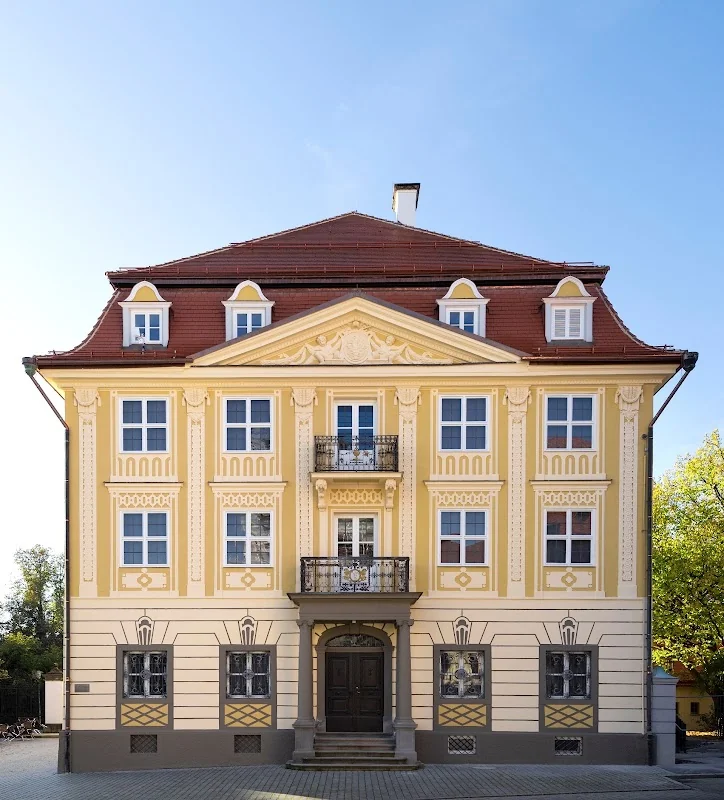
The listed Zumsteinhaus provides a special setting for this. The bourgeois palace, built in 1802, served as a residential and commercial building for the merchant family Zumstein de la Pierre, who originated from Savoy. Today, it is an open city museum that connects the past, present, and future. Eleven timeless thematic rooms, a large 3D city model, audiovisual elements, a museum café, and a shop with local products make the visit varied. Admission is free, the building is barrier-free, and certified as an inclusive cultural venue. Those looking for photos, opening hours, exhibitions, or practical tips for visiting the museum will find a centrally located and versatile point of contact at the Kempten Museum.
Kempten Museum in Zumsteinhaus: Opening Hours, Admission, and Practical Information
The most important information for your visit is: The Kempten Museum in Zumsteinhaus is open from Wednesday to Sunday from 10 AM to 6 PM. Admission to the permanent exhibition is free. This makes the museum suitable for both an extensive cultural morning and a spontaneous stop during a city stroll. Families, school classes, holiday guests, and people who want to get a brief overview of Kempten will particularly benefit from the free access.
The address is Residenzplatz 31, 87435 Kempten (Allgäu). The museum is located in a central city location, making it easy to combine with other sights. Directly opposite is the former prince-abbot's residence with its splendid rooms. The Hofgarten, the Basilica of St. Lorenz, Hildegardplatz, and the Kempten pedestrian zone are also within walking distance. Those planning their museum visit as a city tour can first visit the Kempten Museum, then explore the residence, and end the day in a café or at one of the historic squares.
For general information, the museum can be reached by phone at 0831/2525-1790. The email address is museen@kempten.de. For bookings and information about guided tours, the phone number 0831/2525-7777 is also provided. Guided tours are subject to a fee, while regular museum admission remains free. According to visitor information, standard and special tours have cost three euros per adult since January 1, 2025. Theater tours and special city tours may have different prices.
On holidays, there are partially differing opening regulations. According to official visitor information, the museum is open on Epiphany, Good Friday, Easter Sunday, Easter Monday, May 1st, Ascension Day, Whit Monday, Corpus Christi, Assumption Day, German Unity Day, All Saints' Day, and the second day of Christmas. It is closed on New Year's Day, Shrove Tuesday, Christmas Eve, Christmas Day, and New Year's Eve. Since special exhibitions and events may bring additional time changes, visitors should check the current event calendar for a specific date.
The museum sees itself as a place for everyone. The exhibition areas are accessible without barriers. The building is a member of the Museums Inclusive network and certified by Reisen für Alle. For people who need support or companionship, the museum refers to offers from the leisure exchange and the volunteer agency Oberallgäu. Thus, visitor information does not only focus on time and admission but also takes different needs into account during planning.
Photos, Images, and Visual Impressions from the Kempten Museum
Search queries such as Kempten Museum in Zumsteinhaus photos, Kempten Museum in Zumsteinhaus pictures, and images of Kempten Museum in Zumsteinhaus show that many visitors want to gain an impression of the building, rooms, and exhibition before their visit. This is particularly interesting for this museum because the character of the house arises from the interplay of historical external appearance and modern internal staging. The Zumsteinhaus appears from the outside like a representative bourgeois palace. Inside, historical traces, colorful thematic rooms, media applications, original objects, and low-threshold mediation offers come together.
Official image materials show, among other things, the exterior view of the Zumsteinhaus, the historical building ensemble, and various rooms of the permanent exhibition. Particularly striking is the area with the 3D city model. The model not only stands as a decorative object in the room but is also complemented by an audiovisual projection. This allows the development of the city to be traced in a dynamic narrative. Images from the areas of power and powerlessness, migration, health, and leisure also convey that the exhibition does not solely rely on dates or historical personalities. It asks how people in Kempten lived, worked, believed, celebrated, fought, and changed their city.
Those looking for photos for travel planning should distinguish between official museum images and private reviews. Official photos provide a reliable impression of architecture, atmosphere, and exhibition design. Private images in review portals can provide additional perspectives but are not always current and often show only individual details. For a realistic expectation, it is therefore worthwhile to combine the official shots with the information about the eleven thematic rooms and the 580 square meters of exhibition space.
Photographically appealing is also the location at Residenzplatz. The museum stands in a historical environment that already offers numerous motifs before entering: the facades of the residence, the water basin, the square layout, and the paths leading to the Hofgarten. The surroundings make it understandable why the museum does not tell its city history in isolation. Kempten is experienceable as an ensemble in the center in a confined space. A photo in front of the Zumsteinhaus, a tour through the exhibition, and a view of the residence together provide a vivid access to the city's history.
For visitors who want to take souvenir photos, consideration of the exhibition rules is important. Whether photography is allowed in individual areas and whether flash is permitted may vary from room to room or from exhibition to exhibition. For special exhibitions, the on-site instructions should be observed. This is especially true for works borrowed from other institutions or those where personal and copyright rights must be considered.
Exhibitions, Thematic Rooms, and the 3D City Model
The Kempten Museum tells more than 2,000 years of city history. On the ground floor, a walkable city map initially provides orientation. Visitors see important sights and recognize spatial relationships before delving deeper into individual themes. A timeline presents significant events from Kempten's history in the mirror of world history. The events are assigned to different areas such as culture, economy, and politics. This creates not an isolated local view but a connection between urban development and larger historical changes.
A focus of the museum is the Roman past. Kempten is considered one of the oldest cities in Germany, and Cambodunum is an important starting point for understanding the city's history. However, the exhibition does not simply lead from the Romans to a predetermined endpoint. It shows how structures, power relations, religious influences, economic forms, and everyday practices have changed over time. The history of the city thus becomes visible as a process in which different groups and interests meet.
Particularly impressive is the 3D city model on the first floor. With nine square meters, it is considered the largest city model created by 3D printing in Bavaria. It illustrates the architectural conditions of Kempten and makes the development of the place spatially comprehensible. An audiovisual show is projected onto the model, conveying important stages in fast motion. The narrative ranges from the Roman city of Cambodunum through the twin city of the Catholic collegiate city and the Protestant imperial city to today's Allgäu metropolis.
The eleven timeless thematic rooms address different areas of urban life. These include, among others, power and powerlessness, migration, health, leisure, and Kempten in space and time. This choice of themes is a significant reason why the museum is not only suitable for classic history enthusiasts. Visitors interested in everyday history, social changes, personal life paths, or the development of public spaces will also find points of connection.
Media and interactive elements support the mediation without displacing the historical objects. The Kempten Museum app offers an audio play tour and an interactive role-playing game. This allows the visit to be expanded by a digital level. For children and young people, this is particularly helpful because the city history can be not only read but also heard, viewed, and playfully explored. At the same time, the exhibition is designed so that adults can explore the themes independently and in varying depths.
The Kempten Museum also works with changing special exhibitions, lectures, workshops, and guided tours. The special exhibitions provide space for themes that go beyond the permanent exhibition or address current social questions. For the visit, it is advisable to check the event calendar, as this may result in an additional program item depending on the date. Thus, a museum tour can become a guided tour, a family workshop, or an evening of discussion.
Zumsteinhaus Kempten: History of the Listed Building
The history of the Zumsteinhaus begins in 1802. The merchant family Zumstein de la Pierre, originating from Savoy, had the representative bourgeois palace built in a central location. The building served as a residential and commercial house. The Zumstein brothers traded in textiles, particularly silk fabrics. The goods were mainly purchased in Switzerland or Northern Italy and resold to local merchants. Thus, the house already refers to trade relations, mobility, and economic connections beyond the local area in its inception.
The business operation presumably ended in 1832 with the death of one of the Zumstein brothers. In the second half of the 19th century and in the 20th century, the building was rented to various parties. However, it remained as an urbanistically significant house. In 1961 and 1962, the listed building came into the possession of the city of Kempten. After renovation, it initially housed a Roman museum and later, since the 1970s, a natural history museum.
The previous use explains why many people still associate the Zumsteinhaus with the Roman museum or the natural history museum. However, as part of the museum development, the previous contents were rethought. A working group developed the themes of Romans, twin city, and Allgäu in 2010. In May 2015, the aging museum was dissolved. Later that year, the city of Kempten announced an architectural competition for the Zumsteinhaus, thus preparing for the development of today's Kempten Museum.
Therefore, the building is not only a shell for the exhibition but itself a central museum object. On the ground floor, visitors can learn about the historical context of the house and the Zumstein family. A tactile model of the Zumsteinhaus supports spatial orientation and makes the architecture accessible to people who approach content better through tactile elements. The connection of building history and city history ensures that the museum visit begins at a specific location and does not only work with abstract data.
The term 'living room of the city' describes the Kempten Museum's ambition particularly aptly. The house does not want to be a closed storage of the past but an open place where citizens can recognize their city, ask questions, and develop new perspectives. The past is not only presented but related to the present. This concerns themes such as migration, health, leisure, and social participation as well as the historical power structures of the city.
Therefore, those visiting the Zumsteinhaus can experience two levels simultaneously. On the one hand, one sees a listed bourgeois palace with its own trade and usage history. On the other hand, one enters a modern city museum that conveys its contents in a multimedia and participatory manner. This contrast makes the place particularly special: the historical architecture creates atmosphere, while the exhibition methods facilitate access to the themes.
Access and Parking at the Kempten Museum in Zumsteinhaus
The Kempten Museum is located in the historic center at Residenzplatz. For those arriving by car, visitors should consider that there is no large event parking lot directly in front of the building, but rather an inner-city location with various public parking options. Kempten Tourism points to a parking guidance system that leads drivers to free parking spaces or the nearest parking garage. Parking is usually subject to a fee. Depending on the location, payment can be made with coins, credit card, or app.
As centrally located parking options, Kempten Tourism mentions, among others, the parking areas Pfeilergraben, Rottachstraße West, Marstall, and Kirchberg. These details serve as orientation for planning but do not replace a current check of the signage and availability. During events, markets, construction sites, or short-term closures, access in the city center may change. Those arriving at a fixed date should plan some time reserve and consider the digital parking guidance system or the current traffic situation.
The path from the parking lot to the museum leads through the city center. Residenzplatz is in an area that can be well combined with a walk. For visitors with limited mobility, the information on accessibility is particularly important. The Kempten Museum is barrier-free and tested by Reisen für Alle. Disabled parking spaces are marked in Kempten; an overview is provided by the interactive city map. Since the availability of individual parking spaces may fluctuate, a current check before arrival is also advisable.
Access by public transport is also possible. Near the center, there are bus stops, including Residenzplatz, Residenz/Pfeilergraben, and Zentrum. The specific lines and departure times may change and should be checked via the current schedule of the mona Allgäu transport association. Regular city buses run from the main train station to the transfer point Zentrum. From there, the museum is within walking distance.
For travel groups with buses, Kempten Tourism names several centrally located bus parking spaces, including An der Orangerie, at bigBOX ALLGÄU, at Illerstadion, and at Marstall. Coaches cannot generally be parked directly in front of the museum. Therefore, for groups, it is advisable to coordinate entry and exit options in advance. The museum offers guided tours and bookable mediation offers, allowing groups to prepare their visit well organizationally.
The central location is an advantage despite the parking issue. Those arriving by car can combine the museum visit with other destinations and leave the vehicle afterward. Around Residenzplatz, there are historical squares, dining options, and paths leading into the pedestrian zone. Therefore, the visit does not have to end with searching for parking but can be planned as part of a longer day in Kempten.
Guided Tours, Family Offers, and Events at the Kempten Museum
The Kempten Museum caters to different target groups and offers a changing program in addition to the permanent exhibition. Regularly, guided tours, workshops, and lectures take place. A guided tour can be particularly useful if visitors want to deepen their understanding of the historical connections between the Roman era, the twin city, and the present. It also opens up the opportunity to ask questions and notice details that can easily be overlooked during a self-guided tour.
For families, the combination of interactive exhibition, 3D city model, and digital offerings is interesting. Children do not need to be introduced to history through long texts but can use spatial models, audiovisual elements, and thematic rooms. The Kempten Museum app complements the visit with an audio play tour and an interactive role-playing game. Depending on age, the family can complete the tour together or choose different stations.
An example of a family-oriented offer is the Halloween slime workshop. According to the current official announcement, it is scheduled for Saturday, October 31, 2026, for children aged six and older. Two time slots are planned from 10 AM to 12 PM and from 1 PM to 3 PM. Children can make slime, decorate it with glitter, spider, and skull confetti, and make it glow in the dark with a suitable ingredient. The self-made Halloween slime can then be taken home. Participation costs eight euros, including three euros for materials; registration is required.
Such events show that the museum conveys history and cultural education not only through classic guided tours. A workshop can combine scientific experimentation, creative design, and a visit to a historical house. Even if the Halloween slime is not directly a historical theme of the city's history, the format fits the museum's self-understanding as an open learning and meeting place.
For adults, public guided tours and special events are part of the regular offering. Fees vary depending on the format. Standard and special tours are charged three euros per adult according to visitor information. Theater tours cost five euros per adult. A city tour on the NS history of Kempten is listed at nine euros per adult. Since prices and dates may change, the official website should be used for a specific booking.
The museum café is also part of the visit experience. On the ground floor, guests can enjoy coffee or tea in the salon. Small snacks, pretzels, and various cakes are also offered. In the museum shop, selected Kempten products are available, including drinks, coffee, books, and small souvenirs like the Zumstein mouse. This allows the museum visit to conclude in a calm atmosphere or to start with a short stay in the building.
Why a Visit to the Kempten Museum in Zumsteinhaus is Worthwhile
The Kempten Museum is a good address for all who want to get to know Kempten not just through sights while passing by. The exhibition explains how the Roman city of Cambodunum became a historically divided twin city and finally the modern Allgäu metropolis. At the same time, it does not stop at major political lines but asks about the lives of the people. Themes such as migration, health, and leisure make the city history relatable to contemporary experiences.
Another advantage is the free admission. Visitors can decide for themselves how much time they want to invest. For a first overview, a shorter tour through the ground floor and the city model is sufficient. Those who want to delve deeper can explore the thematic rooms at their leisure, use the app, book a guided tour, or participate in an event. The combination of a free permanent exhibition and supplementary offerings makes the museum interesting for locals as well as for guests of the city.
The building itself enhances the impact of the exhibition. The Zumsteinhaus tells of trade, the bourgeoisie, and urban development. Its history is closely linked to the question of how Kempten preserves and makes cultural heritage accessible anew. The visit therefore leads not only through a collection but through a historical house that has had different functions over time. This connection of architecture and exhibition is an important difference from a museum in a neutral new building.
The location at Residenzplatz also provides a strong framework for a whole cultural day. Opposite is the former residence, whose splendid rooms can be visited as part of guided tours. In the vicinity are the Basilica of St. Lorenz, the Hofgarten, historic squares, and the city center. Those interested in Kempten Museum photos or images of the Zumsteinhaus will therefore find not only interior shots but a diverse urban environment with baroque architecture, green spaces, and central paths.
For families, the low-threshold access, the app, and the workshops are important plus points. For older visitors or people with disabilities, the tested accessibility offers additional security in planning. For history enthusiasts, the 3D city model, the timeline, and the thematic rooms are central highlights. For spontaneous visitors, the free admission is crucial. Hardly any other place combines all these advantages so concentrated.
Those visiting the Kempten Museum should not only look for the most famous individual object. The strength of the house lies in the interplay. The 3D model explains the space, the timeline arranges the time, the thematic rooms show social experiences, the digital offerings create additional perspectives, and the Zumsteinhaus gives the tour a historical atmosphere. Thus, a museum experience is created that remains informative, vivid, and open to different interests.
For planning, it is advisable to check the opening hours, the event calendar, and possible special exhibitions before the visit. Those arriving by car should plan for inner-city parking options and a short walk. Those wanting to take photos can use the official image galleries and observe the rules on-site. Those wanting to learn more can book a guided tour or a workshop. And those who only have an hour can still gain a meaningful impression of Kempten's 2,000-year history.
Sources:
- Kempten Museum in Zumsteinhaus - Official Website
- Kempten Museum - Visitor Information, Opening Hours, and Admission
- Kempten Museum - History of the Zumsteinhaus
- Kempten Museum - Kempten in Space and Time
- Kempten Tourism - Kempten Museum in Zumsteinhaus
- Kempten Tourism - Parking in Kempten
- Kempten Museum - Halloween Slime Workshop
- Kempten Tourism - Historical Squares and Residenzplatz
Mehr anzeigenWeniger anzeigen
Kempten Museum in Zumsteinhaus | Opening Hours & Photos
The Kempten Museum in Zumsteinhaus combines historical architecture with a contemporary, interactive presentation of the city's history. Located at Residenzplatz 31, directly opposite the Kempten Residence, visitors can experience how Kempten has developed from the Roman city of Cambodunum through the confessionally divided twin city to today's Allgäu metropolis over approximately 580 square meters. The permanent exhibition is not designed as a linear sequence of showcases but as a lively tour through themes, living environments, and perspectives.
The listed Zumsteinhaus provides a special setting for this. The bourgeois palace, built in 1802, served as a residential and commercial building for the merchant family Zumstein de la Pierre, who originated from Savoy. Today, it is an open city museum that connects the past, present, and future. Eleven timeless thematic rooms, a large 3D city model, audiovisual elements, a museum café, and a shop with local products make the visit varied. Admission is free, the building is barrier-free, and certified as an inclusive cultural venue. Those looking for photos, opening hours, exhibitions, or practical tips for visiting the museum will find a centrally located and versatile point of contact at the Kempten Museum.
Kempten Museum in Zumsteinhaus: Opening Hours, Admission, and Practical Information
The most important information for your visit is: The Kempten Museum in Zumsteinhaus is open from Wednesday to Sunday from 10 AM to 6 PM. Admission to the permanent exhibition is free. This makes the museum suitable for both an extensive cultural morning and a spontaneous stop during a city stroll. Families, school classes, holiday guests, and people who want to get a brief overview of Kempten will particularly benefit from the free access.
The address is Residenzplatz 31, 87435 Kempten (Allgäu). The museum is located in a central city location, making it easy to combine with other sights. Directly opposite is the former prince-abbot's residence with its splendid rooms. The Hofgarten, the Basilica of St. Lorenz, Hildegardplatz, and the Kempten pedestrian zone are also within walking distance. Those planning their museum visit as a city tour can first visit the Kempten Museum, then explore the residence, and end the day in a café or at one of the historic squares.
For general information, the museum can be reached by phone at 0831/2525-1790. The email address is museen@kempten.de. For bookings and information about guided tours, the phone number 0831/2525-7777 is also provided. Guided tours are subject to a fee, while regular museum admission remains free. According to visitor information, standard and special tours have cost three euros per adult since January 1, 2025. Theater tours and special city tours may have different prices.
On holidays, there are partially differing opening regulations. According to official visitor information, the museum is open on Epiphany, Good Friday, Easter Sunday, Easter Monday, May 1st, Ascension Day, Whit Monday, Corpus Christi, Assumption Day, German Unity Day, All Saints' Day, and the second day of Christmas. It is closed on New Year's Day, Shrove Tuesday, Christmas Eve, Christmas Day, and New Year's Eve. Since special exhibitions and events may bring additional time changes, visitors should check the current event calendar for a specific date.
The museum sees itself as a place for everyone. The exhibition areas are accessible without barriers. The building is a member of the Museums Inclusive network and certified by Reisen für Alle. For people who need support or companionship, the museum refers to offers from the leisure exchange and the volunteer agency Oberallgäu. Thus, visitor information does not only focus on time and admission but also takes different needs into account during planning.
Photos, Images, and Visual Impressions from the Kempten Museum
Search queries such as Kempten Museum in Zumsteinhaus photos, Kempten Museum in Zumsteinhaus pictures, and images of Kempten Museum in Zumsteinhaus show that many visitors want to gain an impression of the building, rooms, and exhibition before their visit. This is particularly interesting for this museum because the character of the house arises from the interplay of historical external appearance and modern internal staging. The Zumsteinhaus appears from the outside like a representative bourgeois palace. Inside, historical traces, colorful thematic rooms, media applications, original objects, and low-threshold mediation offers come together.
Official image materials show, among other things, the exterior view of the Zumsteinhaus, the historical building ensemble, and various rooms of the permanent exhibition. Particularly striking is the area with the 3D city model. The model not only stands as a decorative object in the room but is also complemented by an audiovisual projection. This allows the development of the city to be traced in a dynamic narrative. Images from the areas of power and powerlessness, migration, health, and leisure also convey that the exhibition does not solely rely on dates or historical personalities. It asks how people in Kempten lived, worked, believed, celebrated, fought, and changed their city.
Those looking for photos for travel planning should distinguish between official museum images and private reviews. Official photos provide a reliable impression of architecture, atmosphere, and exhibition design. Private images in review portals can provide additional perspectives but are not always current and often show only individual details. For a realistic expectation, it is therefore worthwhile to combine the official shots with the information about the eleven thematic rooms and the 580 square meters of exhibition space.
Photographically appealing is also the location at Residenzplatz. The museum stands in a historical environment that already offers numerous motifs before entering: the facades of the residence, the water basin, the square layout, and the paths leading to the Hofgarten. The surroundings make it understandable why the museum does not tell its city history in isolation. Kempten is experienceable as an ensemble in the center in a confined space. A photo in front of the Zumsteinhaus, a tour through the exhibition, and a view of the residence together provide a vivid access to the city's history.
For visitors who want to take souvenir photos, consideration of the exhibition rules is important. Whether photography is allowed in individual areas and whether flash is permitted may vary from room to room or from exhibition to exhibition. For special exhibitions, the on-site instructions should be observed. This is especially true for works borrowed from other institutions or those where personal and copyright rights must be considered.
Exhibitions, Thematic Rooms, and the 3D City Model
The Kempten Museum tells more than 2,000 years of city history. On the ground floor, a walkable city map initially provides orientation. Visitors see important sights and recognize spatial relationships before delving deeper into individual themes. A timeline presents significant events from Kempten's history in the mirror of world history. The events are assigned to different areas such as culture, economy, and politics. This creates not an isolated local view but a connection between urban development and larger historical changes.
A focus of the museum is the Roman past. Kempten is considered one of the oldest cities in Germany, and Cambodunum is an important starting point for understanding the city's history. However, the exhibition does not simply lead from the Romans to a predetermined endpoint. It shows how structures, power relations, religious influences, economic forms, and everyday practices have changed over time. The history of the city thus becomes visible as a process in which different groups and interests meet.
Particularly impressive is the 3D city model on the first floor. With nine square meters, it is considered the largest city model created by 3D printing in Bavaria. It illustrates the architectural conditions of Kempten and makes the development of the place spatially comprehensible. An audiovisual show is projected onto the model, conveying important stages in fast motion. The narrative ranges from the Roman city of Cambodunum through the twin city of the Catholic collegiate city and the Protestant imperial city to today's Allgäu metropolis.
The eleven timeless thematic rooms address different areas of urban life. These include, among others, power and powerlessness, migration, health, leisure, and Kempten in space and time. This choice of themes is a significant reason why the museum is not only suitable for classic history enthusiasts. Visitors interested in everyday history, social changes, personal life paths, or the development of public spaces will also find points of connection.
Media and interactive elements support the mediation without displacing the historical objects. The Kempten Museum app offers an audio play tour and an interactive role-playing game. This allows the visit to be expanded by a digital level. For children and young people, this is particularly helpful because the city history can be not only read but also heard, viewed, and playfully explored. At the same time, the exhibition is designed so that adults can explore the themes independently and in varying depths.
The Kempten Museum also works with changing special exhibitions, lectures, workshops, and guided tours. The special exhibitions provide space for themes that go beyond the permanent exhibition or address current social questions. For the visit, it is advisable to check the event calendar, as this may result in an additional program item depending on the date. Thus, a museum tour can become a guided tour, a family workshop, or an evening of discussion.
Zumsteinhaus Kempten: History of the Listed Building
The history of the Zumsteinhaus begins in 1802. The merchant family Zumstein de la Pierre, originating from Savoy, had the representative bourgeois palace built in a central location. The building served as a residential and commercial house. The Zumstein brothers traded in textiles, particularly silk fabrics. The goods were mainly purchased in Switzerland or Northern Italy and resold to local merchants. Thus, the house already refers to trade relations, mobility, and economic connections beyond the local area in its inception.
The business operation presumably ended in 1832 with the death of one of the Zumstein brothers. In the second half of the 19th century and in the 20th century, the building was rented to various parties. However, it remained as an urbanistically significant house. In 1961 and 1962, the listed building came into the possession of the city of Kempten. After renovation, it initially housed a Roman museum and later, since the 1970s, a natural history museum.
The previous use explains why many people still associate the Zumsteinhaus with the Roman museum or the natural history museum. However, as part of the museum development, the previous contents were rethought. A working group developed the themes of Romans, twin city, and Allgäu in 2010. In May 2015, the aging museum was dissolved. Later that year, the city of Kempten announced an architectural competition for the Zumsteinhaus, thus preparing for the development of today's Kempten Museum.
Therefore, the building is not only a shell for the exhibition but itself a central museum object. On the ground floor, visitors can learn about the historical context of the house and the Zumstein family. A tactile model of the Zumsteinhaus supports spatial orientation and makes the architecture accessible to people who approach content better through tactile elements. The connection of building history and city history ensures that the museum visit begins at a specific location and does not only work with abstract data.
The term 'living room of the city' describes the Kempten Museum's ambition particularly aptly. The house does not want to be a closed storage of the past but an open place where citizens can recognize their city, ask questions, and develop new perspectives. The past is not only presented but related to the present. This concerns themes such as migration, health, leisure, and social participation as well as the historical power structures of the city.
Therefore, those visiting the Zumsteinhaus can experience two levels simultaneously. On the one hand, one sees a listed bourgeois palace with its own trade and usage history. On the other hand, one enters a modern city museum that conveys its contents in a multimedia and participatory manner. This contrast makes the place particularly special: the historical architecture creates atmosphere, while the exhibition methods facilitate access to the themes.
Access and Parking at the Kempten Museum in Zumsteinhaus
The Kempten Museum is located in the historic center at Residenzplatz. For those arriving by car, visitors should consider that there is no large event parking lot directly in front of the building, but rather an inner-city location with various public parking options. Kempten Tourism points to a parking guidance system that leads drivers to free parking spaces or the nearest parking garage. Parking is usually subject to a fee. Depending on the location, payment can be made with coins, credit card, or app.
As centrally located parking options, Kempten Tourism mentions, among others, the parking areas Pfeilergraben, Rottachstraße West, Marstall, and Kirchberg. These details serve as orientation for planning but do not replace a current check of the signage and availability. During events, markets, construction sites, or short-term closures, access in the city center may change. Those arriving at a fixed date should plan some time reserve and consider the digital parking guidance system or the current traffic situation.
The path from the parking lot to the museum leads through the city center. Residenzplatz is in an area that can be well combined with a walk. For visitors with limited mobility, the information on accessibility is particularly important. The Kempten Museum is barrier-free and tested by Reisen für Alle. Disabled parking spaces are marked in Kempten; an overview is provided by the interactive city map. Since the availability of individual parking spaces may fluctuate, a current check before arrival is also advisable.
Access by public transport is also possible. Near the center, there are bus stops, including Residenzplatz, Residenz/Pfeilergraben, and Zentrum. The specific lines and departure times may change and should be checked via the current schedule of the mona Allgäu transport association. Regular city buses run from the main train station to the transfer point Zentrum. From there, the museum is within walking distance.
For travel groups with buses, Kempten Tourism names several centrally located bus parking spaces, including An der Orangerie, at bigBOX ALLGÄU, at Illerstadion, and at Marstall. Coaches cannot generally be parked directly in front of the museum. Therefore, for groups, it is advisable to coordinate entry and exit options in advance. The museum offers guided tours and bookable mediation offers, allowing groups to prepare their visit well organizationally.
The central location is an advantage despite the parking issue. Those arriving by car can combine the museum visit with other destinations and leave the vehicle afterward. Around Residenzplatz, there are historical squares, dining options, and paths leading into the pedestrian zone. Therefore, the visit does not have to end with searching for parking but can be planned as part of a longer day in Kempten.
Guided Tours, Family Offers, and Events at the Kempten Museum
The Kempten Museum caters to different target groups and offers a changing program in addition to the permanent exhibition. Regularly, guided tours, workshops, and lectures take place. A guided tour can be particularly useful if visitors want to deepen their understanding of the historical connections between the Roman era, the twin city, and the present. It also opens up the opportunity to ask questions and notice details that can easily be overlooked during a self-guided tour.
For families, the combination of interactive exhibition, 3D city model, and digital offerings is interesting. Children do not need to be introduced to history through long texts but can use spatial models, audiovisual elements, and thematic rooms. The Kempten Museum app complements the visit with an audio play tour and an interactive role-playing game. Depending on age, the family can complete the tour together or choose different stations.
An example of a family-oriented offer is the Halloween slime workshop. According to the current official announcement, it is scheduled for Saturday, October 31, 2026, for children aged six and older. Two time slots are planned from 10 AM to 12 PM and from 1 PM to 3 PM. Children can make slime, decorate it with glitter, spider, and skull confetti, and make it glow in the dark with a suitable ingredient. The self-made Halloween slime can then be taken home. Participation costs eight euros, including three euros for materials; registration is required.
Such events show that the museum conveys history and cultural education not only through classic guided tours. A workshop can combine scientific experimentation, creative design, and a visit to a historical house. Even if the Halloween slime is not directly a historical theme of the city's history, the format fits the museum's self-understanding as an open learning and meeting place.
For adults, public guided tours and special events are part of the regular offering. Fees vary depending on the format. Standard and special tours are charged three euros per adult according to visitor information. Theater tours cost five euros per adult. A city tour on the NS history of Kempten is listed at nine euros per adult. Since prices and dates may change, the official website should be used for a specific booking.
The museum café is also part of the visit experience. On the ground floor, guests can enjoy coffee or tea in the salon. Small snacks, pretzels, and various cakes are also offered. In the museum shop, selected Kempten products are available, including drinks, coffee, books, and small souvenirs like the Zumstein mouse. This allows the museum visit to conclude in a calm atmosphere or to start with a short stay in the building.
Why a Visit to the Kempten Museum in Zumsteinhaus is Worthwhile
The Kempten Museum is a good address for all who want to get to know Kempten not just through sights while passing by. The exhibition explains how the Roman city of Cambodunum became a historically divided twin city and finally the modern Allgäu metropolis. At the same time, it does not stop at major political lines but asks about the lives of the people. Themes such as migration, health, and leisure make the city history relatable to contemporary experiences.
Another advantage is the free admission. Visitors can decide for themselves how much time they want to invest. For a first overview, a shorter tour through the ground floor and the city model is sufficient. Those who want to delve deeper can explore the thematic rooms at their leisure, use the app, book a guided tour, or participate in an event. The combination of a free permanent exhibition and supplementary offerings makes the museum interesting for locals as well as for guests of the city.
The building itself enhances the impact of the exhibition. The Zumsteinhaus tells of trade, the bourgeoisie, and urban development. Its history is closely linked to the question of how Kempten preserves and makes cultural heritage accessible anew. The visit therefore leads not only through a collection but through a historical house that has had different functions over time. This connection of architecture and exhibition is an important difference from a museum in a neutral new building.
The location at Residenzplatz also provides a strong framework for a whole cultural day. Opposite is the former residence, whose splendid rooms can be visited as part of guided tours. In the vicinity are the Basilica of St. Lorenz, the Hofgarten, historic squares, and the city center. Those interested in Kempten Museum photos or images of the Zumsteinhaus will therefore find not only interior shots but a diverse urban environment with baroque architecture, green spaces, and central paths.
For families, the low-threshold access, the app, and the workshops are important plus points. For older visitors or people with disabilities, the tested accessibility offers additional security in planning. For history enthusiasts, the 3D city model, the timeline, and the thematic rooms are central highlights. For spontaneous visitors, the free admission is crucial. Hardly any other place combines all these advantages so concentrated.
Those visiting the Kempten Museum should not only look for the most famous individual object. The strength of the house lies in the interplay. The 3D model explains the space, the timeline arranges the time, the thematic rooms show social experiences, the digital offerings create additional perspectives, and the Zumsteinhaus gives the tour a historical atmosphere. Thus, a museum experience is created that remains informative, vivid, and open to different interests.
For planning, it is advisable to check the opening hours, the event calendar, and possible special exhibitions before the visit. Those arriving by car should plan for inner-city parking options and a short walk. Those wanting to take photos can use the official image galleries and observe the rules on-site. Those wanting to learn more can book a guided tour or a workshop. And those who only have an hour can still gain a meaningful impression of Kempten's 2,000-year history.
Sources:
- Kempten Museum in Zumsteinhaus - Official Website
- Kempten Museum - Visitor Information, Opening Hours, and Admission
- Kempten Museum - History of the Zumsteinhaus
- Kempten Museum - Kempten in Space and Time
- Kempten Tourism - Kempten Museum in Zumsteinhaus
- Kempten Tourism - Parking in Kempten
- Kempten Museum - Halloween Slime Workshop
- Kempten Tourism - Historical Squares and Residenzplatz
Upcoming Events
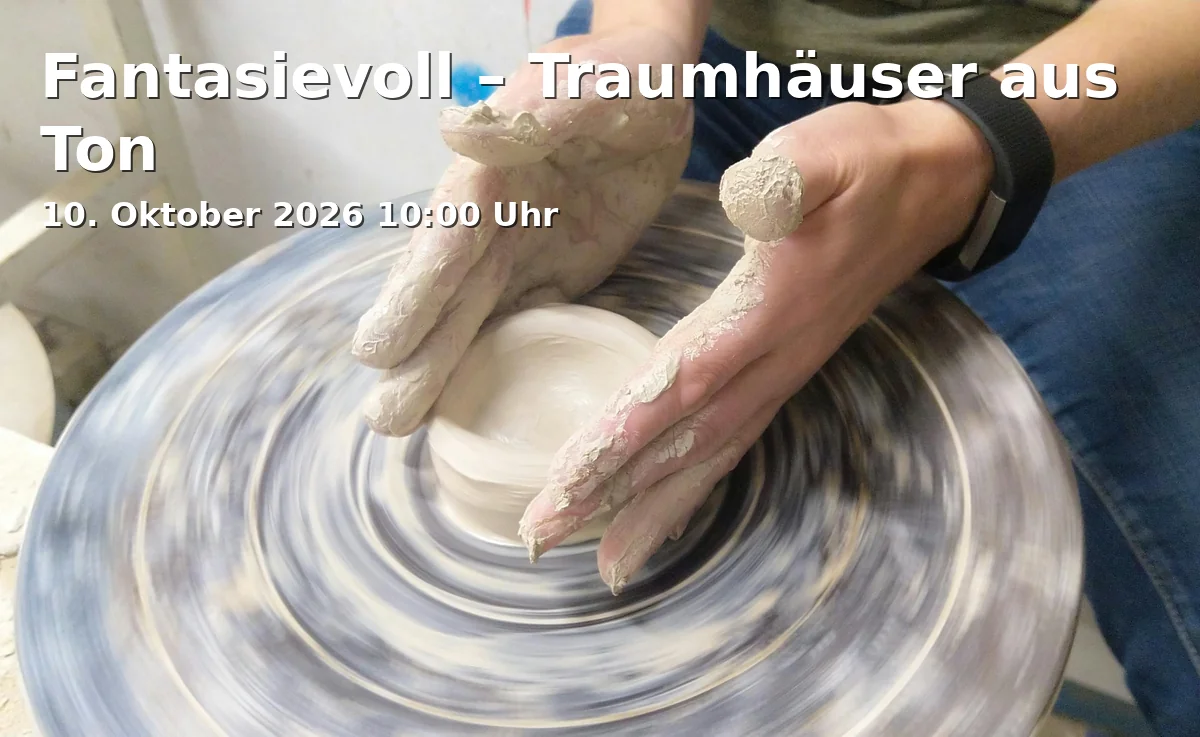
Imaginative – Dream Houses from Clay
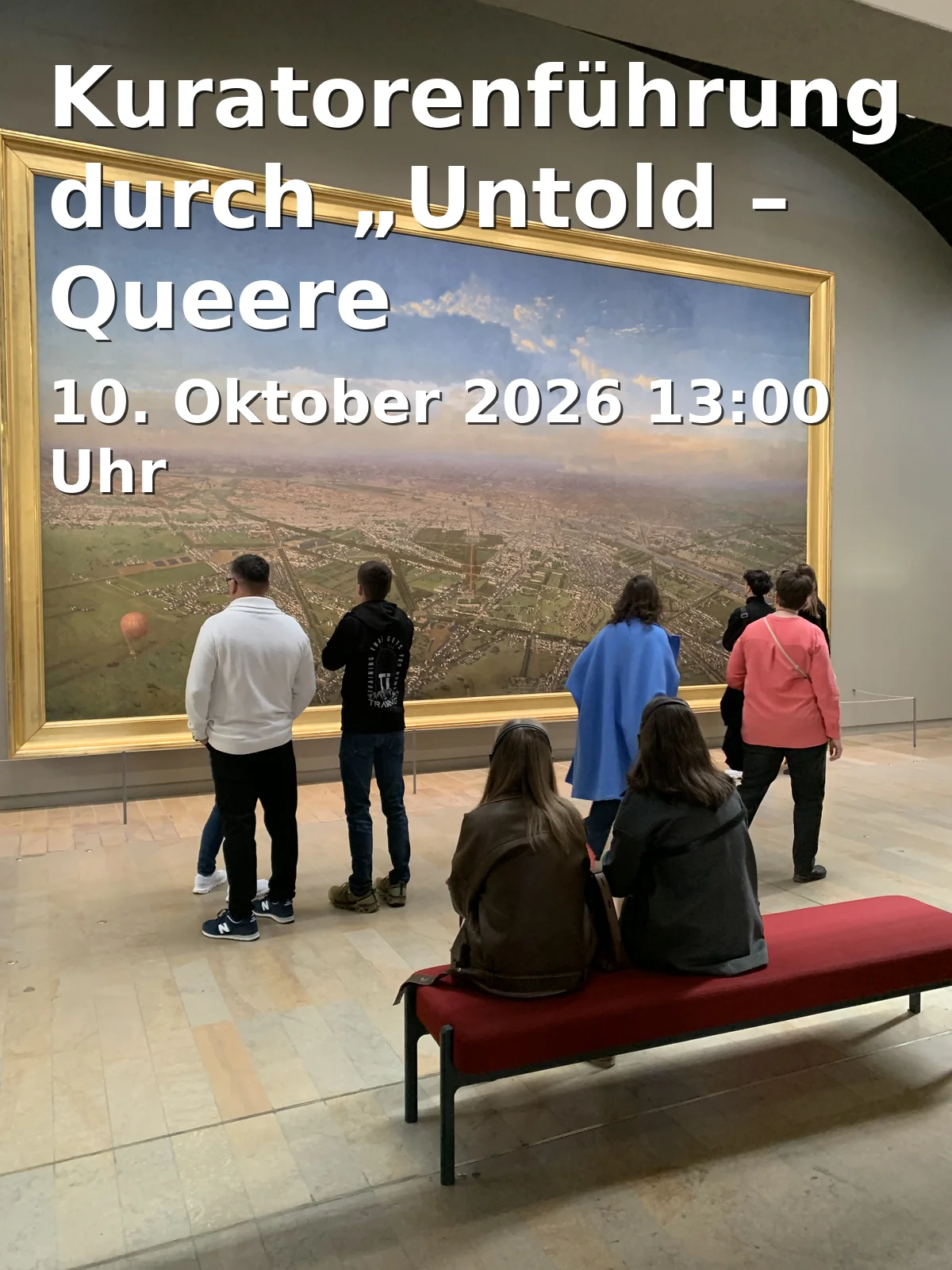
Curator's Tour of “Untold – Queer Stories from Allgäu”

Boys of Today, Men of Tomorrow – Reading by Anne Dittmann
Frequently Asked Questions
Reviews
No reviews found