
Kempten (Allgäu)
In d. Brandstatt, 87437 Kempten (Allgäu), Deutschland
Kempten (Allgäu) Old Town | Photos & Attractions
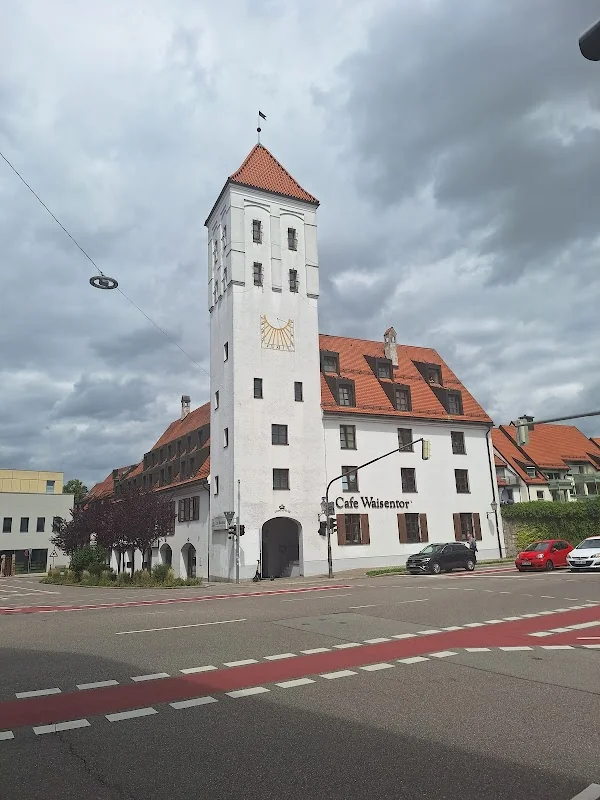
The Kempten (Allgäu) Old Town is a place for everyone who wants to experience history not just by reading, but by walking, looking, and lingering. With 4.6 stars from 375 reviews, it seems popular to visitors at first glance, but its true charm unfolds in the details: in squares with history, in baroque sightlines, between churches, museums, cafés, and the short paths of a city center that has grown over centuries. Kempten is one of the oldest cities in Germany and boasts over 2,000 years of city history. This is felt during the first walk through the Old Town, where memories of the Imperial City, Abbey City, and Double City are still reflected in the urban landscape. Those who want to discover Kempten will find here not a backdrop without life, but a real urban space where everyday life, culture, shopping, and enjoyment are closely intertwined. The Old Town is thus both a sight, a meeting place, a shopping address, and a starting point for a whole day full of impressions. Particularly attractive is that the main stations are close together. This makes the Old Town especially accessible for families, couples, day visitors, and anyone who wants to take photos of historic facades, fountains, and squares. ([kempten-tourismus.de](https://www.kempten-tourismus.de/kempten-museum-im-zumsteinhaus?utm_source=openai))
Old Town Kempten: History between Imperial City and Abbey City
The historical significance of Kempten's Old Town lies in its extraordinary development. For centuries, Kempten existed as a double city made up of the Catholic Abbey City and the Protestant Imperial City. This tension between spiritual authority and civic independence has profoundly shaped the appearance of today's Old Town. Even today, these historical layers can be recognized in the urban landscape, especially in the squares and buildings that define the character of the center. The official city description reminds us that Kempten has a particularly long history and that the Old Town makes this long settlement and urban development visible. A visit is therefore more than just a walk through pretty alleys: it is a small journey through several centuries of city history. This is particularly evident in the transition between sacred and secular places, in representative facades, and in open squares that were once centers of power and are now meeting spaces. Among the most important historical reference points is the St. Mang Church, the oldest Protestant-Lutheran church in the city. Also central is the Residence, where a Benedictine monastery was founded around 750. After its destruction in the Thirty Years' War, a new building was constructed there in the 17th century, which is considered the first baroque monastery complex in Germany. This gives the Old Town a special depth, as here not only individual monuments stand, but entire historical narratives intertwine. Another key to understanding the Old Town is the Kempten Museum in the Zumsteinhaus. It is located in direct proximity to the Residence, tells the city’s history in a multimedia way, and leads through eleven themed rooms from Roman times to the present. The museum ideally complements the walk through the Old Town because it places the visible buildings and squares in a historical context. This way, one understands why Kempten not only has a pretty center, but an urban landscape with two very different roots. Those interested in photos, architecture, and urban development will find plenty of material for a whole day here. And those visiting the Old Town for the first time will quickly notice: precisely because history remains so tangible, Kempten feels authentic and vibrant at the same time. ([kempten-tourismus.de](https://www.kempten-tourismus.de/kempten-museum-im-zumsteinhaus?utm_source=openai))
Town Hall Square, St. Mang Square, and Residence Square: The Most Beautiful Squares
When Kempten's Old Town is mentioned, the squares play the main role. The Town Hall Square is located in the heart of the Allgäu metropolis and is characterized by the historic Town Hall, which is particularly worth seeing with its details on the facade. Even during the time of the double city, the Town Hall Square was the center of the Imperial City; today it is primarily a meeting place, a place to stay, and an event venue. Around the square, cafés and restaurants invite you to linger, and for this reason, the Town Hall Square is one of the best addresses for anyone who wants to combine Old Town café, city life, and historic backdrop. Large events also take place here, including the Kempten Christmas Market, the city festival, and the opening of the Kempten Jazz Spring. Those seeking a lively urban atmosphere will find it particularly dense in this square. Just a few steps away is St. Mang Square with the church of the same name, the St. Mang Fountain in Art Nouveau style, and the entrance to the underground exhibition space Erasmus Chapel. The bronze band marking the former chapel and the bronze plaque also make the area a small history book under the open sky. Particularly exciting is the Mühlberg ensemble with the houses St. Mang Square 8, 10, and 12; house number 12 is considered the oldest in Kempten. Additionally, the listed Red House at number 3 complements the square architecturally. The Residence Square, in turn, lies directly in front of the prince-abbot's residence and represents the baroque side of Kempten. Here, fountains, steps, and sightlines remind us of the former splendor of the Abbey City. Today, the Residence is used as a district and regional court, but the state rooms can be visited as part of a guided tour, providing an impressive picture of the past with the festive hall, throne room, and Rococo details. Additionally, the Abbey Square is worth visiting, which is considered an ideal starting point for a tour of the Abbey City. From here, the Residence, the Basilica of St. Lorenz, and the Kempten Museum can be easily reached. These three squares together form the heart of the Old Town. Those who connect them peacefully on foot experience the historical center of Kempten not only as a sight but as a vibrant urban space with character, gastronomy, and palpable history. ([kempten-tourismus.de](https://www.kempten-tourismus.de/plaetze))
Parking and Access in Kempten's Old Town
For a relaxed visit to Kempten's Old Town, getting there is surprisingly uncomplicated, as the city offers a well-developed system of parking spaces, parking garages, and transport connections. Those arriving by car are guided by a parking guidance system to available spaces or the nearest parking garage. The most important parking lots and garages are located near the city center, so the walk to Town Hall Square, St. Mang Square, or Residence Square is usually short. In general, parking is subject to fees, and payment can be made depending on the area with coins, credit card, or via app. For visitors with electric cars, there are also charging stations in some public parking lots and various parking garages. This makes the Old Town attractive for guests who want to plan their stay flexibly and modernly. Particularly practical is that the Old Town is not only geared towards drivers: there are centrally located and free bus parking spaces available for tour buses, which often serve as meeting points for group tours. Those traveling with a motorhome can use the newly opened Kempten motorhome site at the Iller with 38 parking spaces since July 2025; day visitors with motorhomes can alternatively purchase a day parking ticket at the public parking lot Illerdamm. Even easier is the access by public transport. The Zentrum stop is within walking distance from the Tourist Information and is an important transfer point for local and regional buses. Additionally, ring bus lines operate, and in the evening, the late bus ensures that guests can comfortably return after a restaurant, theater, or city center visit. Those who prefer to cycle will find a bike box with lockers, charging options for e-bike batteries, and a repair column in Grabengasse. For the Old Town itself, this means: one does not have to choose between comfort and sustainability, but can choose the appropriate means of transport depending on the day's plan. This is ideal for a day trip because one can connect the Old Town, the museums, the squares, and the gastronomy without much organizational effort. The combination of the parking guidance system, centrally located parking garages, bus connections, and short walking distances is a real plus for the entire city center. ([kempten-tourismus.de](https://www.kempten-tourismus.de/parken))
Cafés, Restaurants, and Shopping in the Pedestrian Zone
Kempten's Old Town is not only historically interesting but also a very lively place for shopping, dining, and strolling. The official tourism site describes Kempten as the number one shopping city in the Allgäu and emphasizes that the pedestrian zone is among the longest in all of Swabia. This is precisely what gives it its charm: between Hildegardplatz, Residence Square, and the area around Forum Allgäu, a city center stretches where specialty shops, boutiques, regional stores, restaurants, and cafés follow closely one after the other. For all those looking for old town café Kempten Allgäu, this is particularly attractive because one can easily combine historic backdrop and modern gastronomy here. Around the Town Hall Square, guests sit in front of the historic Town Hall, while at Hildegardplatz, Stiftsplatz, and along the adjacent areas, more cafés and restaurants invite you to linger. Hildegardplatz is also an important meeting point for the weekly market, which takes place there every Wednesday and Saturday. This adds extra life, freshness, and regional atmosphere during the day. Those who enjoy browsing will find not only retail in the Old Town but also the Forum Allgäu Kempten, which is considered the largest shopping center in the Allgäu with around 23,000 square meters of retail space. This creates an exciting mix of classic city center and modern shopping. Visitors who want to take photos of bustling streets, shop windows, fountains, and people will find very different motifs here. The Old Town is also diverse in culinary offerings: from a quick coffee to lunch to a cozy dinner, everything is possible. Particularly pleasant is that the paths remain short, and one can easily combine a visit to the museum, a city stroll, and a break in a café. Therefore, those spending half or a whole day in Kempten experience the Old Town not only as a monument zone but as a functioning, modern center with a high quality of stay. This mixture of history and everyday life makes Kempten so appealing to many guests. People come for the Old Town, stay for the atmosphere, and often return because of the diverse squares, shops, and restaurants. ([kempten-tourismus.de](https://www.kempten-tourismus.de/en/shopping-experience?utm_source=openai))
Photos, Viewpoints, and Excursions around the Old Town
Those looking for pictures of Kempten (Allgäu) Old Town will find very different motifs around the center. The historic squares are particularly photogenic in the morning or late afternoon when the light softly falls on the Town Hall facade, fountains, cobblestones, and churches. St. Mang Square offers many details in a small space with the church, fountain, Erasmus Chapel, and the Mühlberg ensemble. The Residence Square impresses with its baroque effect, generous spaces, and connection to the Residence and the Basilica of St. Lorenz. The paths between these places are also suitable for quiet city shots because there, historical architecture and a lively pedestrian zone meet directly. Even more panoramic views are offered by the Burghalde. From the elevation about 700 meters above sea level in the Old Town, a wide view opens up over Kempten, the Alpine chain, and the foothills of the Alps. At the same time, the Allgäu Castle Museum, a playground, a viewpoint, a beer garden, and an open-air stage are located there. Especially in summer, this is an ideal place to combine a visit to the Old Town with a break above the rooftops of the city. Also exciting for photos and discovery tours is the Old Town Park directly on the Iller, on the site of the former gas works near the Burghalde. The park has a small play area, seating, and the Iller steps and is well suited as a quiet contrast to the lively center. Those exploring the Old Town longer can also complement their walk with the Archaeological Park Cambodunum, which is considered the largest Roman park in southern Germany and impressively makes the Roman history of the city visible. This creates a rounded route from the medieval-baroque city center to the ancient roots of Kempten. For photo fans, this is particularly appealing because it allows capturing very different moods: historic squares, views over the city, river proximity, and Roman archaeology. The Old Town is therefore not only a destination for a short city stroll but also an ideal starting point for a whole day full of motifs. Those who plan well start at the Town Hall Square, continue to St. Mang Square, switch to Residence Square, take a break at Hildegardplatz, go up to Burghalde, and end the day down by the Iller. This is how Kempten shows itself in its most versatile form. ([kempten-tourismus.de](https://www.kempten-tourismus.de/parks?utm_source=openai))
Sources:
- Kempten Tourism – Kempten Museum in Zumsteinhaus ([kempten-tourismus.de](https://www.kempten-tourismus.de/kempten-museum-im-zumsteinhaus?utm_source=openai))
- Kempten Tourism – Squares in Kempten ([kempten-tourismus.de](https://www.kempten-tourismus.de/plaetze))
- Kempten Tourism – Parking in Kempten ([kempten-tourismus.de](https://www.kempten-tourismus.de/parken))
- Kempten Tourism – Mobility & Public Transport ([kempten-tourismus.de](https://www.kempten-tourismus.de/mobilitaet-oepnv))
- Kempten Tourism – Church of St Mang ([kempten-tourismus.de](https://www.kempten-tourismus.de/en/church-of-st-mang?utm_source=openai))
- Kempten Tourism – State Rooms of the Residence ([kempten-tourismus.de](https://www.kempten-tourismus.de/en/state-rooms-residenz?utm_source=openai))
- Kempten Tourism – Shopping experience ([kempten-tourismus.de](https://www.kempten-tourismus.de/en/shopping-experience?utm_source=openai))
- Kempten Tourism – Parks / Old Town Park & Burghalde ([kempten-tourismus.de](https://www.kempten-tourismus.de/parks?utm_source=openai))
- Kempten Tourism – Allgäu Castle Museum / Burghalde ([kempten-tourismus.de](https://www.kempten-tourismus.de/burgenmuseum?utm_source=openai))
- Kempten Tourism – Archaeological Park Cambodunum ([kempten-tourismus.de](https://www.kempten-tourismus.de/archaeologischer-park-cambodunum?utm_source=openai))
Show moreShow less
Kempten (Allgäu) Old Town | Photos & Attractions
The Kempten (Allgäu) Old Town is a place for everyone who wants to experience history not just by reading, but by walking, looking, and lingering. With 4.6 stars from 375 reviews, it seems popular to visitors at first glance, but its true charm unfolds in the details: in squares with history, in baroque sightlines, between churches, museums, cafés, and the short paths of a city center that has grown over centuries. Kempten is one of the oldest cities in Germany and boasts over 2,000 years of city history. This is felt during the first walk through the Old Town, where memories of the Imperial City, Abbey City, and Double City are still reflected in the urban landscape. Those who want to discover Kempten will find here not a backdrop without life, but a real urban space where everyday life, culture, shopping, and enjoyment are closely intertwined. The Old Town is thus both a sight, a meeting place, a shopping address, and a starting point for a whole day full of impressions. Particularly attractive is that the main stations are close together. This makes the Old Town especially accessible for families, couples, day visitors, and anyone who wants to take photos of historic facades, fountains, and squares. ([kempten-tourismus.de](https://www.kempten-tourismus.de/kempten-museum-im-zumsteinhaus?utm_source=openai))
Old Town Kempten: History between Imperial City and Abbey City
The historical significance of Kempten's Old Town lies in its extraordinary development. For centuries, Kempten existed as a double city made up of the Catholic Abbey City and the Protestant Imperial City. This tension between spiritual authority and civic independence has profoundly shaped the appearance of today's Old Town. Even today, these historical layers can be recognized in the urban landscape, especially in the squares and buildings that define the character of the center. The official city description reminds us that Kempten has a particularly long history and that the Old Town makes this long settlement and urban development visible. A visit is therefore more than just a walk through pretty alleys: it is a small journey through several centuries of city history. This is particularly evident in the transition between sacred and secular places, in representative facades, and in open squares that were once centers of power and are now meeting spaces. Among the most important historical reference points is the St. Mang Church, the oldest Protestant-Lutheran church in the city. Also central is the Residence, where a Benedictine monastery was founded around 750. After its destruction in the Thirty Years' War, a new building was constructed there in the 17th century, which is considered the first baroque monastery complex in Germany. This gives the Old Town a special depth, as here not only individual monuments stand, but entire historical narratives intertwine. Another key to understanding the Old Town is the Kempten Museum in the Zumsteinhaus. It is located in direct proximity to the Residence, tells the city’s history in a multimedia way, and leads through eleven themed rooms from Roman times to the present. The museum ideally complements the walk through the Old Town because it places the visible buildings and squares in a historical context. This way, one understands why Kempten not only has a pretty center, but an urban landscape with two very different roots. Those interested in photos, architecture, and urban development will find plenty of material for a whole day here. And those visiting the Old Town for the first time will quickly notice: precisely because history remains so tangible, Kempten feels authentic and vibrant at the same time. ([kempten-tourismus.de](https://www.kempten-tourismus.de/kempten-museum-im-zumsteinhaus?utm_source=openai))
Town Hall Square, St. Mang Square, and Residence Square: The Most Beautiful Squares
When Kempten's Old Town is mentioned, the squares play the main role. The Town Hall Square is located in the heart of the Allgäu metropolis and is characterized by the historic Town Hall, which is particularly worth seeing with its details on the facade. Even during the time of the double city, the Town Hall Square was the center of the Imperial City; today it is primarily a meeting place, a place to stay, and an event venue. Around the square, cafés and restaurants invite you to linger, and for this reason, the Town Hall Square is one of the best addresses for anyone who wants to combine Old Town café, city life, and historic backdrop. Large events also take place here, including the Kempten Christmas Market, the city festival, and the opening of the Kempten Jazz Spring. Those seeking a lively urban atmosphere will find it particularly dense in this square. Just a few steps away is St. Mang Square with the church of the same name, the St. Mang Fountain in Art Nouveau style, and the entrance to the underground exhibition space Erasmus Chapel. The bronze band marking the former chapel and the bronze plaque also make the area a small history book under the open sky. Particularly exciting is the Mühlberg ensemble with the houses St. Mang Square 8, 10, and 12; house number 12 is considered the oldest in Kempten. Additionally, the listed Red House at number 3 complements the square architecturally. The Residence Square, in turn, lies directly in front of the prince-abbot's residence and represents the baroque side of Kempten. Here, fountains, steps, and sightlines remind us of the former splendor of the Abbey City. Today, the Residence is used as a district and regional court, but the state rooms can be visited as part of a guided tour, providing an impressive picture of the past with the festive hall, throne room, and Rococo details. Additionally, the Abbey Square is worth visiting, which is considered an ideal starting point for a tour of the Abbey City. From here, the Residence, the Basilica of St. Lorenz, and the Kempten Museum can be easily reached. These three squares together form the heart of the Old Town. Those who connect them peacefully on foot experience the historical center of Kempten not only as a sight but as a vibrant urban space with character, gastronomy, and palpable history. ([kempten-tourismus.de](https://www.kempten-tourismus.de/plaetze))
Parking and Access in Kempten's Old Town
For a relaxed visit to Kempten's Old Town, getting there is surprisingly uncomplicated, as the city offers a well-developed system of parking spaces, parking garages, and transport connections. Those arriving by car are guided by a parking guidance system to available spaces or the nearest parking garage. The most important parking lots and garages are located near the city center, so the walk to Town Hall Square, St. Mang Square, or Residence Square is usually short. In general, parking is subject to fees, and payment can be made depending on the area with coins, credit card, or via app. For visitors with electric cars, there are also charging stations in some public parking lots and various parking garages. This makes the Old Town attractive for guests who want to plan their stay flexibly and modernly. Particularly practical is that the Old Town is not only geared towards drivers: there are centrally located and free bus parking spaces available for tour buses, which often serve as meeting points for group tours. Those traveling with a motorhome can use the newly opened Kempten motorhome site at the Iller with 38 parking spaces since July 2025; day visitors with motorhomes can alternatively purchase a day parking ticket at the public parking lot Illerdamm. Even easier is the access by public transport. The Zentrum stop is within walking distance from the Tourist Information and is an important transfer point for local and regional buses. Additionally, ring bus lines operate, and in the evening, the late bus ensures that guests can comfortably return after a restaurant, theater, or city center visit. Those who prefer to cycle will find a bike box with lockers, charging options for e-bike batteries, and a repair column in Grabengasse. For the Old Town itself, this means: one does not have to choose between comfort and sustainability, but can choose the appropriate means of transport depending on the day's plan. This is ideal for a day trip because one can connect the Old Town, the museums, the squares, and the gastronomy without much organizational effort. The combination of the parking guidance system, centrally located parking garages, bus connections, and short walking distances is a real plus for the entire city center. ([kempten-tourismus.de](https://www.kempten-tourismus.de/parken))
Cafés, Restaurants, and Shopping in the Pedestrian Zone
Kempten's Old Town is not only historically interesting but also a very lively place for shopping, dining, and strolling. The official tourism site describes Kempten as the number one shopping city in the Allgäu and emphasizes that the pedestrian zone is among the longest in all of Swabia. This is precisely what gives it its charm: between Hildegardplatz, Residence Square, and the area around Forum Allgäu, a city center stretches where specialty shops, boutiques, regional stores, restaurants, and cafés follow closely one after the other. For all those looking for old town café Kempten Allgäu, this is particularly attractive because one can easily combine historic backdrop and modern gastronomy here. Around the Town Hall Square, guests sit in front of the historic Town Hall, while at Hildegardplatz, Stiftsplatz, and along the adjacent areas, more cafés and restaurants invite you to linger. Hildegardplatz is also an important meeting point for the weekly market, which takes place there every Wednesday and Saturday. This adds extra life, freshness, and regional atmosphere during the day. Those who enjoy browsing will find not only retail in the Old Town but also the Forum Allgäu Kempten, which is considered the largest shopping center in the Allgäu with around 23,000 square meters of retail space. This creates an exciting mix of classic city center and modern shopping. Visitors who want to take photos of bustling streets, shop windows, fountains, and people will find very different motifs here. The Old Town is also diverse in culinary offerings: from a quick coffee to lunch to a cozy dinner, everything is possible. Particularly pleasant is that the paths remain short, and one can easily combine a visit to the museum, a city stroll, and a break in a café. Therefore, those spending half or a whole day in Kempten experience the Old Town not only as a monument zone but as a functioning, modern center with a high quality of stay. This mixture of history and everyday life makes Kempten so appealing to many guests. People come for the Old Town, stay for the atmosphere, and often return because of the diverse squares, shops, and restaurants. ([kempten-tourismus.de](https://www.kempten-tourismus.de/en/shopping-experience?utm_source=openai))
Photos, Viewpoints, and Excursions around the Old Town
Those looking for pictures of Kempten (Allgäu) Old Town will find very different motifs around the center. The historic squares are particularly photogenic in the morning or late afternoon when the light softly falls on the Town Hall facade, fountains, cobblestones, and churches. St. Mang Square offers many details in a small space with the church, fountain, Erasmus Chapel, and the Mühlberg ensemble. The Residence Square impresses with its baroque effect, generous spaces, and connection to the Residence and the Basilica of St. Lorenz. The paths between these places are also suitable for quiet city shots because there, historical architecture and a lively pedestrian zone meet directly. Even more panoramic views are offered by the Burghalde. From the elevation about 700 meters above sea level in the Old Town, a wide view opens up over Kempten, the Alpine chain, and the foothills of the Alps. At the same time, the Allgäu Castle Museum, a playground, a viewpoint, a beer garden, and an open-air stage are located there. Especially in summer, this is an ideal place to combine a visit to the Old Town with a break above the rooftops of the city. Also exciting for photos and discovery tours is the Old Town Park directly on the Iller, on the site of the former gas works near the Burghalde. The park has a small play area, seating, and the Iller steps and is well suited as a quiet contrast to the lively center. Those exploring the Old Town longer can also complement their walk with the Archaeological Park Cambodunum, which is considered the largest Roman park in southern Germany and impressively makes the Roman history of the city visible. This creates a rounded route from the medieval-baroque city center to the ancient roots of Kempten. For photo fans, this is particularly appealing because it allows capturing very different moods: historic squares, views over the city, river proximity, and Roman archaeology. The Old Town is therefore not only a destination for a short city stroll but also an ideal starting point for a whole day full of motifs. Those who plan well start at the Town Hall Square, continue to St. Mang Square, switch to Residence Square, take a break at Hildegardplatz, go up to Burghalde, and end the day down by the Iller. This is how Kempten shows itself in its most versatile form. ([kempten-tourismus.de](https://www.kempten-tourismus.de/parks?utm_source=openai))
Sources:
- Kempten Tourism – Kempten Museum in Zumsteinhaus ([kempten-tourismus.de](https://www.kempten-tourismus.de/kempten-museum-im-zumsteinhaus?utm_source=openai))
- Kempten Tourism – Squares in Kempten ([kempten-tourismus.de](https://www.kempten-tourismus.de/plaetze))
- Kempten Tourism – Parking in Kempten ([kempten-tourismus.de](https://www.kempten-tourismus.de/parken))
- Kempten Tourism – Mobility & Public Transport ([kempten-tourismus.de](https://www.kempten-tourismus.de/mobilitaet-oepnv))
- Kempten Tourism – Church of St Mang ([kempten-tourismus.de](https://www.kempten-tourismus.de/en/church-of-st-mang?utm_source=openai))
- Kempten Tourism – State Rooms of the Residence ([kempten-tourismus.de](https://www.kempten-tourismus.de/en/state-rooms-residenz?utm_source=openai))
- Kempten Tourism – Shopping experience ([kempten-tourismus.de](https://www.kempten-tourismus.de/en/shopping-experience?utm_source=openai))
- Kempten Tourism – Parks / Old Town Park & Burghalde ([kempten-tourismus.de](https://www.kempten-tourismus.de/parks?utm_source=openai))
- Kempten Tourism – Allgäu Castle Museum / Burghalde ([kempten-tourismus.de](https://www.kempten-tourismus.de/burgenmuseum?utm_source=openai))
- Kempten Tourism – Archaeological Park Cambodunum ([kempten-tourismus.de](https://www.kempten-tourismus.de/archaeologischer-park-cambodunum?utm_source=openai))
Kempten (Allgäu) Old Town | Photos & Attractions
The Kempten (Allgäu) Old Town is a place for everyone who wants to experience history not just by reading, but by walking, looking, and lingering. With 4.6 stars from 375 reviews, it seems popular to visitors at first glance, but its true charm unfolds in the details: in squares with history, in baroque sightlines, between churches, museums, cafés, and the short paths of a city center that has grown over centuries. Kempten is one of the oldest cities in Germany and boasts over 2,000 years of city history. This is felt during the first walk through the Old Town, where memories of the Imperial City, Abbey City, and Double City are still reflected in the urban landscape. Those who want to discover Kempten will find here not a backdrop without life, but a real urban space where everyday life, culture, shopping, and enjoyment are closely intertwined. The Old Town is thus both a sight, a meeting place, a shopping address, and a starting point for a whole day full of impressions. Particularly attractive is that the main stations are close together. This makes the Old Town especially accessible for families, couples, day visitors, and anyone who wants to take photos of historic facades, fountains, and squares. ([kempten-tourismus.de](https://www.kempten-tourismus.de/kempten-museum-im-zumsteinhaus?utm_source=openai))
Old Town Kempten: History between Imperial City and Abbey City
The historical significance of Kempten's Old Town lies in its extraordinary development. For centuries, Kempten existed as a double city made up of the Catholic Abbey City and the Protestant Imperial City. This tension between spiritual authority and civic independence has profoundly shaped the appearance of today's Old Town. Even today, these historical layers can be recognized in the urban landscape, especially in the squares and buildings that define the character of the center. The official city description reminds us that Kempten has a particularly long history and that the Old Town makes this long settlement and urban development visible. A visit is therefore more than just a walk through pretty alleys: it is a small journey through several centuries of city history. This is particularly evident in the transition between sacred and secular places, in representative facades, and in open squares that were once centers of power and are now meeting spaces. Among the most important historical reference points is the St. Mang Church, the oldest Protestant-Lutheran church in the city. Also central is the Residence, where a Benedictine monastery was founded around 750. After its destruction in the Thirty Years' War, a new building was constructed there in the 17th century, which is considered the first baroque monastery complex in Germany. This gives the Old Town a special depth, as here not only individual monuments stand, but entire historical narratives intertwine. Another key to understanding the Old Town is the Kempten Museum in the Zumsteinhaus. It is located in direct proximity to the Residence, tells the city’s history in a multimedia way, and leads through eleven themed rooms from Roman times to the present. The museum ideally complements the walk through the Old Town because it places the visible buildings and squares in a historical context. This way, one understands why Kempten not only has a pretty center, but an urban landscape with two very different roots. Those interested in photos, architecture, and urban development will find plenty of material for a whole day here. And those visiting the Old Town for the first time will quickly notice: precisely because history remains so tangible, Kempten feels authentic and vibrant at the same time. ([kempten-tourismus.de](https://www.kempten-tourismus.de/kempten-museum-im-zumsteinhaus?utm_source=openai))
Town Hall Square, St. Mang Square, and Residence Square: The Most Beautiful Squares
When Kempten's Old Town is mentioned, the squares play the main role. The Town Hall Square is located in the heart of the Allgäu metropolis and is characterized by the historic Town Hall, which is particularly worth seeing with its details on the facade. Even during the time of the double city, the Town Hall Square was the center of the Imperial City; today it is primarily a meeting place, a place to stay, and an event venue. Around the square, cafés and restaurants invite you to linger, and for this reason, the Town Hall Square is one of the best addresses for anyone who wants to combine Old Town café, city life, and historic backdrop. Large events also take place here, including the Kempten Christmas Market, the city festival, and the opening of the Kempten Jazz Spring. Those seeking a lively urban atmosphere will find it particularly dense in this square. Just a few steps away is St. Mang Square with the church of the same name, the St. Mang Fountain in Art Nouveau style, and the entrance to the underground exhibition space Erasmus Chapel. The bronze band marking the former chapel and the bronze plaque also make the area a small history book under the open sky. Particularly exciting is the Mühlberg ensemble with the houses St. Mang Square 8, 10, and 12; house number 12 is considered the oldest in Kempten. Additionally, the listed Red House at number 3 complements the square architecturally. The Residence Square, in turn, lies directly in front of the prince-abbot's residence and represents the baroque side of Kempten. Here, fountains, steps, and sightlines remind us of the former splendor of the Abbey City. Today, the Residence is used as a district and regional court, but the state rooms can be visited as part of a guided tour, providing an impressive picture of the past with the festive hall, throne room, and Rococo details. Additionally, the Abbey Square is worth visiting, which is considered an ideal starting point for a tour of the Abbey City. From here, the Residence, the Basilica of St. Lorenz, and the Kempten Museum can be easily reached. These three squares together form the heart of the Old Town. Those who connect them peacefully on foot experience the historical center of Kempten not only as a sight but as a vibrant urban space with character, gastronomy, and palpable history. ([kempten-tourismus.de](https://www.kempten-tourismus.de/plaetze))
Parking and Access in Kempten's Old Town
For a relaxed visit to Kempten's Old Town, getting there is surprisingly uncomplicated, as the city offers a well-developed system of parking spaces, parking garages, and transport connections. Those arriving by car are guided by a parking guidance system to available spaces or the nearest parking garage. The most important parking lots and garages are located near the city center, so the walk to Town Hall Square, St. Mang Square, or Residence Square is usually short. In general, parking is subject to fees, and payment can be made depending on the area with coins, credit card, or via app. For visitors with electric cars, there are also charging stations in some public parking lots and various parking garages. This makes the Old Town attractive for guests who want to plan their stay flexibly and modernly. Particularly practical is that the Old Town is not only geared towards drivers: there are centrally located and free bus parking spaces available for tour buses, which often serve as meeting points for group tours. Those traveling with a motorhome can use the newly opened Kempten motorhome site at the Iller with 38 parking spaces since July 2025; day visitors with motorhomes can alternatively purchase a day parking ticket at the public parking lot Illerdamm. Even easier is the access by public transport. The Zentrum stop is within walking distance from the Tourist Information and is an important transfer point for local and regional buses. Additionally, ring bus lines operate, and in the evening, the late bus ensures that guests can comfortably return after a restaurant, theater, or city center visit. Those who prefer to cycle will find a bike box with lockers, charging options for e-bike batteries, and a repair column in Grabengasse. For the Old Town itself, this means: one does not have to choose between comfort and sustainability, but can choose the appropriate means of transport depending on the day's plan. This is ideal for a day trip because one can connect the Old Town, the museums, the squares, and the gastronomy without much organizational effort. The combination of the parking guidance system, centrally located parking garages, bus connections, and short walking distances is a real plus for the entire city center. ([kempten-tourismus.de](https://www.kempten-tourismus.de/parken))
Cafés, Restaurants, and Shopping in the Pedestrian Zone
Kempten's Old Town is not only historically interesting but also a very lively place for shopping, dining, and strolling. The official tourism site describes Kempten as the number one shopping city in the Allgäu and emphasizes that the pedestrian zone is among the longest in all of Swabia. This is precisely what gives it its charm: between Hildegardplatz, Residence Square, and the area around Forum Allgäu, a city center stretches where specialty shops, boutiques, regional stores, restaurants, and cafés follow closely one after the other. For all those looking for old town café Kempten Allgäu, this is particularly attractive because one can easily combine historic backdrop and modern gastronomy here. Around the Town Hall Square, guests sit in front of the historic Town Hall, while at Hildegardplatz, Stiftsplatz, and along the adjacent areas, more cafés and restaurants invite you to linger. Hildegardplatz is also an important meeting point for the weekly market, which takes place there every Wednesday and Saturday. This adds extra life, freshness, and regional atmosphere during the day. Those who enjoy browsing will find not only retail in the Old Town but also the Forum Allgäu Kempten, which is considered the largest shopping center in the Allgäu with around 23,000 square meters of retail space. This creates an exciting mix of classic city center and modern shopping. Visitors who want to take photos of bustling streets, shop windows, fountains, and people will find very different motifs here. The Old Town is also diverse in culinary offerings: from a quick coffee to lunch to a cozy dinner, everything is possible. Particularly pleasant is that the paths remain short, and one can easily combine a visit to the museum, a city stroll, and a break in a café. Therefore, those spending half or a whole day in Kempten experience the Old Town not only as a monument zone but as a functioning, modern center with a high quality of stay. This mixture of history and everyday life makes Kempten so appealing to many guests. People come for the Old Town, stay for the atmosphere, and often return because of the diverse squares, shops, and restaurants. ([kempten-tourismus.de](https://www.kempten-tourismus.de/en/shopping-experience?utm_source=openai))
Photos, Viewpoints, and Excursions around the Old Town
Those looking for pictures of Kempten (Allgäu) Old Town will find very different motifs around the center. The historic squares are particularly photogenic in the morning or late afternoon when the light softly falls on the Town Hall facade, fountains, cobblestones, and churches. St. Mang Square offers many details in a small space with the church, fountain, Erasmus Chapel, and the Mühlberg ensemble. The Residence Square impresses with its baroque effect, generous spaces, and connection to the Residence and the Basilica of St. Lorenz. The paths between these places are also suitable for quiet city shots because there, historical architecture and a lively pedestrian zone meet directly. Even more panoramic views are offered by the Burghalde. From the elevation about 700 meters above sea level in the Old Town, a wide view opens up over Kempten, the Alpine chain, and the foothills of the Alps. At the same time, the Allgäu Castle Museum, a playground, a viewpoint, a beer garden, and an open-air stage are located there. Especially in summer, this is an ideal place to combine a visit to the Old Town with a break above the rooftops of the city. Also exciting for photos and discovery tours is the Old Town Park directly on the Iller, on the site of the former gas works near the Burghalde. The park has a small play area, seating, and the Iller steps and is well suited as a quiet contrast to the lively center. Those exploring the Old Town longer can also complement their walk with the Archaeological Park Cambodunum, which is considered the largest Roman park in southern Germany and impressively makes the Roman history of the city visible. This creates a rounded route from the medieval-baroque city center to the ancient roots of Kempten. For photo fans, this is particularly appealing because it allows capturing very different moods: historic squares, views over the city, river proximity, and Roman archaeology. The Old Town is therefore not only a destination for a short city stroll but also an ideal starting point for a whole day full of motifs. Those who plan well start at the Town Hall Square, continue to St. Mang Square, switch to Residence Square, take a break at Hildegardplatz, go up to Burghalde, and end the day down by the Iller. This is how Kempten shows itself in its most versatile form. ([kempten-tourismus.de](https://www.kempten-tourismus.de/parks?utm_source=openai))
Sources:
- Kempten Tourism – Kempten Museum in Zumsteinhaus ([kempten-tourismus.de](https://www.kempten-tourismus.de/kempten-museum-im-zumsteinhaus?utm_source=openai))
- Kempten Tourism – Squares in Kempten ([kempten-tourismus.de](https://www.kempten-tourismus.de/plaetze))
- Kempten Tourism – Parking in Kempten ([kempten-tourismus.de](https://www.kempten-tourismus.de/parken))
- Kempten Tourism – Mobility & Public Transport ([kempten-tourismus.de](https://www.kempten-tourismus.de/mobilitaet-oepnv))
- Kempten Tourism – Church of St Mang ([kempten-tourismus.de](https://www.kempten-tourismus.de/en/church-of-st-mang?utm_source=openai))
- Kempten Tourism – State Rooms of the Residence ([kempten-tourismus.de](https://www.kempten-tourismus.de/en/state-rooms-residenz?utm_source=openai))
- Kempten Tourism – Shopping experience ([kempten-tourismus.de](https://www.kempten-tourismus.de/en/shopping-experience?utm_source=openai))
- Kempten Tourism – Parks / Old Town Park & Burghalde ([kempten-tourismus.de](https://www.kempten-tourismus.de/parks?utm_source=openai))
- Kempten Tourism – Allgäu Castle Museum / Burghalde ([kempten-tourismus.de](https://www.kempten-tourismus.de/burgenmuseum?utm_source=openai))
- Kempten Tourism – Archaeological Park Cambodunum ([kempten-tourismus.de](https://www.kempten-tourismus.de/archaeologischer-park-cambodunum?utm_source=openai))
Upcoming Events
Kempten City Festival
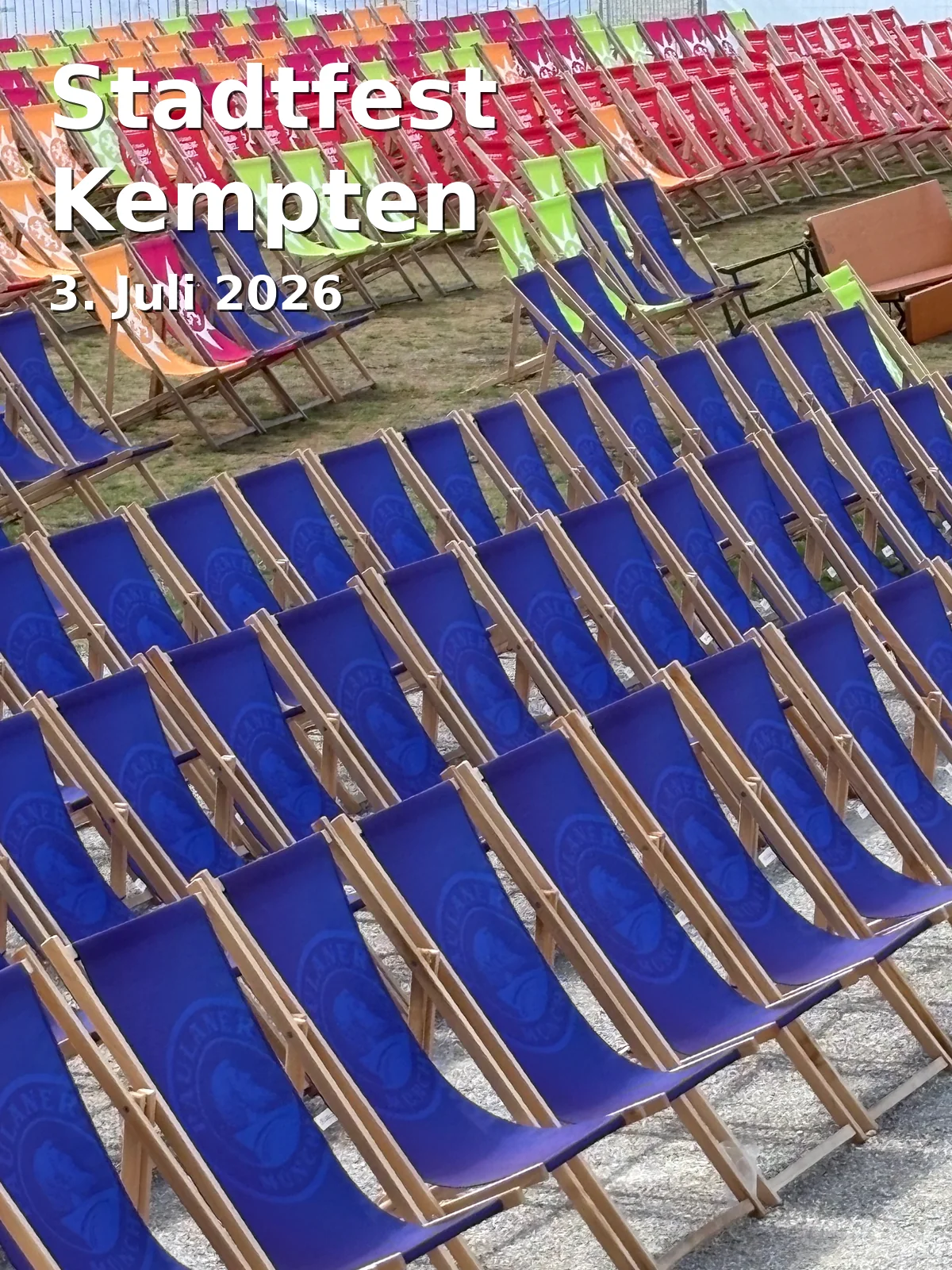
The Kempten City Festival transforms the city center into a large festival mile with music, sports, and entertainment.

Allgäu Business Sprint
Participate and enjoy: The Allgäu Business Sprint takes place in Kempten on July 16, 2026. Ideal for teams and athletes.
Frequently Asked Questions
Reviews
Juliana Martucci
13. October 2025
Charming little town to visit.
Evtim Ivanov
21. December 2024
Best place
N K
7. April 2026
Very beautiful charming old town. It was very quiet. Many apparel and eatery shops are available.
Matthias Sachse
20. May 2026
The old town of Kempten captivates with its special charm, historic buildings, and vibrant atmosphere. While strolling through the small alleys, you discover beautiful facades, cozy squares, and many loving details that give the city its unique character. The mix of history, culture, and modern city life is particularly nice. Numerous cafés, restaurants, and small shops invite you to relax and enjoy the atmosphere. At the same time, you can feel the long history of Germany's oldest city everywhere. The old town appears very well-kept and offers many beautiful places to linger, photograph, or simply enjoy. Whether during the day or in the evening – Kempten's old town always has a special vibe and is definitely worth a visit.
Sylvia Kopp
29. March 2026
Very pretty houses and nice shops, a stroll through Kempten's old town is definitely worth it. Especially the weekly market on Wednesdays and Saturdays is very nice and invites you to linger, also to enjoy some delicacies to eat and drink😉