
Kempten (Allgäu)
Fischerstraße, 87435 Kempten (Allgäu), Deutschland
Pedestrian Zone Kempten | Fischerstraße & City Center
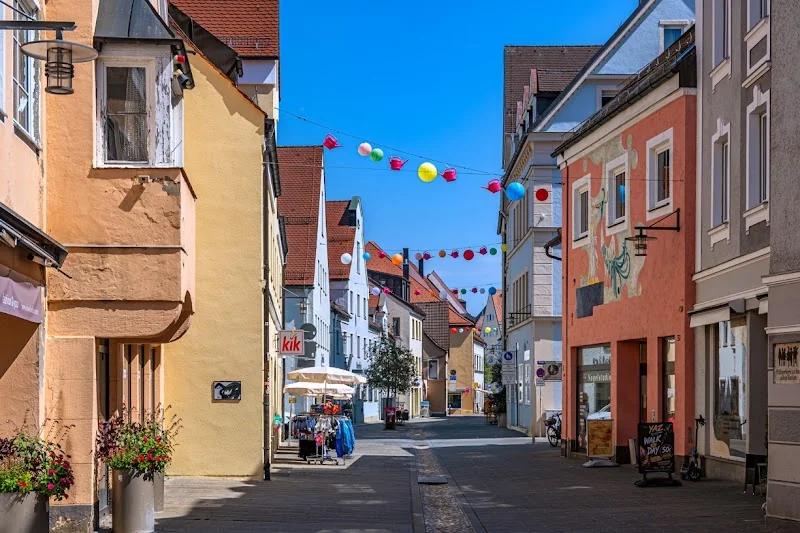
The pedestrian zone Kempten is not a single building and not a classic event hall, but a public urban space in the heart of the Allgäu metropolis. Its most prominent section is Fischerstraße, an approximately 290-meter-long shopping and strolling mile in the historic part of the city. Those looking for a pedestrian zone nearby will find a combination of old town history, retail, gastronomy, short distances, and regularly changing city center events. Between facades, small passages, shops, and gastronomic offerings, an atmosphere is created that changes significantly depending on the time of day: In the morning, the street appears calm and busy, in the afternoon, cafés and shop windows invite you to linger, while events transform the city center into an open meeting place for music, culture, clubs, and families.
The address Fischerstraße in 87435 Kempten (Allgäu) leads to an area that has been relieved of car traffic for decades. In September 1970, Fischerstraße was opened as the first developed pedestrian zone in Bavarian Swabia. This rethought a historic main connection of the former imperial city: From a street dominated by through traffic, it became a public space for people, trade, and encounters. Today, Fischerstraße can be easily connected with other stations of Kempten's city center. Rathausplatz, Rathausstraße, Klostersteige, Residenzplatz, St.-Mang-Platz, museums, shops, and gastronomic businesses are within walking distance. Therefore, the pedestrian zone Kempten is suitable for both a short shopping stop and a longer city stroll through one of Germany's oldest cities.
For planning a visit, the topics of location, parking, access, historical development, shopping, gastronomy, and events are particularly important. There is no classic seating plan or fixed visitor capacity because it is a freely accessible urban space. However, during larger festivals, individual sections can be altered by stages, market stalls, action areas, or visitor zones. Therefore, those visiting Fischerstraße for the first time should not only plan a single destination but consider the entire city center as a cohesive experience.
Pedestrian zone nearby: Fischerstraße as the centerpiece of Kempten's city center
Fischerstraße is located in the part of Kempten shaped by the imperial city and forms one of the most well-known sections of the local pedestrian zone. It begins in the area of the former Fischertor and leads to Klostersteige. The name recalls the fishermen who were once resident in this area. The historical designation Fischergasse indicates that the street did not gain significance only through modern urban planning but has long been part of Kempten's development. Therefore, those walking through Fischerstraße today are moving along a connection that has experienced economic, urban, and social changes over many generations.
Fischerstraße is approximately 290 meters long and can be easily explored on foot. Its manageable length is an advantage for visitors who want to orient themselves quickly. At the same time, there are several connections to side alleys, passages, and other footpaths. This makes the area not feel like a straight corridor but like an entry into a larger city center quarter. From here, paths lead, among others, to Klostersteige, Rathausstraße, Rathausplatz, and towards Residenzplatz. The transition to other shopping areas is also uncomplicated. The Kempten pedestrian zone extends significantly beyond just Fischerstraße and includes other central sections of the city center.
In everyday life, Fischerstraße is primarily used for shopping, strolling, and meeting. Small shops, branches, gastronomic offerings, and service providers create various reasons to visit the area. A stroll does not have to be limited to a single purpose: One can combine shopping with a café visit, start a city tour through the old town, or continue to historical sights from here. Especially on Saturdays and in good weather, a lively picture emerges from passersby, families, guests, employees, and people taking a break in the public space.
The term pedestrian zone is often associated with very different places in everyday life. Search queries such as pedestrian zone Hamburg, pedestrian zone Munich, pedestrian zone Heidelberg, or pedestrian zone nearby show that visitors are usually looking for orientation, shopping opportunities, and quality of stay. Kempten offers a smaller-scale, clearly recognizable city center structure. The paths are short, historical squares are close together, and Fischerstraße can serve as a starting point for a tour through the old town and city center. Those looking for a historical environment with regional character instead of an anonymous shopping zone will find a suitable combination of urban everyday life and Allgäu atmosphere.
Also for visitors with limited mobility or families with strollers, the central location is fundamentally helpful because many destinations are reachable via short paths. However, the specific condition of individual paved areas, transitions, or entrances may vary. During events, additional stalls, cables, barriers, or larger crowds can affect the paths. Therefore, flexible planning and possibly inquiring with organizers or the tourist information is advisable if there are special requirements for accessibility.
History of the pedestrian zone Kempten and Fischerstraße
The history of Fischerstraße is closely linked to the history of Kempten as a trading and administrative city. Kempten developed over centuries as an important place in the Allgäu, shaped by various political, religious, and economic structures. Fischerstraße was located in the area of the former imperial city. Its original function was therefore not that of a pure shopping mile, but rather that of an important inner-city connection. It led through a densely built-up area and was connected with gates, alleys, squares, and traffic routes of the historic city.
An important detail of the city's history is the Fischertor. It stood at the southern end of today's Fischerstraße and was demolished in 1866. The demolition changed access to this part of the city and also represents a phase in which historical structures were adapted to new traffic and urban development requirements. Elsewhere, bottlenecks were also eliminated to better organize connections between the train station, city center, and residential area. Such changes formed the basis for Kempten to further develop its historical areas without completely forgoing new traffic routes and modern urban planning.
Until the second half of the 20th century, Fischerstraße was characterized by through traffic. The transformation into a pedestrian zone was therefore more than a design measure. It fundamentally changed the use of public space. In September 1970, Fischerstraße was opened as the first developed pedestrian zone in Bavarian Swabia. The through traffic was reorganized while the street could increasingly be used for pedestrians, shops, and recreational areas. The so-called old town breakthrough at the town hall played an important role in the reorganization of traffic. The Kronenstraße subsequently took on a through function through the old town.
The history explains why Fischerstraße today appears both modern and historical. Its function as a shopping and strolling area is relatively young, but the urban environment dates back far. Visitors do not see a completely newly planned shopping landscape but a grown urban space with different buildings, facades, and sightlines. In the immediate vicinity, there are historical residential houses, squares, and structures that remind of Kempten's imperial and princely past. The pedestrian zone is thus not only a practical traffic regulation but also part of the cityscape.
A stroll through Fischerstraße can therefore be designed like a small time travel. At the beginning, traces of the former Fischertor and the southern old town access can be picked up. Along the street, trade and the present come to the forefront. Through side paths, one can reach further historical points, Rathausstraße, and squares where the different epochs of the city connect particularly well. Those interested in history can complement their shopping trip with a city tour, a museum visit, or a walk to Kempten's sights.
The history of the name is also remarkable. The former designation Fischergasse refers to the people and professions that gave the area its identity. The name Fischerstraße has been retained, even though the use and cityscape have changed over the years. This shows a typical feature of historical city centers: Streets retain names while their functions change. From a traffic connection, it became a pedestrian zone, and from a section with artisanal and everyday use, it became a central shopping and event area.
Shops, cafés, and stay in Kempten's pedestrian zone
The pedestrian zone Kempten is primarily a place of everyday urban life. In Fischerstraße and the adjacent areas, retail, gastronomy, services, and historical city center atmosphere come together. Visitors can view shop windows, run errands, stop in cafés, or continue their way to other destinations through the old town. The special charm lies not in a single large attraction but in the mix of various offerings at short distances.
Fischerstraße is well-suited for a shopping trip because the route is manageable and connected to other shopping areas. Those who do not want to limit themselves to just one street can extend the tour via Klostersteige, Rathausstraße, and other sections of Kempten's city center. This creates a varied path with different perspectives. In some places, shops and shop windows dominate, while in others, historical facades, squares, or outdoor gastronomic areas are present. The mix makes the pedestrian zone interesting for locals as well as for guests visiting Kempten for the first time.
Cafés and gastronomic offerings provide the area with additional quality of stay. A visit does not have to be exclusively focused on shopping. Many people use the city center for a short break, a meeting, or a coffee between two program points. In good weather, the public space is used more intensively, while the cooler months can create a different atmosphere through seasonal actions, lighting, and events. Opening hours, offerings, and outdoor seating of individual businesses may change; therefore, for specific visits, it is advisable to check directly with the respective provider.
Fischerstraße is also suitable as a meeting point before an old town tour. From here, central sights and squares are within walking distance. These include Rathausplatz, Rathausstraße, the residential area, St.-Mang-Platz, and other cultural and historical destinations. Those with more time can combine the city center with the Kempten Museum, the Erasmus Chapel, or a city tour. The pedestrian zone is not necessarily the final destination but often a practical starting or intermediate point.
For families, the car-free design provides a pleasant framework, although attention is still required during heavy foot traffic. Children can explore the surroundings more easily than on a heavily trafficked thoroughfare, yet delivery traffic, bicycles, service vehicles, and event logistics must still be considered. Seating options and gastronomic breaks can make a city visit more relaxed. For older people or those who cannot walk long distances, short segments can be planned by choosing a nearby parking lot or bus stop and only visiting selected areas.
Those looking for a pedestrian zone nearby often associate it with specific wishes: shops should be reachable, parking options should not be too far away, cafés should allow for breaks, and historical or cultural destinations should be nearby. Kempten's Fischerstraße meets these requirements through its central location. It is compact enough for a short visit and at the same time embedded in a larger city center area. This allows for different types of visits, from quick shopping to relaxed city strolls to a cultural day program.
Events, markets, and programs in the pedestrian zone
Fischerstraße and the adjacent Kempten city center are regularly used as public event spaces. Unlike in a hall, there is no permanently fixed schedule or seating arrangement. The program changes throughout the year and is shaped by the city, city marketing, clubs, gastronomy businesses, cultural creators, and other local actors. Depending on the occasion, music, market stalls, club presentations, family activities, art, sports, or seasonal offerings may be in the spotlight.
Among the well-known formats in the city center are the Kempten city festival, the day of music, the sports and family day, the art night, the Kempten shopping night, and various late-night shopping or thematic action days. During the city festival, the city center is animated across several squares and areas. The pedestrian zone can serve as a stage for live music, dance, sports and club presentations, as well as family offerings. The day of music distributes live music across various stations in the city center, thus bringing movement to several streets and squares.
The sports and family day is also aimed at open use of urban space. Participation offers, movement, games, and activities for different age groups fit particularly well into a car-free city center. Visitors can move freely between individual stations instead of being tied to a fixed spectator seat. This makes the pedestrian zone a low-threshold event venue: one can participate spontaneously, stop briefly, or combine the visit with shopping and gastronomy.
During the art night, the perception of the city center changes particularly clearly. Exhibition venues, artistic actions, installations, performances, and complementary program points turn the streets and squares into parts of a larger cultural parcours. Fischerstraße can serve as a connecting path between different stations. For such evenings, it is advisable to plan parking options and return early, as many visitors arrive simultaneously and individual areas may be more crowded.
Markets are also part of city center life. The regular weekly market takes place in a central square and complements the shopping offerings of the pedestrian zone with regional and seasonal products. Visitors can find, among other things, fruits and vegetables, cheese, fish, sausage, pasta, plants, and other specialties there. A market visit can be well combined with a stroll through Fischerstraße. The combination of market, shops, cafés, and historical squares provides a particularly immediate impression of everyday life in Kempten.
For current dates, visitors should check the event calendar of the city, city marketing, or tourist information. Annual programs may change, individual events are weather-dependent, or are spread across several locations. Setup and teardown times can also affect access or paths. However, the pedestrian zone remains interesting precisely because of its adaptable use. On an ordinary weekday, it is a shopping street, during a city festival an open stage, during a shopping night a meeting point, and during an art action part of a cultural tour.
Access and parking at the pedestrian zone Kempten
Fischerstraße itself is not the destination for direct access by private car as a pedestrian zone. Those arriving by car should choose a parking space or parking garage nearby and walk the last meters. Kempten has a parking guidance system that leads to free parking spaces and parking garages. The official information on parking indicates that parking spaces, parking garages, and underground garages are available near the city center. Parking is usually subject to a fee; depending on the respective location, payment may be possible with coins, cards, or apps.
As city-center nearby options, the areas Königsplatz, the parking lot or parking garage Königsplatz, Pfeilergraben, Rottachstraße, and the Kaufhof underground garage are mentioned. The specific availability, access, and tariff structure may change. Especially during larger events, visitors should pay attention to the current signage and parking guidance system. On heavily visited days, it may be advisable not to wait for the nearest parking space but to use a slightly further parking garage and plan the short walk through the city center as part of the visit.
For travelers with electric vehicles, there are charging options at some public parking spaces and in various parking garages. The city information consolidates information on parking spaces, number of parking spaces, special parking spaces, and charging stations. Those who rely on a charging option should check before arriving whether the desired location is suitable and available. For bicycles, there is a bike box in the Grabengasse in a central location. Bicycles can be parked there; additionally, there are options for charging e-bike batteries and securely storing personal items.
Kempten is accessible via the A7 motorway and the federal roads B12 and B19. For guests from the Allgäu and neighboring regions, the city is well connected to the regional road network. The main train station is located south of the city center. From there, city buses regularly run to the central transfer point Zentrum. Public transport from the districts and the region also connects the city center. Therefore, those arriving without a car can continue their way from the train station or a bus stop by bus and then reach Fischerstraße on foot.
Tour buses are not allowed to stop directly in the pedestrian zone. For groups, there are centrally located bus parking spaces, including at the Orangerie, at the bigBOX ALLGÄU, at the Illerstadion, and at the Marstall. There is a possibility to board and alight at St.-Mang-Platz, but the exact procedure should be coordinated with the tour operator or the responsible authority. Groups can then walk together through the city center to Fischerstraße. This form of arrival is particularly practical for city tours, as the old town destinations are close together.
People with mobility restrictions should plan the specific route in advance. Kempten has designated disabled parking spaces and information on barrier-free mobility. The city center is generally accessible via central paths, but historical paved areas, slopes, construction sites, and event setups can change the conditions. For a planned visit with a wheelchair, walker, or stroller, it is advisable to choose a suitable parking space and check current information about the event.
Sights around Fischerstraße and city center
A visit to the pedestrian zone Kempten can be well combined with a historical city walk. Fischerstraße is not isolated but is located in the midst of a densely populated city center area with town hall, squares, religious buildings, museums, and historical buildings. Therefore, those walking through the shopping street can switch from modern shop windows to buildings and facades that recall earlier epochs within a few minutes.
Rathausplatz is an important point of orientation in the city center. The town hall itself is one of Kempten's prominent historical buildings and shapes the central urban space. The square is accessible from Fischerstraße via the adjacent streets and paths. The town hall area is suitable as a meeting point, starting point for tours, or a stop during a shopping trip. In the immediate vicinity are also the tourist information and other destinations that provide information about the city's history, events, and mobility.
The Kempten Residence recalls the princely history of the city. Together with the Basilica of St. Lorenz, it forms one of Kempten's most important historical areas. The path from the pedestrian zone to there leads through other central streets and squares. Those who plan enough time can therefore combine Fischerstraße with a tour that leads from the imperial part to the princely area. This contrast is characteristic of Kempten and makes the city's history particularly vivid in the cityscape.
The Kempten Museum in Zumsteinhaus and the exhibition space Erasmus Chapel also offer opportunities to deepen the city's history. The Erasmus Chapel is associated with a historical presentation that provides insights into Kempten's eventful past. The Archaeological Park Cambodunum expands the view of the city's Roman history, but is not directly in Fischerstraße. Those spending a whole day in Kempten can combine the pedestrian zone with these cultural destinations.
Particularly appealing are the small transitions and side spaces around Fischerstraße. Alleys, passages, stairs, and historical facades make the walk more varied than a pure shopping street. The outdoor staircase near the town hall area, for example, offers a special perspective on Rathausstraße and the urban environment. Depending on the route, the Iller, Burghalde, and other viewpoints can also be incorporated into a longer walk.
For visitors who do not want to orient themselves alone, city tours are a good addition. A tour can connect the history of the former double city, the Roman roots, the imperial city, the princely abbey, and the development into the modern city center. Fischerstraße is a vivid example of urban change: a historical traffic axis became a pedestrian zone without losing its location and name. This makes it understandable why today's shopping area is more than just a collection of shops.
Even outside of an official program, it is worth paying attention to details. Facades, fountains, old house forms, gate references, and sightlines tell of different times. The history of Fischertor, the former course of important traffic routes, and the names of the adjacent alleys show how closely everyday life, trade, and urban development were interconnected. Therefore, those walking attentively through Fischerstraße recognize not only a pedestrian zone but a section of the historical city layout.
Tips for visiting the pedestrian zone Kempten
For a relaxed visit, it is advisable to first determine the desired destination: shopping, gastronomy, events, city tours, or sights. Fischerstraße is suitable as a central starting point from which many destinations can be flexibly reached. Those with little time can quickly cross the approximately 290-meter-long street and plan a detour to Rathausplatz. Those with several hours available should also consider the adjacent old town areas, the residence, and a museum.
When arriving by car, the parking space should not be sought immediately in front of Fischerstraße. Since the street is a pedestrian zone, city-center parking garages or parking spaces are the better choice. The parking guidance system can help with orientation. For an event, it is advisable to plan more time for parking search and footpath. During large events, certain accesses may be blocked, or parking spaces may be more crowded.
Those arriving by bus or train can use the central transfer point Zentrum. Regular bus connections run from the main train station towards the city center. The exact connection depends on the time of day, day of the week, and schedule. For the current visit, passengers should check the information from the transport association or the municipal utilities. Within the city center, many paths are possible on foot, making the combination of public transport and city stroll particularly practical.
The best time to visit depends on the personal goal. In the mornings, the city center is often quieter and suitable for errands or a relaxed start. In the afternoon, the frequency increases, and cafés and shops are more visited. During events, the pedestrian zone can also be lively in the evening. For photographic impressions, historical facades are interesting in different light; for families, action days and city festivals offer additional program points. Weatherproof clothing is advisable for outdoor events, as there is no continuous indoor alternative for the entire urban area.
The pedestrian zone is publicly accessible, but individual shops, museums, cafés, and events have their own opening or admission regulations. Staying on the street is generally possible without a ticket. At stage programs, markets, or actions, certain offerings may be free, while gastronomic services, tours, or museum visits are paid separately. Those looking for a specific program should check the respective event calendar, as dates and venues within the city center may vary.
Another tip is to combine shopping and culture. After a walk through Fischerstraße, one can go to Rathausplatz, visit the residence, or join a city tour. This makes the visit more varied, and the pedestrian zone serves as a common thread through the city center. Even for guests who are just passing through the Allgäu, a short stop is worthwhile because many central destinations are located in close proximity.
Fischerstraße is also a good meeting point for groups. Tour groups can gather at a central square, then walk together through the pedestrian zone and combine the tour with a guide or a gastronomic stay. For larger groups, reservations, bus parking, and meeting points should be organized in advance. For families, a clear meeting point is recommended, as more people are out and about during city festivals and markets.
Those needing a barrier-free route should check suitable parking spaces, bus stops, and paths in advance. Kempten provides information on disabled parking spaces and mobility on site. However, historical surfaces and temporary setups can influence the conditions. An early inquiry with the tourist information or the organizer can help better tailor the visit to one's needs.
Overall, the pedestrian zone Kempten thrives on its versatility. It is a shopping street, historical path, event space, meeting point, and access to the most important city center destinations. Fischerstraße connects these functions over a short distance and makes the city's transformation visible. Therefore, those looking for a pedestrian zone nearby should not only search for shops or parking spaces but also for quality of stay, history, and opportunities for a whole day in the city. This connection is what makes Fischerstraße in Kempten special.
Sources:
Mehr anzeigenWeniger anzeigen
Pedestrian Zone Kempten | Fischerstraße & City Center
The pedestrian zone Kempten is not a single building and not a classic event hall, but a public urban space in the heart of the Allgäu metropolis. Its most prominent section is Fischerstraße, an approximately 290-meter-long shopping and strolling mile in the historic part of the city. Those looking for a pedestrian zone nearby will find a combination of old town history, retail, gastronomy, short distances, and regularly changing city center events. Between facades, small passages, shops, and gastronomic offerings, an atmosphere is created that changes significantly depending on the time of day: In the morning, the street appears calm and busy, in the afternoon, cafés and shop windows invite you to linger, while events transform the city center into an open meeting place for music, culture, clubs, and families.
The address Fischerstraße in 87435 Kempten (Allgäu) leads to an area that has been relieved of car traffic for decades. In September 1970, Fischerstraße was opened as the first developed pedestrian zone in Bavarian Swabia. This rethought a historic main connection of the former imperial city: From a street dominated by through traffic, it became a public space for people, trade, and encounters. Today, Fischerstraße can be easily connected with other stations of Kempten's city center. Rathausplatz, Rathausstraße, Klostersteige, Residenzplatz, St.-Mang-Platz, museums, shops, and gastronomic businesses are within walking distance. Therefore, the pedestrian zone Kempten is suitable for both a short shopping stop and a longer city stroll through one of Germany's oldest cities.
For planning a visit, the topics of location, parking, access, historical development, shopping, gastronomy, and events are particularly important. There is no classic seating plan or fixed visitor capacity because it is a freely accessible urban space. However, during larger festivals, individual sections can be altered by stages, market stalls, action areas, or visitor zones. Therefore, those visiting Fischerstraße for the first time should not only plan a single destination but consider the entire city center as a cohesive experience.
Pedestrian zone nearby: Fischerstraße as the centerpiece of Kempten's city center
Fischerstraße is located in the part of Kempten shaped by the imperial city and forms one of the most well-known sections of the local pedestrian zone. It begins in the area of the former Fischertor and leads to Klostersteige. The name recalls the fishermen who were once resident in this area. The historical designation Fischergasse indicates that the street did not gain significance only through modern urban planning but has long been part of Kempten's development. Therefore, those walking through Fischerstraße today are moving along a connection that has experienced economic, urban, and social changes over many generations.
Fischerstraße is approximately 290 meters long and can be easily explored on foot. Its manageable length is an advantage for visitors who want to orient themselves quickly. At the same time, there are several connections to side alleys, passages, and other footpaths. This makes the area not feel like a straight corridor but like an entry into a larger city center quarter. From here, paths lead, among others, to Klostersteige, Rathausstraße, Rathausplatz, and towards Residenzplatz. The transition to other shopping areas is also uncomplicated. The Kempten pedestrian zone extends significantly beyond just Fischerstraße and includes other central sections of the city center.
In everyday life, Fischerstraße is primarily used for shopping, strolling, and meeting. Small shops, branches, gastronomic offerings, and service providers create various reasons to visit the area. A stroll does not have to be limited to a single purpose: One can combine shopping with a café visit, start a city tour through the old town, or continue to historical sights from here. Especially on Saturdays and in good weather, a lively picture emerges from passersby, families, guests, employees, and people taking a break in the public space.
The term pedestrian zone is often associated with very different places in everyday life. Search queries such as pedestrian zone Hamburg, pedestrian zone Munich, pedestrian zone Heidelberg, or pedestrian zone nearby show that visitors are usually looking for orientation, shopping opportunities, and quality of stay. Kempten offers a smaller-scale, clearly recognizable city center structure. The paths are short, historical squares are close together, and Fischerstraße can serve as a starting point for a tour through the old town and city center. Those looking for a historical environment with regional character instead of an anonymous shopping zone will find a suitable combination of urban everyday life and Allgäu atmosphere.
Also for visitors with limited mobility or families with strollers, the central location is fundamentally helpful because many destinations are reachable via short paths. However, the specific condition of individual paved areas, transitions, or entrances may vary. During events, additional stalls, cables, barriers, or larger crowds can affect the paths. Therefore, flexible planning and possibly inquiring with organizers or the tourist information is advisable if there are special requirements for accessibility.
History of the pedestrian zone Kempten and Fischerstraße
The history of Fischerstraße is closely linked to the history of Kempten as a trading and administrative city. Kempten developed over centuries as an important place in the Allgäu, shaped by various political, religious, and economic structures. Fischerstraße was located in the area of the former imperial city. Its original function was therefore not that of a pure shopping mile, but rather that of an important inner-city connection. It led through a densely built-up area and was connected with gates, alleys, squares, and traffic routes of the historic city.
An important detail of the city's history is the Fischertor. It stood at the southern end of today's Fischerstraße and was demolished in 1866. The demolition changed access to this part of the city and also represents a phase in which historical structures were adapted to new traffic and urban development requirements. Elsewhere, bottlenecks were also eliminated to better organize connections between the train station, city center, and residential area. Such changes formed the basis for Kempten to further develop its historical areas without completely forgoing new traffic routes and modern urban planning.
Until the second half of the 20th century, Fischerstraße was characterized by through traffic. The transformation into a pedestrian zone was therefore more than a design measure. It fundamentally changed the use of public space. In September 1970, Fischerstraße was opened as the first developed pedestrian zone in Bavarian Swabia. The through traffic was reorganized while the street could increasingly be used for pedestrians, shops, and recreational areas. The so-called old town breakthrough at the town hall played an important role in the reorganization of traffic. The Kronenstraße subsequently took on a through function through the old town.
The history explains why Fischerstraße today appears both modern and historical. Its function as a shopping and strolling area is relatively young, but the urban environment dates back far. Visitors do not see a completely newly planned shopping landscape but a grown urban space with different buildings, facades, and sightlines. In the immediate vicinity, there are historical residential houses, squares, and structures that remind of Kempten's imperial and princely past. The pedestrian zone is thus not only a practical traffic regulation but also part of the cityscape.
A stroll through Fischerstraße can therefore be designed like a small time travel. At the beginning, traces of the former Fischertor and the southern old town access can be picked up. Along the street, trade and the present come to the forefront. Through side paths, one can reach further historical points, Rathausstraße, and squares where the different epochs of the city connect particularly well. Those interested in history can complement their shopping trip with a city tour, a museum visit, or a walk to Kempten's sights.
The history of the name is also remarkable. The former designation Fischergasse refers to the people and professions that gave the area its identity. The name Fischerstraße has been retained, even though the use and cityscape have changed over the years. This shows a typical feature of historical city centers: Streets retain names while their functions change. From a traffic connection, it became a pedestrian zone, and from a section with artisanal and everyday use, it became a central shopping and event area.
Shops, cafés, and stay in Kempten's pedestrian zone
The pedestrian zone Kempten is primarily a place of everyday urban life. In Fischerstraße and the adjacent areas, retail, gastronomy, services, and historical city center atmosphere come together. Visitors can view shop windows, run errands, stop in cafés, or continue their way to other destinations through the old town. The special charm lies not in a single large attraction but in the mix of various offerings at short distances.
Fischerstraße is well-suited for a shopping trip because the route is manageable and connected to other shopping areas. Those who do not want to limit themselves to just one street can extend the tour via Klostersteige, Rathausstraße, and other sections of Kempten's city center. This creates a varied path with different perspectives. In some places, shops and shop windows dominate, while in others, historical facades, squares, or outdoor gastronomic areas are present. The mix makes the pedestrian zone interesting for locals as well as for guests visiting Kempten for the first time.
Cafés and gastronomic offerings provide the area with additional quality of stay. A visit does not have to be exclusively focused on shopping. Many people use the city center for a short break, a meeting, or a coffee between two program points. In good weather, the public space is used more intensively, while the cooler months can create a different atmosphere through seasonal actions, lighting, and events. Opening hours, offerings, and outdoor seating of individual businesses may change; therefore, for specific visits, it is advisable to check directly with the respective provider.
Fischerstraße is also suitable as a meeting point before an old town tour. From here, central sights and squares are within walking distance. These include Rathausplatz, Rathausstraße, the residential area, St.-Mang-Platz, and other cultural and historical destinations. Those with more time can combine the city center with the Kempten Museum, the Erasmus Chapel, or a city tour. The pedestrian zone is not necessarily the final destination but often a practical starting or intermediate point.
For families, the car-free design provides a pleasant framework, although attention is still required during heavy foot traffic. Children can explore the surroundings more easily than on a heavily trafficked thoroughfare, yet delivery traffic, bicycles, service vehicles, and event logistics must still be considered. Seating options and gastronomic breaks can make a city visit more relaxed. For older people or those who cannot walk long distances, short segments can be planned by choosing a nearby parking lot or bus stop and only visiting selected areas.
Those looking for a pedestrian zone nearby often associate it with specific wishes: shops should be reachable, parking options should not be too far away, cafés should allow for breaks, and historical or cultural destinations should be nearby. Kempten's Fischerstraße meets these requirements through its central location. It is compact enough for a short visit and at the same time embedded in a larger city center area. This allows for different types of visits, from quick shopping to relaxed city strolls to a cultural day program.
Events, markets, and programs in the pedestrian zone
Fischerstraße and the adjacent Kempten city center are regularly used as public event spaces. Unlike in a hall, there is no permanently fixed schedule or seating arrangement. The program changes throughout the year and is shaped by the city, city marketing, clubs, gastronomy businesses, cultural creators, and other local actors. Depending on the occasion, music, market stalls, club presentations, family activities, art, sports, or seasonal offerings may be in the spotlight.
Among the well-known formats in the city center are the Kempten city festival, the day of music, the sports and family day, the art night, the Kempten shopping night, and various late-night shopping or thematic action days. During the city festival, the city center is animated across several squares and areas. The pedestrian zone can serve as a stage for live music, dance, sports and club presentations, as well as family offerings. The day of music distributes live music across various stations in the city center, thus bringing movement to several streets and squares.
The sports and family day is also aimed at open use of urban space. Participation offers, movement, games, and activities for different age groups fit particularly well into a car-free city center. Visitors can move freely between individual stations instead of being tied to a fixed spectator seat. This makes the pedestrian zone a low-threshold event venue: one can participate spontaneously, stop briefly, or combine the visit with shopping and gastronomy.
During the art night, the perception of the city center changes particularly clearly. Exhibition venues, artistic actions, installations, performances, and complementary program points turn the streets and squares into parts of a larger cultural parcours. Fischerstraße can serve as a connecting path between different stations. For such evenings, it is advisable to plan parking options and return early, as many visitors arrive simultaneously and individual areas may be more crowded.
Markets are also part of city center life. The regular weekly market takes place in a central square and complements the shopping offerings of the pedestrian zone with regional and seasonal products. Visitors can find, among other things, fruits and vegetables, cheese, fish, sausage, pasta, plants, and other specialties there. A market visit can be well combined with a stroll through Fischerstraße. The combination of market, shops, cafés, and historical squares provides a particularly immediate impression of everyday life in Kempten.
For current dates, visitors should check the event calendar of the city, city marketing, or tourist information. Annual programs may change, individual events are weather-dependent, or are spread across several locations. Setup and teardown times can also affect access or paths. However, the pedestrian zone remains interesting precisely because of its adaptable use. On an ordinary weekday, it is a shopping street, during a city festival an open stage, during a shopping night a meeting point, and during an art action part of a cultural tour.
Access and parking at the pedestrian zone Kempten
Fischerstraße itself is not the destination for direct access by private car as a pedestrian zone. Those arriving by car should choose a parking space or parking garage nearby and walk the last meters. Kempten has a parking guidance system that leads to free parking spaces and parking garages. The official information on parking indicates that parking spaces, parking garages, and underground garages are available near the city center. Parking is usually subject to a fee; depending on the respective location, payment may be possible with coins, cards, or apps.
As city-center nearby options, the areas Königsplatz, the parking lot or parking garage Königsplatz, Pfeilergraben, Rottachstraße, and the Kaufhof underground garage are mentioned. The specific availability, access, and tariff structure may change. Especially during larger events, visitors should pay attention to the current signage and parking guidance system. On heavily visited days, it may be advisable not to wait for the nearest parking space but to use a slightly further parking garage and plan the short walk through the city center as part of the visit.
For travelers with electric vehicles, there are charging options at some public parking spaces and in various parking garages. The city information consolidates information on parking spaces, number of parking spaces, special parking spaces, and charging stations. Those who rely on a charging option should check before arriving whether the desired location is suitable and available. For bicycles, there is a bike box in the Grabengasse in a central location. Bicycles can be parked there; additionally, there are options for charging e-bike batteries and securely storing personal items.
Kempten is accessible via the A7 motorway and the federal roads B12 and B19. For guests from the Allgäu and neighboring regions, the city is well connected to the regional road network. The main train station is located south of the city center. From there, city buses regularly run to the central transfer point Zentrum. Public transport from the districts and the region also connects the city center. Therefore, those arriving without a car can continue their way from the train station or a bus stop by bus and then reach Fischerstraße on foot.
Tour buses are not allowed to stop directly in the pedestrian zone. For groups, there are centrally located bus parking spaces, including at the Orangerie, at the bigBOX ALLGÄU, at the Illerstadion, and at the Marstall. There is a possibility to board and alight at St.-Mang-Platz, but the exact procedure should be coordinated with the tour operator or the responsible authority. Groups can then walk together through the city center to Fischerstraße. This form of arrival is particularly practical for city tours, as the old town destinations are close together.
People with mobility restrictions should plan the specific route in advance. Kempten has designated disabled parking spaces and information on barrier-free mobility. The city center is generally accessible via central paths, but historical paved areas, slopes, construction sites, and event setups can change the conditions. For a planned visit with a wheelchair, walker, or stroller, it is advisable to choose a suitable parking space and check current information about the event.
Sights around Fischerstraße and city center
A visit to the pedestrian zone Kempten can be well combined with a historical city walk. Fischerstraße is not isolated but is located in the midst of a densely populated city center area with town hall, squares, religious buildings, museums, and historical buildings. Therefore, those walking through the shopping street can switch from modern shop windows to buildings and facades that recall earlier epochs within a few minutes.
Rathausplatz is an important point of orientation in the city center. The town hall itself is one of Kempten's prominent historical buildings and shapes the central urban space. The square is accessible from Fischerstraße via the adjacent streets and paths. The town hall area is suitable as a meeting point, starting point for tours, or a stop during a shopping trip. In the immediate vicinity are also the tourist information and other destinations that provide information about the city's history, events, and mobility.
The Kempten Residence recalls the princely history of the city. Together with the Basilica of St. Lorenz, it forms one of Kempten's most important historical areas. The path from the pedestrian zone to there leads through other central streets and squares. Those who plan enough time can therefore combine Fischerstraße with a tour that leads from the imperial part to the princely area. This contrast is characteristic of Kempten and makes the city's history particularly vivid in the cityscape.
The Kempten Museum in Zumsteinhaus and the exhibition space Erasmus Chapel also offer opportunities to deepen the city's history. The Erasmus Chapel is associated with a historical presentation that provides insights into Kempten's eventful past. The Archaeological Park Cambodunum expands the view of the city's Roman history, but is not directly in Fischerstraße. Those spending a whole day in Kempten can combine the pedestrian zone with these cultural destinations.
Particularly appealing are the small transitions and side spaces around Fischerstraße. Alleys, passages, stairs, and historical facades make the walk more varied than a pure shopping street. The outdoor staircase near the town hall area, for example, offers a special perspective on Rathausstraße and the urban environment. Depending on the route, the Iller, Burghalde, and other viewpoints can also be incorporated into a longer walk.
For visitors who do not want to orient themselves alone, city tours are a good addition. A tour can connect the history of the former double city, the Roman roots, the imperial city, the princely abbey, and the development into the modern city center. Fischerstraße is a vivid example of urban change: a historical traffic axis became a pedestrian zone without losing its location and name. This makes it understandable why today's shopping area is more than just a collection of shops.
Even outside of an official program, it is worth paying attention to details. Facades, fountains, old house forms, gate references, and sightlines tell of different times. The history of Fischertor, the former course of important traffic routes, and the names of the adjacent alleys show how closely everyday life, trade, and urban development were interconnected. Therefore, those walking attentively through Fischerstraße recognize not only a pedestrian zone but a section of the historical city layout.
Tips for visiting the pedestrian zone Kempten
For a relaxed visit, it is advisable to first determine the desired destination: shopping, gastronomy, events, city tours, or sights. Fischerstraße is suitable as a central starting point from which many destinations can be flexibly reached. Those with little time can quickly cross the approximately 290-meter-long street and plan a detour to Rathausplatz. Those with several hours available should also consider the adjacent old town areas, the residence, and a museum.
When arriving by car, the parking space should not be sought immediately in front of Fischerstraße. Since the street is a pedestrian zone, city-center parking garages or parking spaces are the better choice. The parking guidance system can help with orientation. For an event, it is advisable to plan more time for parking search and footpath. During large events, certain accesses may be blocked, or parking spaces may be more crowded.
Those arriving by bus or train can use the central transfer point Zentrum. Regular bus connections run from the main train station towards the city center. The exact connection depends on the time of day, day of the week, and schedule. For the current visit, passengers should check the information from the transport association or the municipal utilities. Within the city center, many paths are possible on foot, making the combination of public transport and city stroll particularly practical.
The best time to visit depends on the personal goal. In the mornings, the city center is often quieter and suitable for errands or a relaxed start. In the afternoon, the frequency increases, and cafés and shops are more visited. During events, the pedestrian zone can also be lively in the evening. For photographic impressions, historical facades are interesting in different light; for families, action days and city festivals offer additional program points. Weatherproof clothing is advisable for outdoor events, as there is no continuous indoor alternative for the entire urban area.
The pedestrian zone is publicly accessible, but individual shops, museums, cafés, and events have their own opening or admission regulations. Staying on the street is generally possible without a ticket. At stage programs, markets, or actions, certain offerings may be free, while gastronomic services, tours, or museum visits are paid separately. Those looking for a specific program should check the respective event calendar, as dates and venues within the city center may vary.
Another tip is to combine shopping and culture. After a walk through Fischerstraße, one can go to Rathausplatz, visit the residence, or join a city tour. This makes the visit more varied, and the pedestrian zone serves as a common thread through the city center. Even for guests who are just passing through the Allgäu, a short stop is worthwhile because many central destinations are located in close proximity.
Fischerstraße is also a good meeting point for groups. Tour groups can gather at a central square, then walk together through the pedestrian zone and combine the tour with a guide or a gastronomic stay. For larger groups, reservations, bus parking, and meeting points should be organized in advance. For families, a clear meeting point is recommended, as more people are out and about during city festivals and markets.
Those needing a barrier-free route should check suitable parking spaces, bus stops, and paths in advance. Kempten provides information on disabled parking spaces and mobility on site. However, historical surfaces and temporary setups can influence the conditions. An early inquiry with the tourist information or the organizer can help better tailor the visit to one's needs.
Overall, the pedestrian zone Kempten thrives on its versatility. It is a shopping street, historical path, event space, meeting point, and access to the most important city center destinations. Fischerstraße connects these functions over a short distance and makes the city's transformation visible. Therefore, those looking for a pedestrian zone nearby should not only search for shops or parking spaces but also for quality of stay, history, and opportunities for a whole day in the city. This connection is what makes Fischerstraße in Kempten special.
Sources:
Frequently Asked Questions
Reviews
Jutta Leicher
14. June 2026
Kempten is really worth seeing, with many beautiful alleys and lots to discover and look at. The market has many delicious vendors. It's beautifully decorated, and the service is friendly. There are plenty of options to sit outside and enjoy a drink or a meal in peace.
M B
14. May 2026
Beautiful old houses, cafes, restaurants, and pubs
B. Böhm
21. September 2022
Life is buzzing here. A pedestrian zone that every city would wish for. Shop after shop, inviting bistros and restaurants, nice seating areas, framed in a well-kept backdrop. Kempten is always worth the trip👌.
Petra Hilscher
13. July 2023
Beautiful pedestrian zone with many shops and cafes, bars, and eateries in between, much nicer than the Munich pedestrian zone.
Heike Kaim
8. August 2022
Very nice pedestrian zone with many options to linger.