
Kempten (Allgäu)
Cambodunumweg 3, 87437 Kempten (Allgäu), Deutschland
Archaeological Park Cambodunum | Tickets & Opening Hours
The Archaeological Park Cambodunum in Kempten is a special place for anyone who wants to not only see Roman history but truly experience it. The museum and excavation site protects and presents the center of the ancient Roman city of Cambodunum, which is located on the eastern high bank of the Iller in present-day Kempten and was founded under Emperor Augustus around the turn of the era. Today, visitors encounter not a classic indoor museum but a Roman open-air museum with open spaces, reconstructed areas, archaeological finds, and modern educational offerings. Particularly impressive is the connection between the original archaeological site and contemporary presentation: the temple district, small baths, as well as the forum and basilica make the ancient urban structure understandable, while the experience trail and the Cambodunum app open up additional layers. Those looking for tickets, opening hours, directions, parking, or photos will find not only practical visitor information at the APC but also a versatile cultural destination for families, school groups, history enthusiasts, and anyone who wants to get to know Kempten's Roman past up close. ([apc-kempten.de](https://www.apc-kempten.de/en/exhibition-area/gallo-roman-temple-district))
Tickets, Opening Hours, and Admission Prices at the Archaeological Park Cambodunum
Anyone wishing to visit the Archaeological Park Cambodunum should first know the most important service information. The season runs from March to November, and during this period, the park is open from Tuesday to Sunday from 10 am to 5 pm. Admission tickets can be obtained at the ticket office in the temple district at Cambodunumweg 3 and at the ticket office at the small baths in Merktstraße 1. Those who want to plan their visit in advance can also purchase tickets online and then pick them up at the temple district ticket office. For adults, admission costs 5 euros, while children and teenagers up to 17 years old, as well as students, have free admission. The reduced price is 2.50 euros, groups of ten or more pay 2.50 euros per person, and on the first Sunday of the month, admission is free. Additionally, there is an APC annual pass for adults for 15 euros. This makes the park attractive not only for spontaneous outings but also for repeated visits throughout the season. ([apc-kempten.de](https://apc-kempten.de/de/besucherinfo))
Some visitor rules are also helpful for planning. Groups of 15 or more should register in advance by email or phone. Children may visit the APC unaccompanied by adults only from the age of 10. Dogs are not allowed in the museum area; in the park itself, they must be kept on a leash. These notes show that the Archaeological Park Cambodunum is a protected museum space with clear rules, where the ancient structures and the safety of visitors are the focus. At the same time, access remains uncomplicated: tickets are available at both entrances, online tickets save time, and the pricing structure is clearly understandable. So, anyone looking for tickets for the APC, admission prices, or an overview for the museum visit receives a very direct and transparent solution here. This is particularly practical for families, school classes, and cultural travelers, as the visit can be well organized in advance while still allowing plenty of room for spontaneous discoveries on-site. ([apc-kempten.de](https://apc-kempten.de/de/besucherinfo))
Directions and Parking at APC Kempten
The directions to the Archaeological Park Cambodunum are clearly described and manageable even for first-time visitors. By car, Kempten can be reached via the A7, B12, or B19. In the city, follow the signs at Berliner Platz towards the main train station and then the signs to the Archaeological Park Cambodunum. The APC is located on the high bank of the Iller in the Kempten-Ost district. For the navigation device, the addresses Cambodunumweg 3 and Merktstraße 1 are provided, as these are where the two entrances and ticket areas are located. Those arriving by bus can use lines 11 and 12 from the central transfer point ZUM; from the main train station, the APC is also connected via line R8. Nearby are the stops Schumacherring/APC, Kaufbeurer Straße/Augarten, and Lenzfrieder Straße/Kieswerk. This means the park is easily accessible not only by car but also by public transport. ([apc-kempten.de](https://apc-kempten.de/de/besucherinfo))
When it comes to parking, it is important to know that there is no dedicated APC parking lot. The official visitor information recommends instead parking spaces in the vicinity of the park, especially the Illerdamm parking lot and the parking lot at Brodkorbweg. The walking time is about 5 to 15 minutes. Those with mobility restrictions will benefit from the fact that the APC is largely barrier-free and that the paths in the outdoor area are on paved surfaces. Additionally, barrier-free toilets are available in the Taberna and in the small baths. This allows for a visit with a wheelchair, walker, or stroller to be well organized, as long as the paths in the park area are taken into account. For visitors looking for parking at the Archaeological Park Cambodunum or the best route, the conclusion is simple: arrive early, use the designated parking options in the vicinity, and plan some walking time for a relaxed visit. This way, the tour begins stress-free and with more time for the actual discovery of the Roman city. ([apc-kempten.de](https://apc-kempten.de/de/besucherinfo))
Gallo-Roman Temple District: The Heart of the Roman City
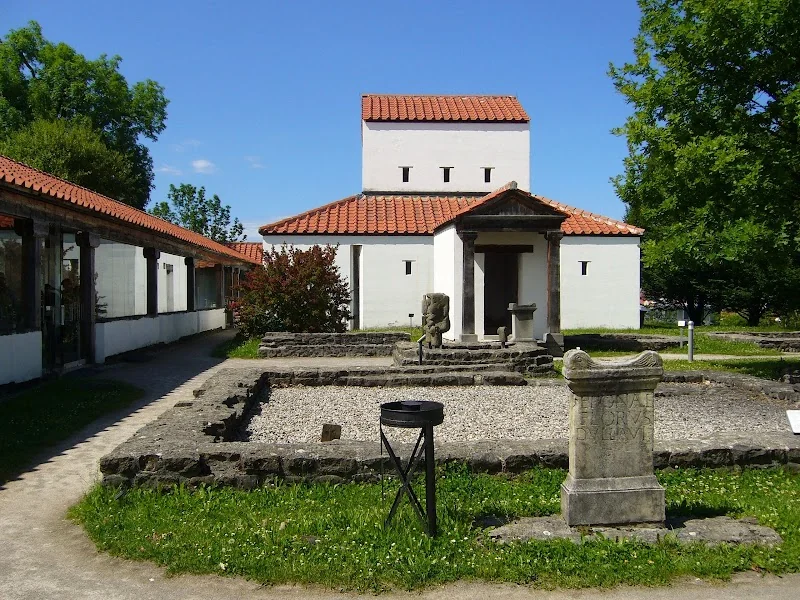
The Gallo-Roman Temple District is one of the most defining exhibition areas of the Archaeological Park Cambodunum and for many visitors the most impressive part of the site. The official exhibition describes that the inhabitants of Cambodunum brought their religious beliefs from various parts of the Roman Empire. In the temple district, Romanized Celts, Germans, and Romans worshipped their gods and made sacrifices. The area was surrounded by a double hall, and today several partial reconstructions are accessible at the original location. This creates an authentic impression of how monumental and functional a sacred place in a Roman city was organized. Unlike in a purely museum exhibition space, one experiences the spatial structure directly on-site and can grasp the ancient atmosphere with just a few steps. ([apc-kempten.de](https://www.apc-kempten.de/en/exhibition-area/gallo-roman-temple-district))
The temple district is also particularly rich in content. The exhibition showcases finds from the APC and provides insights into the religious world of Cambodunum. Among others, Hercules, Mercury as the god of merchants and thieves, and Epona, the goddess of fertility and horses, who was worshipped by both Celts and Romans, are mentioned. The new interactive permanent exhibition is divided into five zones and works with original objects, everyday references, interactive stations, and a tactile guiding system. This makes the topic of religion in antiquity not only explained but also sensibly and vividly experienced. Especially for those searching for the keyword Gallo-Roman Temple District, this is a place where archaeology, reconstruction, and education work closely together. The temple district is therefore not just a beautiful photo point but a key to understanding the entire Roman city. It shows how strongly Cambodunum was shaped as a political, cultural, and religious center and why this area is still considered the centerpiece of the park today. ([apc-kempten.de](https://www.apc-kempten.de/en/exhibition-area/gallo-roman-temple-district))
Small Baths, Forum, and Basilica: Further Exhibition Areas with History
Other highlights of the Archaeological Park Cambodunum include the small baths as well as the forum and basilica. According to the official representation, the small baths were built around the year 50 AD next to the governor's palace and initially served the private use of the governor, his staff, and his guests. Two generations later, the governor moved to Augusta Vindelicum, present-day Augsburg. After that, the palace complex in Cambodunum was used as a guest house. The bathing facility was remodeled, and a public latrine was added. Today, the original remains of the baths are housed in a protective and exhibition building that preserves the findings from the elements while also directing attention to the ancient wellness life. Those interested in everyday culture, body care, and Roman infrastructure will find a very illustrative example of how differentiated a provincial city was organized. ([apc-kempten.de](https://www.apc-kempten.de/en/exhibition-area/small-thermal-baths))
The forum and basilica, in turn, tell of politics, administration, and public life. The forum was the heart of Cambodunum and was the center of urban life in antiquity. Market days took place on the large public square, and meetings and court dates were held in the basilica. Around the year 40 AD, the representative public buildings were constructed in stone, a clear sign of the city's high status. In the first century AD, Cambodunum or Kempten was the seat of the governor of the Roman province of Raetia. Today, the forum grounds are freely accessible and thus also experienceable outside of the actual exhibition operations. This openness makes the area particularly attractive for a tour, as one can very well imagine the ancient city structure in today's park space. Together with the small baths, a more complete picture of the Roman city emerges: sacred district, bathing facility, forum, and basilica represent different functions of an organized provincial capital. For visitors searching for history, architecture, and urban development, this part of the APC is indispensable. ([apc-kempten.de](https://www.apc-kempten.de/en/exhibition-area/forum-and-basilica))
Experience Trail, Cambodunum App, and Family Offers
Since 2020, the Archaeological Park Cambodunum has been offering two modern access points to antiquity with the experience trail and the Cambodunum app. The trail leads through the park area with 15 activity stations and was designed so that history can be experienced with all senses. According to the official description, rollable paths, portable tactile plans to take into the area, and many seating areas with permanently installed board games are included. This makes the park interesting not only for adult tours but also for families, school classes, and people who prefer interactive education. The trail is not just a mere additional idea but a real complement to the classic museum visit, as it provides orientation, connects stations, and brings the course through the area to life. For visitors looking for a planable yet playful cultural program, this is a strong argument for the APC. ([apc-kempten.de](https://apc-kempten.de/de/archaeologischer-park/erlebnis-rundweg-mit-app))
The Cambodunum app additionally expands the tour with digital content. It offers 360-degree videos, VR photos with interactive hotspots, 3D scans of objects, images, videos, background information, avatar-based storytelling, a quiz, and an outdoor map with hints. The app is available in German, English, and German sign language and also includes descriptive audio texts. This makes the park digitally, multilingual, and inclusively experienceable. For families, the Taberna and the Roman playground are also important: in the Taberna, there are cold and hot drinks, cakes, ice cream, and Roman snacks, and the playground is located directly at the entrance Cambodunumweg 3. The playground can even be visited without admission to the Archaeological Park. This is particularly practical for outings with children, as one can flexibly combine a museum visit and a play break. Those looking for leisure, family offerings, or a mix of learning and relaxing will find a very rounded overall package here. The APC thus shows how an archaeological site can function today: scientifically grounded but also open to curiosity, participation, and spontaneous visits. ([apc-kempten.de](https://apc-kempten.de/de/archaeologischer-park/erlebnis-rundweg-mit-app))
Photos, Highlights, and Special Impressions on Site
Anyone looking for photos of the Archaeological Park Cambodunum will find particularly strong motifs where history, architecture, and open landscape come together. Especially photogenic are the Gallo-Roman Temple District with its partial reconstructions, the protective and exhibition buildings of the small baths, and the freely accessible area of the forum and basilica. The experience trail also provides visually interesting stations, as it connects ancient themes with modern information boards, sightlines, and viewpoints. The official representation also shows that the park is located on a high bank above the Iller and has a clearly readable topographical location in the Kempten-Ost district. This combination of archaeological findings, reconstruction, and city views makes the site particularly appealing for visitors with cameras or smartphones. Those seeking calm, structured motifs can focus on the temple zone; those preferring panoramas and expanses will find very good perspectives along the trail and at the open areas of the forum. ([apc-kempten.de](https://www.apc-kempten.de/en/exhibition-area/gallo-roman-temple-district))
However, the highlights of the park lie not only in individual photo spots but in the overall experience. The APC connects one of the oldest Roman cities in Germany with a contemporary museum landscape, complemented by an app, trail, shop, Taberna, and family offerings. Visitors can explore the ancient areas in a meaningful order: first the temple district, then the small baths, followed by the forum and basilica. This orientation is also practical if one has little time and wants to collect the most important impressions in a concentrated manner. At the same time, the visit can be extended, for example, with a guided tour, a look into the museum shop, or a break at the Roman café. This makes the park very suitable for different target groups: history enthusiasts get substance, families receive variety, and all those looking for photos, content, and atmosphere find a versatile field of motifs. For content planning and SEO relevance, this is important, as terms like photos, tickets, directions, parking, opening hours, and temple district cover the same visitor moment at the APC: the search for a special, well-planned, and content-rich excursion destination in Kempten. ([apc-kempten.de](https://www.apc-kempten.de/?utm_source=openai))
Sources:
- Archaeological Park Cambodunum - Visitor Information
- Archaeological Park Cambodunum - Exhibition Areas
- Archaeological Park Cambodunum - Experience Trail with App
- Archaeological Park Cambodunum - Ticket Office and Museum Shop
- Archaeological Park Cambodunum - Taberna and Roman Playground
- Archaeological Park Cambodunum - Gallo-Roman Temple District
- Archaeological Park Cambodunum - Small Thermal Baths
- Archaeological Park Cambodunum - Forum and Basilica
Show moreShow less
Archaeological Park Cambodunum | Tickets & Opening Hours
The Archaeological Park Cambodunum in Kempten is a special place for anyone who wants to not only see Roman history but truly experience it. The museum and excavation site protects and presents the center of the ancient Roman city of Cambodunum, which is located on the eastern high bank of the Iller in present-day Kempten and was founded under Emperor Augustus around the turn of the era. Today, visitors encounter not a classic indoor museum but a Roman open-air museum with open spaces, reconstructed areas, archaeological finds, and modern educational offerings. Particularly impressive is the connection between the original archaeological site and contemporary presentation: the temple district, small baths, as well as the forum and basilica make the ancient urban structure understandable, while the experience trail and the Cambodunum app open up additional layers. Those looking for tickets, opening hours, directions, parking, or photos will find not only practical visitor information at the APC but also a versatile cultural destination for families, school groups, history enthusiasts, and anyone who wants to get to know Kempten's Roman past up close. ([apc-kempten.de](https://www.apc-kempten.de/en/exhibition-area/gallo-roman-temple-district))
Tickets, Opening Hours, and Admission Prices at the Archaeological Park Cambodunum
Anyone wishing to visit the Archaeological Park Cambodunum should first know the most important service information. The season runs from March to November, and during this period, the park is open from Tuesday to Sunday from 10 am to 5 pm. Admission tickets can be obtained at the ticket office in the temple district at Cambodunumweg 3 and at the ticket office at the small baths in Merktstraße 1. Those who want to plan their visit in advance can also purchase tickets online and then pick them up at the temple district ticket office. For adults, admission costs 5 euros, while children and teenagers up to 17 years old, as well as students, have free admission. The reduced price is 2.50 euros, groups of ten or more pay 2.50 euros per person, and on the first Sunday of the month, admission is free. Additionally, there is an APC annual pass for adults for 15 euros. This makes the park attractive not only for spontaneous outings but also for repeated visits throughout the season. ([apc-kempten.de](https://apc-kempten.de/de/besucherinfo))
Some visitor rules are also helpful for planning. Groups of 15 or more should register in advance by email or phone. Children may visit the APC unaccompanied by adults only from the age of 10. Dogs are not allowed in the museum area; in the park itself, they must be kept on a leash. These notes show that the Archaeological Park Cambodunum is a protected museum space with clear rules, where the ancient structures and the safety of visitors are the focus. At the same time, access remains uncomplicated: tickets are available at both entrances, online tickets save time, and the pricing structure is clearly understandable. So, anyone looking for tickets for the APC, admission prices, or an overview for the museum visit receives a very direct and transparent solution here. This is particularly practical for families, school classes, and cultural travelers, as the visit can be well organized in advance while still allowing plenty of room for spontaneous discoveries on-site. ([apc-kempten.de](https://apc-kempten.de/de/besucherinfo))
Directions and Parking at APC Kempten
The directions to the Archaeological Park Cambodunum are clearly described and manageable even for first-time visitors. By car, Kempten can be reached via the A7, B12, or B19. In the city, follow the signs at Berliner Platz towards the main train station and then the signs to the Archaeological Park Cambodunum. The APC is located on the high bank of the Iller in the Kempten-Ost district. For the navigation device, the addresses Cambodunumweg 3 and Merktstraße 1 are provided, as these are where the two entrances and ticket areas are located. Those arriving by bus can use lines 11 and 12 from the central transfer point ZUM; from the main train station, the APC is also connected via line R8. Nearby are the stops Schumacherring/APC, Kaufbeurer Straße/Augarten, and Lenzfrieder Straße/Kieswerk. This means the park is easily accessible not only by car but also by public transport. ([apc-kempten.de](https://apc-kempten.de/de/besucherinfo))
When it comes to parking, it is important to know that there is no dedicated APC parking lot. The official visitor information recommends instead parking spaces in the vicinity of the park, especially the Illerdamm parking lot and the parking lot at Brodkorbweg. The walking time is about 5 to 15 minutes. Those with mobility restrictions will benefit from the fact that the APC is largely barrier-free and that the paths in the outdoor area are on paved surfaces. Additionally, barrier-free toilets are available in the Taberna and in the small baths. This allows for a visit with a wheelchair, walker, or stroller to be well organized, as long as the paths in the park area are taken into account. For visitors looking for parking at the Archaeological Park Cambodunum or the best route, the conclusion is simple: arrive early, use the designated parking options in the vicinity, and plan some walking time for a relaxed visit. This way, the tour begins stress-free and with more time for the actual discovery of the Roman city. ([apc-kempten.de](https://apc-kempten.de/de/besucherinfo))
Gallo-Roman Temple District: The Heart of the Roman City
The Gallo-Roman Temple District is one of the most defining exhibition areas of the Archaeological Park Cambodunum and for many visitors the most impressive part of the site. The official exhibition describes that the inhabitants of Cambodunum brought their religious beliefs from various parts of the Roman Empire. In the temple district, Romanized Celts, Germans, and Romans worshipped their gods and made sacrifices. The area was surrounded by a double hall, and today several partial reconstructions are accessible at the original location. This creates an authentic impression of how monumental and functional a sacred place in a Roman city was organized. Unlike in a purely museum exhibition space, one experiences the spatial structure directly on-site and can grasp the ancient atmosphere with just a few steps. ([apc-kempten.de](https://www.apc-kempten.de/en/exhibition-area/gallo-roman-temple-district))
The temple district is also particularly rich in content. The exhibition showcases finds from the APC and provides insights into the religious world of Cambodunum. Among others, Hercules, Mercury as the god of merchants and thieves, and Epona, the goddess of fertility and horses, who was worshipped by both Celts and Romans, are mentioned. The new interactive permanent exhibition is divided into five zones and works with original objects, everyday references, interactive stations, and a tactile guiding system. This makes the topic of religion in antiquity not only explained but also sensibly and vividly experienced. Especially for those searching for the keyword Gallo-Roman Temple District, this is a place where archaeology, reconstruction, and education work closely together. The temple district is therefore not just a beautiful photo point but a key to understanding the entire Roman city. It shows how strongly Cambodunum was shaped as a political, cultural, and religious center and why this area is still considered the centerpiece of the park today. ([apc-kempten.de](https://www.apc-kempten.de/en/exhibition-area/gallo-roman-temple-district))
Small Baths, Forum, and Basilica: Further Exhibition Areas with History
Other highlights of the Archaeological Park Cambodunum include the small baths as well as the forum and basilica. According to the official representation, the small baths were built around the year 50 AD next to the governor's palace and initially served the private use of the governor, his staff, and his guests. Two generations later, the governor moved to Augusta Vindelicum, present-day Augsburg. After that, the palace complex in Cambodunum was used as a guest house. The bathing facility was remodeled, and a public latrine was added. Today, the original remains of the baths are housed in a protective and exhibition building that preserves the findings from the elements while also directing attention to the ancient wellness life. Those interested in everyday culture, body care, and Roman infrastructure will find a very illustrative example of how differentiated a provincial city was organized. ([apc-kempten.de](https://www.apc-kempten.de/en/exhibition-area/small-thermal-baths))
The forum and basilica, in turn, tell of politics, administration, and public life. The forum was the heart of Cambodunum and was the center of urban life in antiquity. Market days took place on the large public square, and meetings and court dates were held in the basilica. Around the year 40 AD, the representative public buildings were constructed in stone, a clear sign of the city's high status. In the first century AD, Cambodunum or Kempten was the seat of the governor of the Roman province of Raetia. Today, the forum grounds are freely accessible and thus also experienceable outside of the actual exhibition operations. This openness makes the area particularly attractive for a tour, as one can very well imagine the ancient city structure in today's park space. Together with the small baths, a more complete picture of the Roman city emerges: sacred district, bathing facility, forum, and basilica represent different functions of an organized provincial capital. For visitors searching for history, architecture, and urban development, this part of the APC is indispensable. ([apc-kempten.de](https://www.apc-kempten.de/en/exhibition-area/forum-and-basilica))
Experience Trail, Cambodunum App, and Family Offers
Since 2020, the Archaeological Park Cambodunum has been offering two modern access points to antiquity with the experience trail and the Cambodunum app. The trail leads through the park area with 15 activity stations and was designed so that history can be experienced with all senses. According to the official description, rollable paths, portable tactile plans to take into the area, and many seating areas with permanently installed board games are included. This makes the park interesting not only for adult tours but also for families, school classes, and people who prefer interactive education. The trail is not just a mere additional idea but a real complement to the classic museum visit, as it provides orientation, connects stations, and brings the course through the area to life. For visitors looking for a planable yet playful cultural program, this is a strong argument for the APC. ([apc-kempten.de](https://apc-kempten.de/de/archaeologischer-park/erlebnis-rundweg-mit-app))
The Cambodunum app additionally expands the tour with digital content. It offers 360-degree videos, VR photos with interactive hotspots, 3D scans of objects, images, videos, background information, avatar-based storytelling, a quiz, and an outdoor map with hints. The app is available in German, English, and German sign language and also includes descriptive audio texts. This makes the park digitally, multilingual, and inclusively experienceable. For families, the Taberna and the Roman playground are also important: in the Taberna, there are cold and hot drinks, cakes, ice cream, and Roman snacks, and the playground is located directly at the entrance Cambodunumweg 3. The playground can even be visited without admission to the Archaeological Park. This is particularly practical for outings with children, as one can flexibly combine a museum visit and a play break. Those looking for leisure, family offerings, or a mix of learning and relaxing will find a very rounded overall package here. The APC thus shows how an archaeological site can function today: scientifically grounded but also open to curiosity, participation, and spontaneous visits. ([apc-kempten.de](https://apc-kempten.de/de/archaeologischer-park/erlebnis-rundweg-mit-app))
Photos, Highlights, and Special Impressions on Site
Anyone looking for photos of the Archaeological Park Cambodunum will find particularly strong motifs where history, architecture, and open landscape come together. Especially photogenic are the Gallo-Roman Temple District with its partial reconstructions, the protective and exhibition buildings of the small baths, and the freely accessible area of the forum and basilica. The experience trail also provides visually interesting stations, as it connects ancient themes with modern information boards, sightlines, and viewpoints. The official representation also shows that the park is located on a high bank above the Iller and has a clearly readable topographical location in the Kempten-Ost district. This combination of archaeological findings, reconstruction, and city views makes the site particularly appealing for visitors with cameras or smartphones. Those seeking calm, structured motifs can focus on the temple zone; those preferring panoramas and expanses will find very good perspectives along the trail and at the open areas of the forum. ([apc-kempten.de](https://www.apc-kempten.de/en/exhibition-area/gallo-roman-temple-district))
However, the highlights of the park lie not only in individual photo spots but in the overall experience. The APC connects one of the oldest Roman cities in Germany with a contemporary museum landscape, complemented by an app, trail, shop, Taberna, and family offerings. Visitors can explore the ancient areas in a meaningful order: first the temple district, then the small baths, followed by the forum and basilica. This orientation is also practical if one has little time and wants to collect the most important impressions in a concentrated manner. At the same time, the visit can be extended, for example, with a guided tour, a look into the museum shop, or a break at the Roman café. This makes the park very suitable for different target groups: history enthusiasts get substance, families receive variety, and all those looking for photos, content, and atmosphere find a versatile field of motifs. For content planning and SEO relevance, this is important, as terms like photos, tickets, directions, parking, opening hours, and temple district cover the same visitor moment at the APC: the search for a special, well-planned, and content-rich excursion destination in Kempten. ([apc-kempten.de](https://www.apc-kempten.de/?utm_source=openai))
Sources:
- Archaeological Park Cambodunum - Visitor Information
- Archaeological Park Cambodunum - Exhibition Areas
- Archaeological Park Cambodunum - Experience Trail with App
- Archaeological Park Cambodunum - Ticket Office and Museum Shop
- Archaeological Park Cambodunum - Taberna and Roman Playground
- Archaeological Park Cambodunum - Gallo-Roman Temple District
- Archaeological Park Cambodunum - Small Thermal Baths
- Archaeological Park Cambodunum - Forum and Basilica
Archaeological Park Cambodunum | Tickets & Opening Hours
The Archaeological Park Cambodunum in Kempten is a special place for anyone who wants to not only see Roman history but truly experience it. The museum and excavation site protects and presents the center of the ancient Roman city of Cambodunum, which is located on the eastern high bank of the Iller in present-day Kempten and was founded under Emperor Augustus around the turn of the era. Today, visitors encounter not a classic indoor museum but a Roman open-air museum with open spaces, reconstructed areas, archaeological finds, and modern educational offerings. Particularly impressive is the connection between the original archaeological site and contemporary presentation: the temple district, small baths, as well as the forum and basilica make the ancient urban structure understandable, while the experience trail and the Cambodunum app open up additional layers. Those looking for tickets, opening hours, directions, parking, or photos will find not only practical visitor information at the APC but also a versatile cultural destination for families, school groups, history enthusiasts, and anyone who wants to get to know Kempten's Roman past up close. ([apc-kempten.de](https://www.apc-kempten.de/en/exhibition-area/gallo-roman-temple-district))
Tickets, Opening Hours, and Admission Prices at the Archaeological Park Cambodunum
Anyone wishing to visit the Archaeological Park Cambodunum should first know the most important service information. The season runs from March to November, and during this period, the park is open from Tuesday to Sunday from 10 am to 5 pm. Admission tickets can be obtained at the ticket office in the temple district at Cambodunumweg 3 and at the ticket office at the small baths in Merktstraße 1. Those who want to plan their visit in advance can also purchase tickets online and then pick them up at the temple district ticket office. For adults, admission costs 5 euros, while children and teenagers up to 17 years old, as well as students, have free admission. The reduced price is 2.50 euros, groups of ten or more pay 2.50 euros per person, and on the first Sunday of the month, admission is free. Additionally, there is an APC annual pass for adults for 15 euros. This makes the park attractive not only for spontaneous outings but also for repeated visits throughout the season. ([apc-kempten.de](https://apc-kempten.de/de/besucherinfo))
Some visitor rules are also helpful for planning. Groups of 15 or more should register in advance by email or phone. Children may visit the APC unaccompanied by adults only from the age of 10. Dogs are not allowed in the museum area; in the park itself, they must be kept on a leash. These notes show that the Archaeological Park Cambodunum is a protected museum space with clear rules, where the ancient structures and the safety of visitors are the focus. At the same time, access remains uncomplicated: tickets are available at both entrances, online tickets save time, and the pricing structure is clearly understandable. So, anyone looking for tickets for the APC, admission prices, or an overview for the museum visit receives a very direct and transparent solution here. This is particularly practical for families, school classes, and cultural travelers, as the visit can be well organized in advance while still allowing plenty of room for spontaneous discoveries on-site. ([apc-kempten.de](https://apc-kempten.de/de/besucherinfo))
Directions and Parking at APC Kempten
The directions to the Archaeological Park Cambodunum are clearly described and manageable even for first-time visitors. By car, Kempten can be reached via the A7, B12, or B19. In the city, follow the signs at Berliner Platz towards the main train station and then the signs to the Archaeological Park Cambodunum. The APC is located on the high bank of the Iller in the Kempten-Ost district. For the navigation device, the addresses Cambodunumweg 3 and Merktstraße 1 are provided, as these are where the two entrances and ticket areas are located. Those arriving by bus can use lines 11 and 12 from the central transfer point ZUM; from the main train station, the APC is also connected via line R8. Nearby are the stops Schumacherring/APC, Kaufbeurer Straße/Augarten, and Lenzfrieder Straße/Kieswerk. This means the park is easily accessible not only by car but also by public transport. ([apc-kempten.de](https://apc-kempten.de/de/besucherinfo))
When it comes to parking, it is important to know that there is no dedicated APC parking lot. The official visitor information recommends instead parking spaces in the vicinity of the park, especially the Illerdamm parking lot and the parking lot at Brodkorbweg. The walking time is about 5 to 15 minutes. Those with mobility restrictions will benefit from the fact that the APC is largely barrier-free and that the paths in the outdoor area are on paved surfaces. Additionally, barrier-free toilets are available in the Taberna and in the small baths. This allows for a visit with a wheelchair, walker, or stroller to be well organized, as long as the paths in the park area are taken into account. For visitors looking for parking at the Archaeological Park Cambodunum or the best route, the conclusion is simple: arrive early, use the designated parking options in the vicinity, and plan some walking time for a relaxed visit. This way, the tour begins stress-free and with more time for the actual discovery of the Roman city. ([apc-kempten.de](https://apc-kempten.de/de/besucherinfo))
Gallo-Roman Temple District: The Heart of the Roman City
The Gallo-Roman Temple District is one of the most defining exhibition areas of the Archaeological Park Cambodunum and for many visitors the most impressive part of the site. The official exhibition describes that the inhabitants of Cambodunum brought their religious beliefs from various parts of the Roman Empire. In the temple district, Romanized Celts, Germans, and Romans worshipped their gods and made sacrifices. The area was surrounded by a double hall, and today several partial reconstructions are accessible at the original location. This creates an authentic impression of how monumental and functional a sacred place in a Roman city was organized. Unlike in a purely museum exhibition space, one experiences the spatial structure directly on-site and can grasp the ancient atmosphere with just a few steps. ([apc-kempten.de](https://www.apc-kempten.de/en/exhibition-area/gallo-roman-temple-district))
The temple district is also particularly rich in content. The exhibition showcases finds from the APC and provides insights into the religious world of Cambodunum. Among others, Hercules, Mercury as the god of merchants and thieves, and Epona, the goddess of fertility and horses, who was worshipped by both Celts and Romans, are mentioned. The new interactive permanent exhibition is divided into five zones and works with original objects, everyday references, interactive stations, and a tactile guiding system. This makes the topic of religion in antiquity not only explained but also sensibly and vividly experienced. Especially for those searching for the keyword Gallo-Roman Temple District, this is a place where archaeology, reconstruction, and education work closely together. The temple district is therefore not just a beautiful photo point but a key to understanding the entire Roman city. It shows how strongly Cambodunum was shaped as a political, cultural, and religious center and why this area is still considered the centerpiece of the park today. ([apc-kempten.de](https://www.apc-kempten.de/en/exhibition-area/gallo-roman-temple-district))
Small Baths, Forum, and Basilica: Further Exhibition Areas with History
Other highlights of the Archaeological Park Cambodunum include the small baths as well as the forum and basilica. According to the official representation, the small baths were built around the year 50 AD next to the governor's palace and initially served the private use of the governor, his staff, and his guests. Two generations later, the governor moved to Augusta Vindelicum, present-day Augsburg. After that, the palace complex in Cambodunum was used as a guest house. The bathing facility was remodeled, and a public latrine was added. Today, the original remains of the baths are housed in a protective and exhibition building that preserves the findings from the elements while also directing attention to the ancient wellness life. Those interested in everyday culture, body care, and Roman infrastructure will find a very illustrative example of how differentiated a provincial city was organized. ([apc-kempten.de](https://www.apc-kempten.de/en/exhibition-area/small-thermal-baths))
The forum and basilica, in turn, tell of politics, administration, and public life. The forum was the heart of Cambodunum and was the center of urban life in antiquity. Market days took place on the large public square, and meetings and court dates were held in the basilica. Around the year 40 AD, the representative public buildings were constructed in stone, a clear sign of the city's high status. In the first century AD, Cambodunum or Kempten was the seat of the governor of the Roman province of Raetia. Today, the forum grounds are freely accessible and thus also experienceable outside of the actual exhibition operations. This openness makes the area particularly attractive for a tour, as one can very well imagine the ancient city structure in today's park space. Together with the small baths, a more complete picture of the Roman city emerges: sacred district, bathing facility, forum, and basilica represent different functions of an organized provincial capital. For visitors searching for history, architecture, and urban development, this part of the APC is indispensable. ([apc-kempten.de](https://www.apc-kempten.de/en/exhibition-area/forum-and-basilica))
Experience Trail, Cambodunum App, and Family Offers
Since 2020, the Archaeological Park Cambodunum has been offering two modern access points to antiquity with the experience trail and the Cambodunum app. The trail leads through the park area with 15 activity stations and was designed so that history can be experienced with all senses. According to the official description, rollable paths, portable tactile plans to take into the area, and many seating areas with permanently installed board games are included. This makes the park interesting not only for adult tours but also for families, school classes, and people who prefer interactive education. The trail is not just a mere additional idea but a real complement to the classic museum visit, as it provides orientation, connects stations, and brings the course through the area to life. For visitors looking for a planable yet playful cultural program, this is a strong argument for the APC. ([apc-kempten.de](https://apc-kempten.de/de/archaeologischer-park/erlebnis-rundweg-mit-app))
The Cambodunum app additionally expands the tour with digital content. It offers 360-degree videos, VR photos with interactive hotspots, 3D scans of objects, images, videos, background information, avatar-based storytelling, a quiz, and an outdoor map with hints. The app is available in German, English, and German sign language and also includes descriptive audio texts. This makes the park digitally, multilingual, and inclusively experienceable. For families, the Taberna and the Roman playground are also important: in the Taberna, there are cold and hot drinks, cakes, ice cream, and Roman snacks, and the playground is located directly at the entrance Cambodunumweg 3. The playground can even be visited without admission to the Archaeological Park. This is particularly practical for outings with children, as one can flexibly combine a museum visit and a play break. Those looking for leisure, family offerings, or a mix of learning and relaxing will find a very rounded overall package here. The APC thus shows how an archaeological site can function today: scientifically grounded but also open to curiosity, participation, and spontaneous visits. ([apc-kempten.de](https://apc-kempten.de/de/archaeologischer-park/erlebnis-rundweg-mit-app))
Photos, Highlights, and Special Impressions on Site
Anyone looking for photos of the Archaeological Park Cambodunum will find particularly strong motifs where history, architecture, and open landscape come together. Especially photogenic are the Gallo-Roman Temple District with its partial reconstructions, the protective and exhibition buildings of the small baths, and the freely accessible area of the forum and basilica. The experience trail also provides visually interesting stations, as it connects ancient themes with modern information boards, sightlines, and viewpoints. The official representation also shows that the park is located on a high bank above the Iller and has a clearly readable topographical location in the Kempten-Ost district. This combination of archaeological findings, reconstruction, and city views makes the site particularly appealing for visitors with cameras or smartphones. Those seeking calm, structured motifs can focus on the temple zone; those preferring panoramas and expanses will find very good perspectives along the trail and at the open areas of the forum. ([apc-kempten.de](https://www.apc-kempten.de/en/exhibition-area/gallo-roman-temple-district))
However, the highlights of the park lie not only in individual photo spots but in the overall experience. The APC connects one of the oldest Roman cities in Germany with a contemporary museum landscape, complemented by an app, trail, shop, Taberna, and family offerings. Visitors can explore the ancient areas in a meaningful order: first the temple district, then the small baths, followed by the forum and basilica. This orientation is also practical if one has little time and wants to collect the most important impressions in a concentrated manner. At the same time, the visit can be extended, for example, with a guided tour, a look into the museum shop, or a break at the Roman café. This makes the park very suitable for different target groups: history enthusiasts get substance, families receive variety, and all those looking for photos, content, and atmosphere find a versatile field of motifs. For content planning and SEO relevance, this is important, as terms like photos, tickets, directions, parking, opening hours, and temple district cover the same visitor moment at the APC: the search for a special, well-planned, and content-rich excursion destination in Kempten. ([apc-kempten.de](https://www.apc-kempten.de/?utm_source=openai))
Sources:
- Archaeological Park Cambodunum - Visitor Information
- Archaeological Park Cambodunum - Exhibition Areas
- Archaeological Park Cambodunum - Experience Trail with App
- Archaeological Park Cambodunum - Ticket Office and Museum Shop
- Archaeological Park Cambodunum - Taberna and Roman Playground
- Archaeological Park Cambodunum - Gallo-Roman Temple District
- Archaeological Park Cambodunum - Small Thermal Baths
- Archaeological Park Cambodunum - Forum and Basilica
Upcoming Events
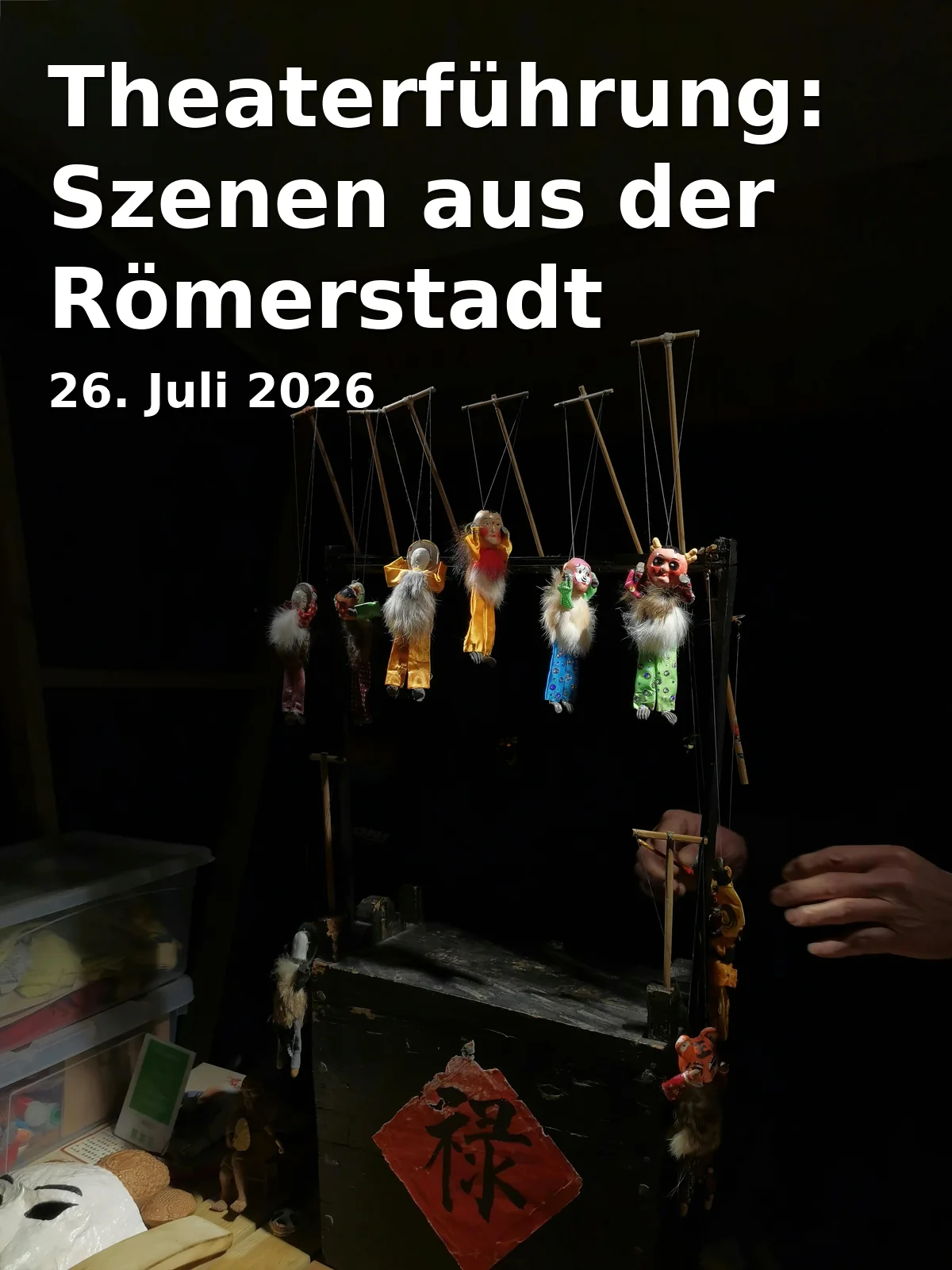
Theater tour: Scenes from the Roman city of Cambodunum
Dive into the fascinating world of the Romans with our theater tour in Kempten on July 26, 2026. Discover Cambodunum up close!
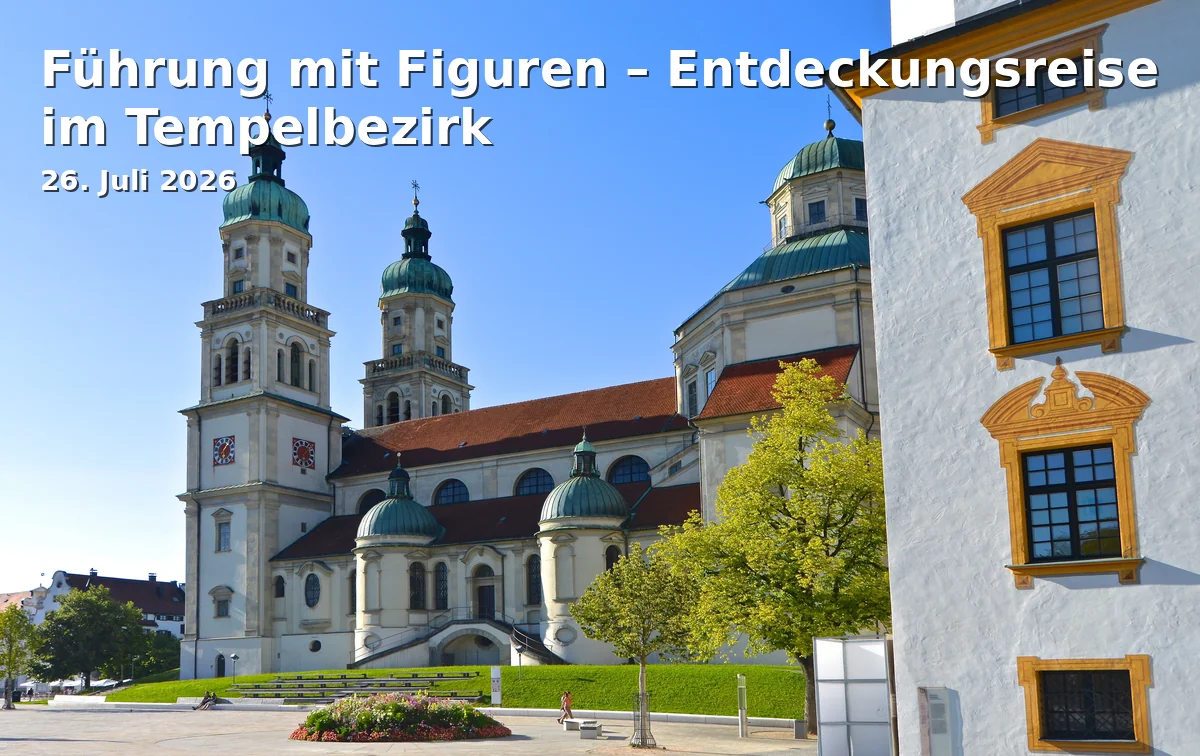
Guided Tour with Figures – Discovery Journey in the Temple District
Immerse yourself in the history of Kempten with a guided tour of the Archaeological Park Cambodunum.
Frequently Asked Questions
Reviews
No reviews found